
Remain aware with complimentary notifications
Simply register for the UK employment myFT Digest — sent straight to your email.
KPMG, a prominent accountancy firm, the opulent department store Harvey Nichols, and numerous renowned retail chains and football teams constitute a group of 400 businesses identified for having compensated their staff below the UK’s legally mandated minimum wage.
The administration declared its intention to fulfill a pledge made in the November Budget, which involves publicly denouncing businesses found to be violating employment regulations with greater regularity, aiming to intensify its implementation of recently fortified employee entitlements.
The Ministry for Business and Trade indicated that the involved businesses had reimbursed over £7.3 million to approximately 60,000 employees, with penalties totaling £12.6 million also imposed on 389 of these entities.
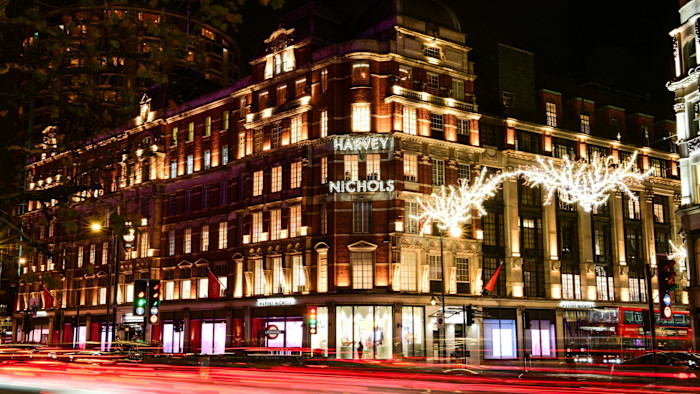
Soccer teams Norwich City and Charlton Athletic were among those identified, in addition to main street retailer Costa, bakery firm Hovis, and Walsall Local Authority. Harvey Nichols was specifically identified for having neglected to remunerate £7,537 to 83 members of staff. These organizations did not reply to inquiries for a statement.
Traded companies identified by the administration encompassed divisions of the Danish facilities management conglomerate ISS, which stated it had committed “inadvertent mistakes” in determining compensated hours between 2017 and 2023, mistakes that have subsequently been rectified.
The auditing company KPMG stated it was featured on the list attributable to “a minimal number of procedural faults” impacting 59 staff members, which it had detected and amended after alerting HM Revenue & Customs in 2022.
Tour operator Hays Travel similarly stated it had “resolved” a technical problem upon discovery, meanwhile, medical insurer Bupa admitted to having amended mistakes “pertaining to items such as garments, shoes, and lodging” following notification from HMRC in 2019.
Violations of lowest remuneration regulations by major corporations typically impact a considerable number of personnel, however, they often entail comparatively minor amounts of capital.
Numerous of the identified enterprises, nonetheless, are modest firms where a handful of persons have incurred significantly greater financial setbacks. Difficulties are particularly common among establishments such as nursing facilities and child welfare services, yet the compilation likewise features construction companies, agricultural holdings, lodging establishments, food service providers, and apparel producers.
Commercial associations have for an extended period contended that the United Kingdom’s regulatory agencies lack the necessary means to monitor employment regulations.
The concern is that unscrupulous employers will evade emerging employee entitlements stemming from the administration’s Labour Rights Legislation, which are poised to augment financial burdens in poorly remunerated industries that have previously faced steep rises in wage deductions and lowest pay scales.
The countrywide subsistence wage — representing the lowest remuneration for individuals aged majority and above — has escalated by a third since 2021, moving from £8.91 hourly to the prevailing rate of £12.21, and is scheduled to ascend by an additional 4.1 percent to £12.71 come April.
A novel Equitable Employment Authority, amalgamating current regulatory entities into one unified entity with an expanded scope, will commence activities next month in reaction to worries voiced regarding inadequate adherence; even though businesses and labour organizations observe that it has not received support from any substantial boost in finances.