
Key Takeaways
- **Strategic Domestic Sourcing Win:** The U.S. Army’s selection of Robinson Helicopter’s R66 marks a significant victory for domestic manufacturing and the “Buy American” initiative, reinforcing the nation’s defense industrial base with a 100% U.S.-made solution over foreign competitors.
- **Cost-Effective Modernization Trend:** R66’s proven low acquisition and operating costs, combined with modern avionics, signal a growing military trend towards leveraging commercial-off-the-shelf (COTS) solutions for training and support roles, potentially freeing up critical budget for advanced warfighting platforms.
- **Long-Term Revenue & Innovation Driver:** The multi-decade contract, including aircraft and parts sales, provides Robinson Helicopter with a stable, substantial revenue stream, enabling significant reinvestment into R&D for future defense technologies like unmanned aircraft, and fostering hundreds of skilled jobs.
David Smith, CEO of Robinson Helicopter Company, said the Army training deal could strengthen the U.S. defense industrial base while supporting skilled manufacturing jobs.
A California helicopter manufacturer, Robinson Helicopter Company, has secured a pivotal role in a major new U.S. Army flight training program, a development poised to inject substantial economic activity and reinforce the nation’s defense industrial base. The selection of its R66 turbine helicopter for the Army’s Flight School Next program, as part of a team led by M1 Support Services, represents a strategic endorsement of domestic manufacturing and a significant long-term revenue opportunity for the privately-held company.
This program is designed to train the next generation of Army helicopter pilots at Fort Rucker, Alabama, with the R66 specifically chosen for the Army’s Initial Entry Rotary-Wing (IERW) training. The implications extend beyond just the contract value, signaling a shift in military procurement strategies towards efficient, readily available, and American-made solutions in a competitive global market.
“Robinson didn’t just check the boxes; it blew past them, beating out competitors on price, performance and resiliency,” company spokesperson Erica Dumas told FOX Business, underscoring the R66’s competitive edge. This success reflects a broader trend within the defense sector, where the imperative for cost efficiency and rapid deployment often pushes procurement agencies to consider robust commercial-off-the-shelf (COTS) products capable of meeting stringent military specifications.
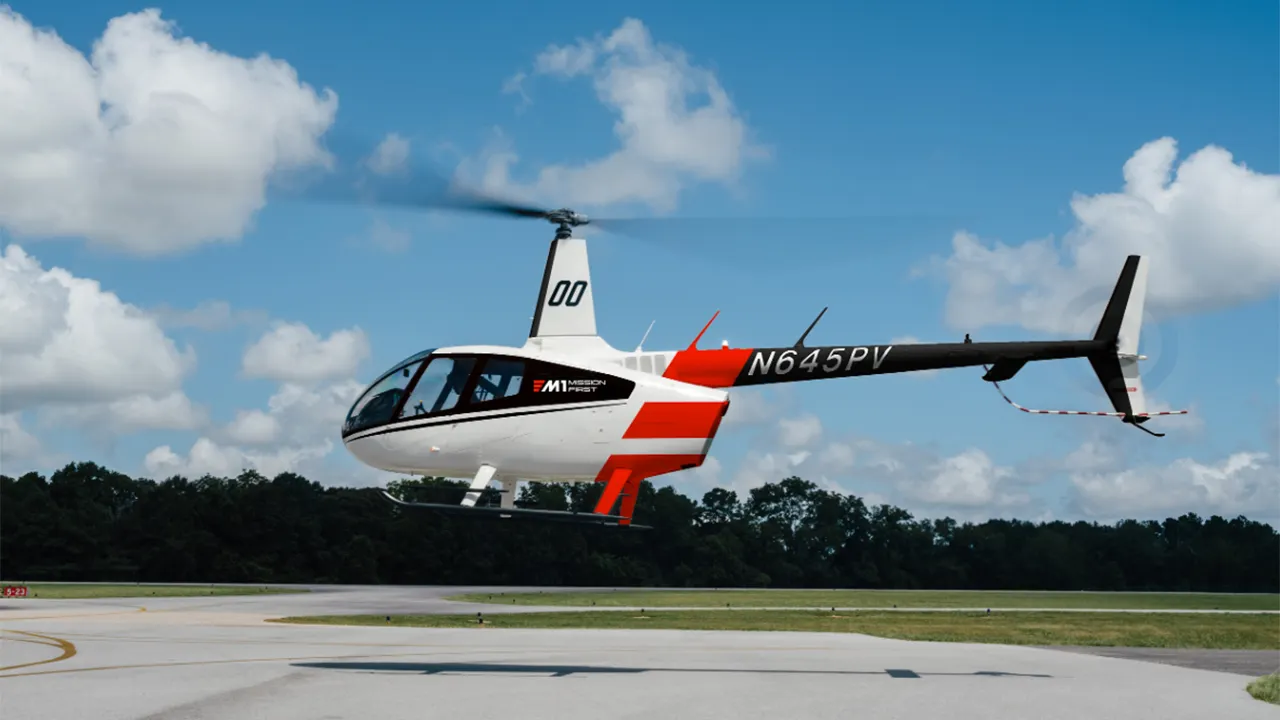
Robinson Helicopter Company will provide its R66 turbine helicopter for the Army’s Flight School Next program as part of a team led by M1 Support Services.(Robinson Helicopter Company)
David Smith, CEO of Robinson Helicopter Company, highlighted the national security implications of the deal, emphasizing that the selection demonstrates the capability of American-made aircraft to compete effectively against foreign-built products in critical military roles. “This is a really powerful demonstration of American-made displacing what are currently foreign products that occupy this very important role of training Army aviators,” Smith told FOX Business. In an era of increasing geopolitical tensions and supply chain vulnerabilities, prioritizing domestic production is not merely an economic decision but a strategic imperative for national readiness and resilience.
The economic ripple effects are projected to be significant. Smith elaborated that the program will generate substantial demand for skilled maintenance workers, flight instructors, and overhaul specialists in Alabama, directly supporting local economies. Concurrently, it will drive additional manufacturing work at Robinson’s highly integrated Torrance, California, factory. The deal encompasses a remarkable 26-year opportunity for both aircraft sales and the sustained provision of parts, providing a stable, long-term revenue stream that is highly attractive in the often-volatile aerospace and defense sector.
Furthermore, Smith anticipates that future exports of the R66 to allied nations, spurred by this U.S. Army endorsement, could lead to the creation of “likely hundreds of jobs over time” in Torrance, California. This potential for export growth underscores the powerful multiplier effect that major defense contracts can have on a company’s international market penetration and sustained growth trajectory. Robinson’s assertion that the R66 is 100% U.S.-designed and manufactured, with over 85% of its parts produced at its Torrance facility, positions it as a prime example of vertical integration, offering greater control over quality, supply chain, and intellectual property.

Robinson President and CEO David Smith said the selection shows that an American-made aircraft can compete with foreign-built products.(FOX Business)
“We absolutely have the skills, the resources to design, the resources to innovate, and ultimately to make the hard manufactured products that build these products,” Smith stated, addressing concerns about the erosion of America’s manufacturing capabilities. This contract serves as a tangible counter-narrative, showcasing the enduring strength of the U.S. industrial base when innovative solutions are embraced.
From a financial perspective, Robinson highlights that the R66 boasts the lowest acquisition price and direct operating cost of any turbine helicopter in its class over the past decade. This cost-effectiveness is a critical factor for the Army, which is continually seeking ways to optimize its budget amidst evolving threats and demands for modernization. By providing Army pilots with experience in modern avionics, autopilot systems, and night-vision capabilities at a lower cost, the R66 allows the military to maintain high training standards without compromising other strategic priorities.
Smith suggested these savings could be redirected. “One of the great benefits of this project is it will help the Army allocate more funding to some of the more significant projects they have [in] the future,” he said. This reallocation potential is a compelling argument for COTS integration, enabling the Pentagon to invest more heavily in cutting-edge platforms, artificial intelligence, and cybersecurity initiatives.
For Robinson Helicopter, the contract is also a significant step in its strategic expansion into the defense market, traditionally dominated by larger prime contractors. “This is a way for us to contribute directly to an area of great need,” Smith noted, indicating a broader corporate strategy to diversify revenue streams and apply its commercial expertise to military applications.
The contract also advances Robinson’s expansion into defense.(Patrick T. Fallon/Bloomberg via Getty Images)
The CEO also touched upon a critical national issue: the necessity of rebuilding America’s defense industrial base by reinvigorating skilled trades. “We need to rebuild that first, the appetite and the interest of the workforce to go into these very important skilled areas and make it a fun and cool business to be in again,” Smith urged. This sentiment resonates with broader government initiatives aimed at workforce development and STEM education, recognizing that a robust defense sector depends on a continuous pipeline of skilled labor.
Beyond the immediate contractual benefits, Robinson plans to reinvest proceeds from this program into research and development, including advanced areas such as unmanned aircraft and other defense technologies. “I’m an engineer first,” Smith concluded. “And so my mindset is, how can we continue to use wins like this to reinvest in the business and grow in the years to come?” This forward-looking approach positions Robinson not just as a supplier but as an innovator, potentially opening new market segments and securing its relevance in the evolving landscape of military aviation technology.
GET FOX BUSINESS ON THE GO BY CLICKING HERE
Market Impact
The U.S. Army’s selection of Robinson Helicopter’s R66 for its primary flight training program sends a strong signal across the aerospace and defense sector. For investors and industry observers, it underscores the increasing viability and strategic importance of commercial-off-the-shelf (COTS) solutions for military applications, particularly in support and training roles where cost-effectiveness and rapid deployment are paramount. This trend could encourage other specialized manufacturers, both public and private, to explore military contracting opportunities, potentially broadening the defense industrial base beyond traditional prime contractors. Furthermore, the emphasis on a 100% U.S.-designed and manufactured product aligns with broader “Buy American” policy initiatives, indicating a sustained government preference for domestic sourcing that could benefit other American manufacturers and their supply chains. The long-term nature of the 26-year contract provides significant revenue visibility for Robinson Helicopter and highlights the value placed on sustained operational readiness and domestic job creation, signaling a positive outlook for companies capable of delivering high-quality, cost-efficient, and domestically produced defense solutions.