
Royal Navy Carrier Strike Group Deploys to Nordic Waters for Key NATO and JEF Exercises
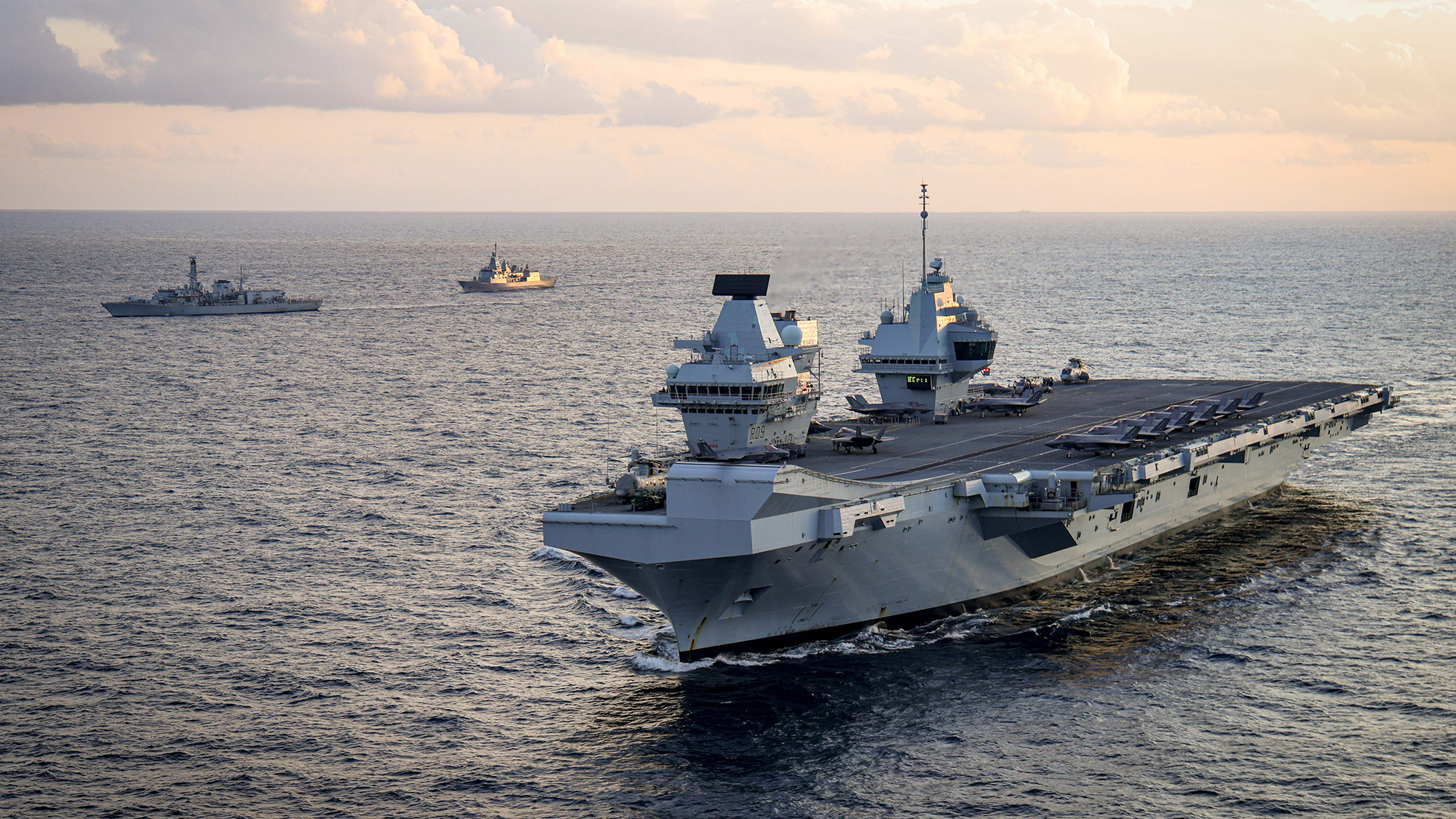
The United Kingdom’s flagship aircraft carrier, HMS Prince of Wales, has recently departed Scotland, embarking on a significant deployment to Nordic waters. The carrier strike group will engage in a series of exercises with NATO and Joint Expeditionary Force (JEF) partners, with a core focus on enhancing security in the Atlantic and the strategically vital High North regions.
Following a period of ammunition and supplies loading at the Glen Mallan jetty in Loch Long over the bank holiday weekend, the Portsmouth-based carrier set sail. She is accompanied by the Type 45 destroyer HMS Duncan, known for its advanced air defence capabilities, and the Royal Fleet Auxiliary (RFA) tanker Tidespring, which provides essential logistical support. This formidable force operates under the command of Commodore Rich Hewitt, who leads the UK Carrier Strike Group.
The deployment’s initial phase will see the group navigate to the intricate fjords near Bergen, Norway. Here, they will participate in Exercise Tamber Shield. This exercise is specifically designed to refine tactics for defending high-value naval assets against potential threats posed by small, fast, and highly manoeuvrable craft in restricted and confined maritime environments. Participants in Tamber Shield will include Wildcat helicopters from the Royal Navy’s 815 Naval Air Squadron, P2000 patrol boats, and Norwegian missile craft, fostering multilateral cooperation in complex operational scenarios.
Following the conclusion of Tamber Shield, the focus of the deployment will shift to the expansive, open waters of the High North. The group will then join Dynamic Mongoose, NATO’s premier anti-submarine warfare (ASW) exercise in Northern Europe. This exercise is critical for developing and testing the capabilities of allied navies to detect, track, and deter submarines, a capability that has gained renewed importance in the contemporary security landscape.
Captain Ben Power, the Commanding Officer of HMS Prince of Wales, underscored the importance of the deployment in reflecting the carrier’s role as the nation’s flagship. “HMS Prince of Wales stands ready as the nation’s flagship to demonstrate the United Kingdom’s commitment to NATO and the Joint Expeditionary Force,” Captain Power stated. He also acknowledged the personal commitment of the crew’s families, adding, “My thanks go to our families who continue to show unwavering support as we deploy for a period away from home waters.”
Commander James Mitchell, Commanding Officer of HMS Duncan, highlighted the critical contribution of his destroyer to the overall group’s capabilities. “As a Type 45 destroyer, HMS Duncan brings world-class air defence capability to the Carrier Strike Group, providing essential protection to HMS Prince of Wales and other high-value units,” Commander Mitchell explained. He further emphasized the benefits of international collaboration, noting that “Training alongside our allies in the North Atlantic and High North strengthens our ability to operate as an integrated and resilient force.”
Commodore Hewitt contextualized the deployment within the broader regional security environment. “This 2026 deployment delivers a clear signal of the UK’s steadfast commitment to working with regional partners and securing Europe’s northern flank,” Commodore Hewitt affirmed. He stressed the necessity of allied integration, stating, “In an increasingly volatile environment, our integration with partner nations is vital to safeguarding our mutual interests.”
The High North, encompassing the Arctic and sub-Arctic regions, has steadily emerged as an area of increasing strategic focus for NATO member states. This heightened attention has been particularly pronounced since Russia’s full-scale invasion of Ukraine in February 2022. The subsequent accession of Finland and Sweden to the alliance has significantly expanded NATO’s geographic presence and military reach within the region, transforming its security dynamics.
Beyond formal NATO structures, the Joint Expeditionary Force (JEF) plays a crucial role in regional security. The JEF, a UK-led grouping of ten northern European nations—including Denmark, Estonia, Finland, Iceland, Latvia, Lithuania, the Netherlands, Norway, and Sweden—has evolved into one of the primary frameworks for military cooperation and rapid response in the High North and Baltic Sea areas. Its structure allows for flexible and agile responses to crises, complementing NATO’s collective defence mandate.
Exercises such as Tamber Shield and Dynamic Mongoose are not merely routine training operations; they are integral to maintaining the operational readiness and interoperability of allied forces. The ability to defend against diverse threats, from small craft in complex littoral environments to sophisticated submarines in vast ocean expanses, is paramount for projecting power and deterring potential adversaries. The presence of a carrier strike group, a potent symbol of naval power, underscores the commitment of the United Kingdom and its allies to uphold international law and ensure stability in strategically critical waterways.
Why This Matters
The deployment of HMS Prince of Wales and its accompanying strike group to Nordic waters carries significant geopolitical and strategic implications for several reasons. Firstly, it directly demonstrates the United Kingdom’s unwavering commitment to NATO’s collective defence, particularly in Europe’s northern flank. In the wake of Russia’s continued aggression in Ukraine, the reaffirmation of allied solidarity and military readiness in regions adjacent to Russian influence is crucial for deterrence.
Secondly, the focus on the High North underscores the escalating strategic importance of the Arctic and sub-Arctic. This region is critical for global shipping routes, holds vast untapped natural resources, and is becoming increasingly accessible due to climate change. The presence of a robust naval force engaging in anti-submarine warfare (ASW) and defence against asymmetric threats signals a clear intent to protect these interests and maintain freedom of navigation in an area where great power competition is intensifying. Russia has significantly re-militarized its Arctic territories, making allied ASW capabilities vital.
Thirdly, the exercises like Tamber Shield and Dynamic Mongoose are essential for enhancing interoperability among allied navies. Modern warfare demands seamless coordination, communication, and shared tactical understanding between different national forces. These drills allow participants from various nations, including recent NATO members Finland and Sweden, to integrate their capabilities, test new tactics, and build the collective resilience necessary to respond to a wide spectrum of threats, from conventional naval operations to hybrid warfare scenarios.
Finally, the involvement of the Joint Expeditionary Force (JEF) alongside NATO structures highlights the multi-faceted approach to regional security. The JEF provides a flexible, rapidly deployable force capable of responding to crises that might not immediately trigger a full NATO Article 5 response. Its role in the High North complements NATO’s broader security architecture, offering a versatile tool for safeguarding mutual interests among its ten member nations and reinforcing regional stability without escalating tensions unnecessarily. This deployment therefore serves as a vital component of a comprehensive strategy to maintain peace and security in an increasingly volatile global environment.