
Recent security-oriented surveys, undertaken for Adam Smith Insights and disseminated to theUK Defence Journal, indicate that the UK populace is growingly concerned about worldwide safety, with most people expressing a diminished sense of security compared to half a decade prior, against the backdrop of the continuing conflict in Ukraine and unrest in the Middle East.
These revelations show that 52% of participants perceive less safety than they did in 2021. Under one-fifth of individuals from every political faction stated they felt more secure or marginally safer than they did half a decade ago. The survey further implies that over half of both males and females reported experiencing reduced security, with the elderly demographic pinpointed as the cohort feeling the most vulnerable relative to their sentiments in 2021.
When questioned specifically about worldwide safety threats, the survey revealed that approximately two-thirds of the populace currently experience greater apprehension than they did half a decade earlier. It further indicates that more than 60% of individuals from every political party express either moderate or significantly heightened worry concerning global security threats, with substantial proportions noted in all demographic cohorts. The findings imply that under 10% of people aged over 35 feel much or somewhat less concerned than they did before.
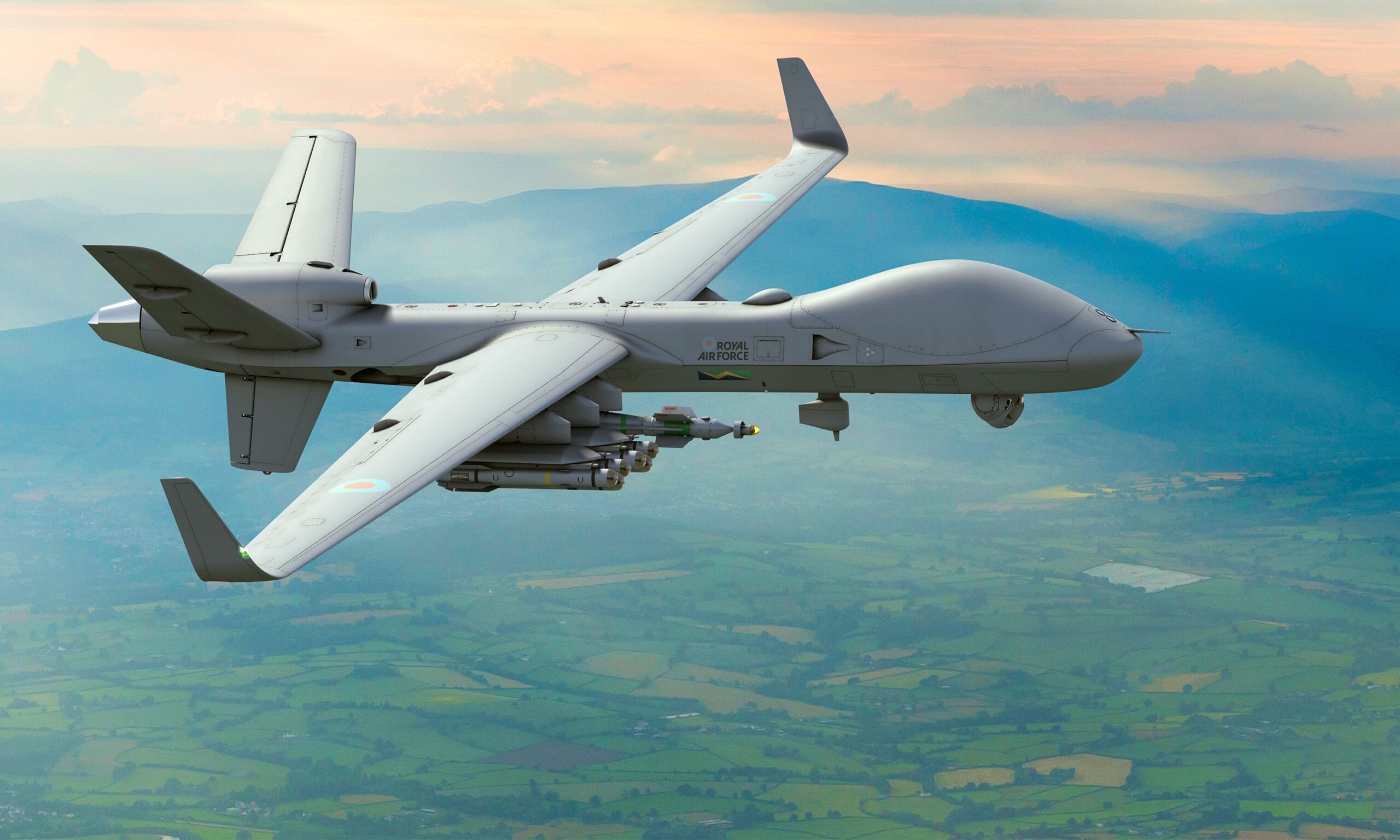
The examination also underscores significant popular backing for a swift updating of Britain’s military, especially concerning unmanned aerial vehicles (UAVs). It asserts that UAVs are now responsible for over 80% of fatalities and injuries in the conflict in Ukraine and inquired if the UK ought to furnish its soldiers with the cutting-edge drone technologies. Replying, 79% of participants largely or partially concurred, while merely 4% expressed any level of dissent.
Endorsement for increasing UAV capacity was robust throughout the political landscape, per the data. The survey revealed that 82% of Labour 2024 electors advocated for outfitting UK soldiers with the most advanced drone systems, whereas Conservative 2024 electors demonstrated the strongest approval, totaling 88%. Based on present party affiliation, the survey indicated substantial proportions across all parties, comprising 64% of Green adherents. The examination also stated that more than 70% of participants in each demographic cohort concurred that UK troops ought to be outfitted with the newest drone technologies, with those aged 65 and above exhibiting the most robust approval at 86%.
The survey further points to widespread approval for allocating resources to artificial intelligence and self-governing platforms for defence applications, referencing the intensifying military tech rivalry with China and Russia. Approximately two-thirds of participants advocated for the UK putting funds into AI and autonomous systems for national security, with Conservative electors once more noted as the keenest advocates, with 75% endorsing such expenditure. The findings further implied that 44% of males and 25% of females firmly back the UK investing in AI and autonomous systems for military deployment.
Dissent against funding AI and self-governing platforms was noted as quite minimal, with the survey indicating that merely 7% of males and 9% of females firmly object or mildly disagree with the UK allocating resources to these systems. The data further indicates that most people in every age cohort advocate for the UK investing in AI and autonomous systems, with all groups exceeding 50% in assent.
The survey was carried out between 3 and 5 November 2025, drawing from a pool of 2,052 individuals in Great Britain. The data was gathered via digital survey platforms and adjusted to align with the GB adult demographic composition encompassing age, gender, region, ethnic background, and 2024 parliamentary election preference. The method outlines that participants were screened for data integrity, such as rapid answering, and that partial or inappropriate submissions were omitted. No data estimation was used. The poll has a declared error range of an allowance of 2.2%, with an average duration of completion of roughly 3.5 minutes.