
UK Parliament Debates Russia’s Hostile Activities and “Threshold of Conflict”
The House of Commons recently heard a stark assessment from Labour Member of Parliament Graeme Downie, who asserted that Britain should consider itself engaged in a sustained confrontation with the Russian state. Speaking on Wednesday, Mr. Downie, who represents Dunfermline and Dollar, presented a list of ten hostile Russian activities directed against the United Kingdom and challenged the government to delineate which of these, if any, would be deemed to cross the threshold of conflict.
Mr. Downie characterised the current situation not as a traditional armed conflict, but as a “prolonged campaign of hostile activity.” This campaign, he explained, targets the UK’s population, critical infrastructure, economy, and democratic institutions. His central argument revolved around the critical need to define what constitutes the “threshold of conflict,” a phrase often used in defence discussions. He stressed that understanding this “hard line” is fundamental for effective deterrence and for informing rearmament strategies.
Highlighting what he perceived as a lack of clarity from the Ministry of Defence (MOD), Mr. Downie referenced a written answer he had received earlier in the week. The MOD minister had declined to provide specific details on how the department would respond to various activities, citing concerns that such information could assist adversaries. In response, Mr. Downie chose to directly pose his examples to the House, rather than pursuing further written questions.
He systematically listed a series of actions, questioning whether each would be considered “sub-threshold.” These included using a cyberattack to compromise the electoral register, stealing the email addresses of Foreign Office diplomats, and deploying ransomware to disrupt National Health Service (NHS) patient care, potentially contributing to patient deaths. Further examples included the use of lasers to endanger the safety of Royal Air Force (RAF) pilots, and cyberattacks targeting major UK businesses, resulting in hundreds of millions of pounds in losses and significantly influencing Bank of England interest rate decisions.
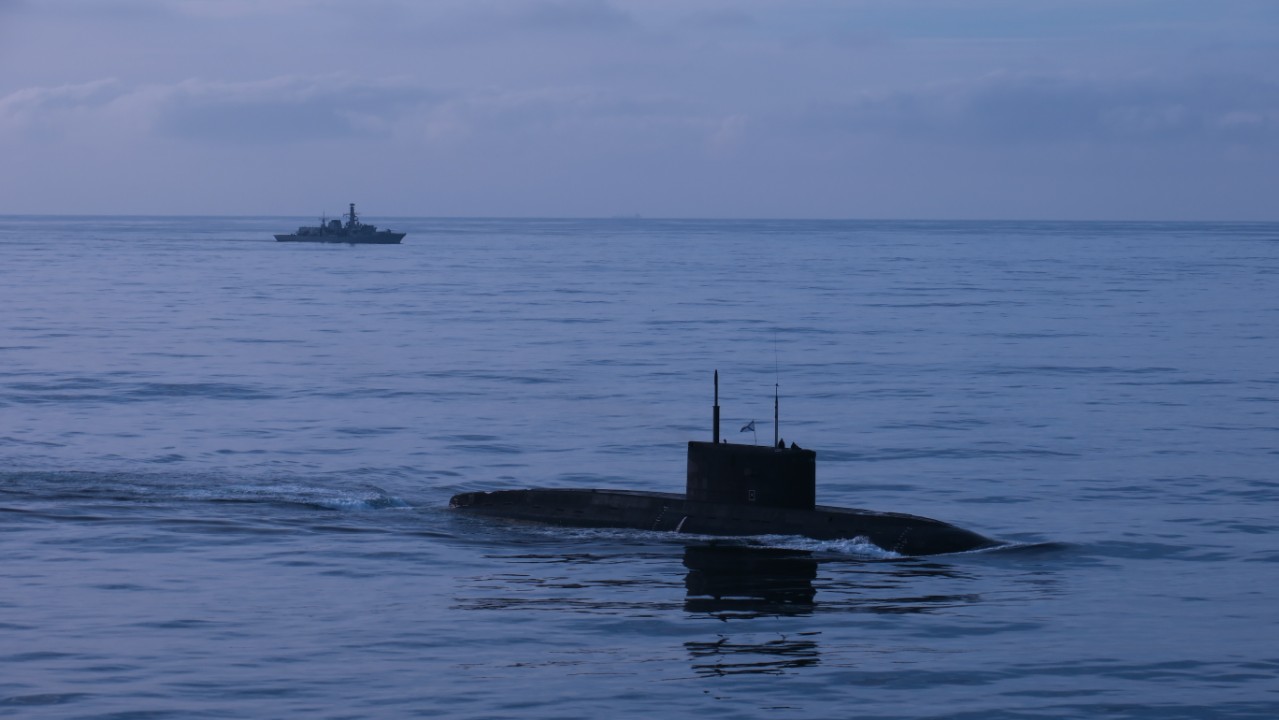
Mr. Downie then expanded his challenge, noting that Russia has already undertaken all the aforementioned activities. He continued by asking whether actions such as poisoning UK citizens on British soil, launching drones from “shadow fleet” vessels to monitor UK airbases, recruiting activists via messaging applications to commit arson attacks against property, endangering a UK aircraft carrier by deploying sonobuoys in its immediate vicinity, or even attempting an arson attack against the British Prime Minister would also fall below the conflict threshold. He reiterated that Russia has, in recent times, undertaken every activity on this extended list.
Each item cited by Mr. Downie corresponds to publicly documented events. For instance, the poisoning of UK citizens refers to the Salisbury poisonings. The disruption of NHS patient care via ransomware alludes to incidents like the Synnovis ransomware attack, which was linked to patient deaths. The laser incidents targeting RAF pilots relate to events where RAF P-8 crews monitoring vessels like the Yantar were subjected to laser threats. The significant cyberattack on a major UK business is understood to reference incidents such as the Jaguar Land Rover attack, which has been attributed to a Russian group. The endangering of a UK aircraft carrier by sonobuoys points to a recent event in the Norwegian Sea, where a Russian Tu-142 aircraft dropped dozens of sonobuoys close to HMS Prince of Wales. Mr. Downie referenced the investigative work of Emma Burrows of the Associated Press as a resource for those seeking to track these patterns across Europe. He concluded this segment of his address by posing a fundamental question: “At what point do governments in the UK say enough is enough?”
The MP further contended that clarity itself serves as a vital component of deterrence. He articulated that “preparedness for war is not warmongering” and that “war fighting readiness begins long before the first shot is fired.” However, he stressed that this readiness must be founded upon an honest appraisal and acknowledgment of the threats confronting the nation. He urged the government to transparently define for both the public and potential adversaries what it considers to be “sub-threshold” activities. Such preparedness and public clarity, he argued, are the most effective means to ensure that Vladimir Putin and his associates never conclude that Britain lacks either the capacity or the resolve to defend itself.
Responding to Mr. Downie, Calvin Bailey, the Parliamentary Under-Secretary of State for Defence and Minister for Veterans and People, expressed agreement with the underlying argument for greater openness with the public. Mr. Bailey, the Labour MP for Leyton and Wanstead, stated, “I believe he’s absolutely right. I actually think one of the ways we can go about building trust in government and building trust in how government responds to a crisis is by trusting the people with the information.” He suggested that an informed public would be better positioned to advocate for necessary government action, adding, “I think we must use our secrets more effectively.”
The minister also advocated for moving beyond a narrow focus on defence spending percentages. He asserted that “the central question cannot just be whether we spend 3 per cent or 3.5 per cent, or some other percentage of GDP. The real question must be what capability are we creating.” He credited the Defence Investment Plan, despite its implementation delays, with a commitment to “fighting the next war and not the last one.” Mr. Bailey highlighted perceived improvements in pay, housing, and support for serving personnel and their families as factors contributing to increased recruitment, retention, and morale. He also welcomed the decision to construct six Common Combat Vessels as part of the UK’s adaptation to hybrid warfare.
This parliamentary debate follows a period of sustained pressure from Mr. Downie on this issue. He had previously submitted written questions to the MOD seeking definitions for “sub-threshold” activities and clarification on what would constitute crossing the threshold of conflict, which had elicited the response that such details could assist adversaries. Furthermore, he had commented to the UK Defence Journal after the theft of government login credentials, calling for a rapid increase in UK preparedness and for the public to be made aware of the real-world impact of these attacks on their daily lives.
Why This Matters
The parliamentary debate initiated by Graeme Downie carries significant implications for the United Kingdom’s national security, international standing, and the evolving nature of global conflict. The central call for a clear definition of the “threshold of conflict” is not merely an academic exercise; it underpins the very effectiveness of deterrence in an era dominated by hybrid warfare tactics.
Firstly, **National Security and Deterrence:** Ambiguity surrounding what constitutes an act of war or a hostile act that demands a robust response can embolden adversaries. If a nation, such as Russia, can repeatedly engage in cyberattacks, espionage, sabotage, and even direct physical harm (like poisonings) without clearly crossing a defined red line, it creates a permissive environment for continued aggression. A clear threshold, publicly articulated, aims to communicate to potential aggressors the precise consequences of their actions, thereby enhancing the UK’s deterrent posture and potentially preventing escalation to more overt forms of conflict.
Secondly, **International Relations and Alliances:** The UK’s ability to respond coherently and decisively to hybrid threats also impacts its relationships with allies. NATO, for instance, operates under the principle of collective defence (Article 5), but the application of this article to non-traditional attacks remains a complex area. By defining its own thresholds, the UK contributes to the broader international discussion on how democratic nations collectively respond to such challenges. Clarity from one nation can encourage similar clarity from others, strengthening collective security frameworks against state-sponsored hostile activities.
Thirdly, **Public Awareness and Societal Resilience:** As Mr. Downie and Minister Bailey both acknowledged, informing the public about the nature and scale of threats is crucial. Hybrid warfare specifically targets societal resilience, aiming to sow discord, erode trust in institutions, and disrupt daily life. When citizens understand that incidents like ransomware attacks on the NHS or cyberattacks on critical infrastructure are not isolated criminal acts but potentially part of a sustained state-level confrontation, they can better understand government responses and contribute to national resilience. Public understanding fosters trust and enables a more unified national response to crisis.
Fourthly, **Defence Policy and Investment:** The debate directly challenges the UK’s defence planning and resource allocation. If the nation is indeed in a “sustained confrontation” that falls “below the threshold” of traditional warfare, then defence spending and strategy must adapt to counter these specific threats. Minister Bailey’s emphasis on “capability creation” over mere spending percentages underscores this shift. It implies a need for investment in cyber defences, intelligence gathering, information warfare capabilities, and other tools relevant to countering hybrid threats, alongside conventional military strength. The acquisition of Common Combat Vessels is cited as an example of this adaptation to hybrid warfare.
Finally, **Defining the Future of Conflict:** This discussion reflects a broader global challenge in adapting to the evolving nature of conflict in the 21st century. The lines between peace and war have become increasingly blurred. Understanding and articulating these new boundaries is essential for states to protect their sovereignty, interests, and populations without inadvertently escalating conflicts or, conversely, failing to respond effectively to genuine threats. The UK’s parliamentary debate represents a significant step in confronting this complex reality and shaping its future national security posture.