
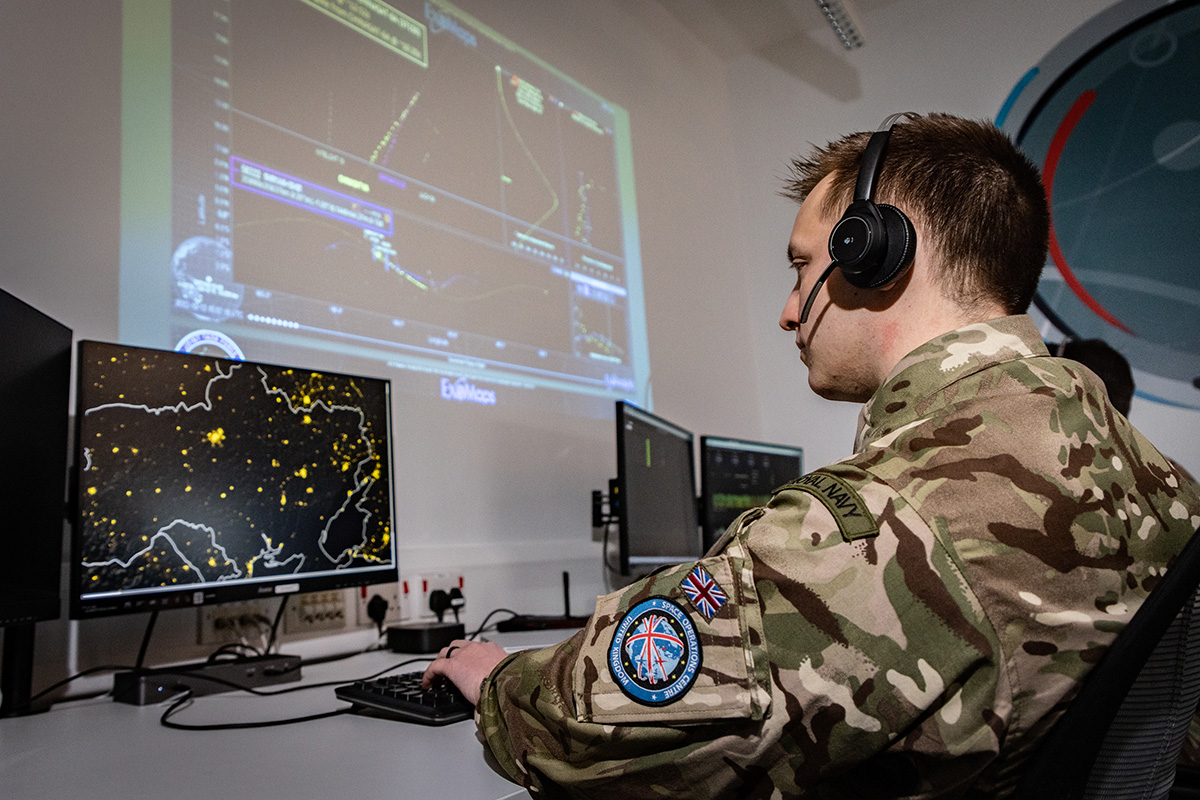
United Kingdom Establishes First Space Warfare Unit to Counter Hostile Activities
The Royal Air Force (RAF) today announced the formation of No. III Space Effects Squadron, a pioneering British military unit specifically tasked with disrupting, degrading, and denying hostile activities in outer space. This move, disclosed by the Ministry of Defence, marks a significant step in the United Kingdom’s efforts to safeguard its interests and capabilities in the increasingly contested space domain.
The establishment of the squadron was unveiled by the Chief of the Air Staff, Air Chief Marshal Sir Harv Smyth, at the inaugural UK Space Power Conference. The new unit is designed to integrate specialist personnel from across the armed forces, focusing on countering adversarial actions in orbit and protecting the critical satellite infrastructure upon which the nation’s security, economy, and daily life depend.
During his address, Sir Harv emphasized the evolving nature of space, stating, “Space no longer supports operations from the sidelines. It’s a domain of direct competition, where our military advantage can be won or lost.” He further underscored the squadron’s mandate to “safeguard the vital benefits that space gives to our integrated armed forces, and will be capable of denying those benefits to our adversaries.” This statement highlights the recognition within the UK’s defence establishment that space is now a frontline for strategic competition.
No. III Space Effects Squadron completes a strategic trio of units within the Royal Air Force’s space command structure. Its predecessors, No. I Space Operations Squadron, are responsible for monitoring activities in orbit, providing the RAF with comprehensive situational awareness regarding objects and events in space. No. II Space Warning Squadron, in turn, offers alerts regarding potential threats emerging in space that could impact UK or allied assets. The newly formed No. III Squadron will be the operational arm, designed to actively respond to these identified threats. The Ministry of Defence confirmed that this response will involve advanced technologies, including electronic warfare capabilities, which typically involve interfering with an adversary’s electronic systems or communications. The squadron’s mandate encompasses both offensive and defensive space operations and is expected to expand its capabilities as new technologies and strategies are developed and integrated into service.
The formation of No. III Space Effects Squadron is presented by the Ministry of Defence as a direct contribution to developing the UK’s indigenous capabilities for space warfare. This includes strengthening expertise in electronic warfare, which can be used to disrupt satellite communications or navigation signals, and developing countermeasures against anti-satellite weapons, which are designed to disable or destroy spacecraft. The unit’s creation is also a tangible delivery of the “Control of Space Requirement,” a key objective outlined in the UK Space Strategy published earlier this month. This requirement articulates the UK’s ambition to maintain its freedom to operate effectively in space, while simultaneously possessing the capacity to deny similar freedom to potential adversaries who might seek to undermine global stability or target British assets in orbit. This strategy seeks to ensure that the UK can both utilize space for its own purposes and prevent others from using it against UK interests.
Despite these advancements in space defence capabilities, the United Kingdom maintains a clear stance against the weaponization of space through destructive means. The government has formally committed to not conducting destructive anti-satellite missile testing, a practice known to generate long-lived and dangerous debris fields that threaten all orbital operations and could render parts of space unusable. Furthermore, the Ministry of Defence reiterated its ongoing commitment to working through international forums, specifically the United Nations Committee on the Peaceful Uses of Outer Space (UNCOPUOS), to advocate for and promote norms and principles of responsible behaviour in orbit. This dual approach emphasizes the government’s dedication to the peaceful and sustainable use of space, alongside its imperative to protect critical national infrastructure in orbit from hostile acts, distinguishing between responsible defensive measures and potentially destabilizing destructive actions.
Accompanying the announcement of the new squadron, the department also reconfirmed a substantial investment of £880 million allocated between the fiscal years 2026/27 and 2029/30. This funding is earmarked for enhancing space-based intelligence, surveillance, and reconnaissance (ISR) capabilities, which provide critical data for military and civilian applications, as well as strengthening broader space control activities. These investments align with the findings of the Strategic Defence Review, which explicitly identified the ability to operate in, from, and through space as fundamental to underpinning British security, prosperity, and daily life, recognizing space as a foundational domain for national welfare.
Further underscoring the UK’s strategic commitment to space, the Defence Investment Plan includes participation in the Deep Space Advanced Radar Capability (DARC) program. This trilateral initiative, involving the United States and Australia, aims to establish a network of advanced radar systems for continuous surveillance of geostationary orbit. Geostationary orbit, located approximately 36,000 kilometres above the Earth, is crucial for many communication and intelligence satellites. The British site for DARC is scheduled to commence construction in April 2027, highlighting a long-term vision for comprehensive space situational awareness and defence collaboration with key allies to monitor distant orbital threats.
Why This Matters
The formation of No. III Space Effects Squadron represents a pivotal shift in the United Kingdom’s defence posture, reflecting the growing strategic importance and vulnerability of outer space. This development carries significant implications for national security, economic stability, international relations, and the future of global defence.
National Security and Deterrence:Satellites are integral to modern military operations, providing essential capabilities for communication, navigation, intelligence gathering, and precision targeting. By establishing a dedicated unit to disrupt and deny hostile space activities, the UK aims to protect these vital assets and maintain its operational advantage. This capability also serves as a deterrent, signaling to potential adversaries that any attempt to interfere with British or allied space infrastructure will face a robust, active response. It moves the UK beyond merely observing threats to actively countering them with specific, non-destructive measures.
Economic and Societal Resilience:Beyond military applications, space-based services underpin vast sectors of the UK economy and daily life. From GPS-dependent logistics and financial transactions to weather forecasting, broadband internet, and broadcast media, a disruption to satellite services could have catastrophic economic and social consequences. The squadron’s mission directly contributes to safeguarding these critical civilian infrastructures, ensuring the continuity of essential services and national resilience against targeted attacks or broader space-based disruptions, thereby protecting the everyday functioning of the nation.
Evolving Nature of Warfare:This move acknowledges that space is no longer solely a domain for scientific exploration or passive support. It has become a crucial arena for strategic competition, mirroring traditional land, sea, and air domains. The UK’s investment in “space effects” capabilities, such as electronic warfare, signals an adaptation to the modern battlespace where non-kinetic means of engagement are increasingly prevalent. It highlights the growing importance of cyber and electronic warfare in conjunction with conventional military strategies, indicating a broader shift in how nations approach conflict in the 21st century.
International Collaboration and Responsible Conduct:While developing offensive and defensive space capabilities, the UK simultaneously reaffirms its commitment to international norms and responsible behaviour, notably ruling out destructive anti-satellite testing. This dual approach seeks to balance national security imperatives with the broader goal of preventing an unregulated arms race in space. By working through the UN, the UK aims to shape global governance of space, promoting sustainability and avoiding the creation of hazardous debris that could imperil all space users. Its collaboration with allies like the US and Australia on programs like DARC also strengthens collective security and shared situational awareness in space, fostering a cooperative approach to a shared challenge.
Technological Advancement and Strategic Autonomy:The significant investment in space-based intelligence, surveillance, reconnaissance, and control activities, coupled with the DARC program, will drive technological innovation and foster specialized expertise within the UK’s defence and scientific communities. This not only enhances the UK’s strategic autonomy in space, ensuring it can operate independently when necessary, but also positions it as a key player in the development of future space technologies and defence capabilities, contributing to its standing on the global stage as a technologically advanced and responsible space power.