
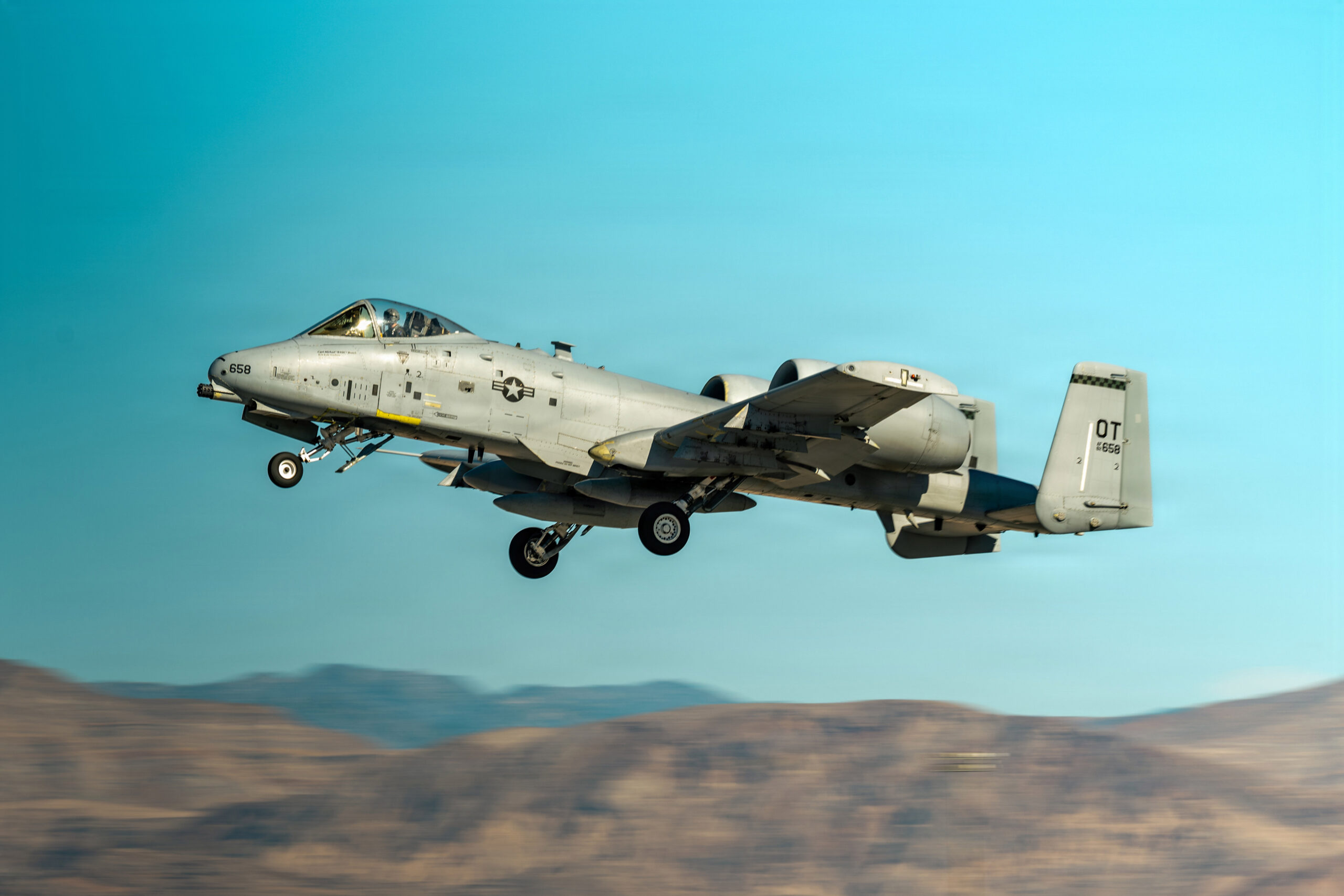
Nellis Air Force Base, Nevada – a prominent center for the training, operational testing, and maintenance of the A-10 Thunderbolt II aircraft – officially concluded its nearly five-decade-long association with the venerable “Warthog” on September 22, 2026. The departure marked a significant milestone in the U.S. Air Force’s ongoing efforts to modernize its fleet and transition its capabilities.
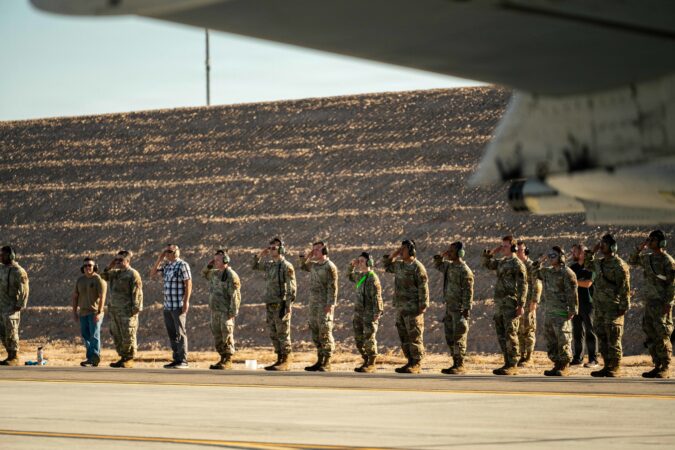
According to an Air Force statement released on September 23, approximately 70 Airmen gathered on the Nellis flightline to render a final salute as the last A-10 based at the installation took off. This ceremonial event honored the aircraft’s long service and the personnel who supported its mission for decades.
Nellis Air Force Base had been a pivotal location for A-10 operations since 1977, serving as the Air Force’s primary proving ground for the aircraft’s tactical employment. Over the years, units stationed at Nellis were instrumental in the continuous refinement of the A-10’s software, avionics, and precision weapons systems. The base’s U.S. Air Force Weapons School, specifically its 66th Weapons Squadron, played a crucial role in developing expert pilots, having trained over 300 A-10 weapons officers across 100 specialized classes.
Known for its distinctive design, heavy armor, and the formidable GAU-8 Avenger 30mm Gatling gun, the A-10 Thunderbolt II was initially conceived during the Cold War as a dedicated anti-tank platform, designed to counter potential Soviet armored incursions across Europe. Its robust construction allowed it to sustain significant battle damage and remain operational. The aircraft’s combat debut in the Gulf War against Iraqi forces underscored its effectiveness in this original role, destroying numerous armored vehicles.
In subsequent conflicts, particularly during the Global War on Terror, the A-10 adapted to become a highly reliable and valued close air support (CAS) aircraft. It became best known for providing critical protection and precision firepower for U.S. and allied ground troops engaged in various insurgent operations in Afghanistan and Iraq, earning deep respect from soldiers and Marines for its ability to remain on station for extended periods and deliver decisive fire.
Beyond its direct ground support, the A-10 also performed a vital mission dubbed “Sandy,” providing armed escort, reconnaissance, and suppression of enemy air defenses during combat search and rescue (CSAR) operations. A recent example of its continued relevance in this capacity occurred in April 2026, when A-10s supported the successful rescue of two F-15E aircrew members who were shot down during operations in Iran.
For many years, the Air Force has consistently advocated for the retirement of its A-10 fleet. The primary rationale cited was concerns about the aircraft’s survivability in highly contested airspace against advanced adversaries, a scenario differing significantly from the low-threat environments it typically operated in during counter-insurgency campaigns. These retirement proposals historically faced strong congressional opposition, largely stemming from bipartisan concerns about maintaining robust close air support capabilities for ground forces and the A-10’s unique effectiveness in that specific role.
However, congressional resistance has gradually diminished in recent years as the Air Force articulated its modernization strategy more clearly. The service had initially planned to retire all 162 remaining A-10s by the end of fiscal year 2026. This timeline was subsequently adjusted following the outbreak of hostilities in Iran and the aforementioned F-15E rescue mission, with the Pentagon announcing a delay for the retirement of a portion of the fleet until at least 2030, acknowledging the aircraft’s continued utility in certain scenarios.
Despite this partial delay, the process of phasing out the A-10 and its supporting infrastructure is actively underway across the U.S. Air Force. Davis-Monthan Air Force Base in Arizona, another significant hub for A-10 operations and training, graduated its final class of Warthog pilots in April 2026 and conducted farewell flights for its last aircraft in July of the same year. Concurrently, the primary maintenance depot for the A-10, located at Hill Air Force Base, Utah, also ceased its operations earlier this year, signaling the comprehensive winding down of the platform’s support network.
The Air Force has consistently emphasized that while the A-10 is being retired, its commitment to robust close air support capabilities remains steadfast. The service states that the foundational tactical expertise, operational roles, and personnel previously associated with the A-10 are being systematically transitioned to multirole and advanced fighter platforms across the Air Force to ensure continuity and adapt to future threats.
The F-35 Lightning II, for instance, is being increasingly tasked with close air support and combat search-and-rescue roles. The Air Force highlights the F-35’s fifth-generation stealth capabilities, advanced sensor suites, and secure data-sharing networks as critical assets for performing precision ground support missions, particularly within contested operational environments where the A-10’s survivability would be severely challenged.
Lieutenant Colonel Ridge Flick, commander of the 66th Weapons Squadron, elaborated on this transition in the Air Force statement. He noted, “We are maintaining the culture of the A-10 by involving as many other fighter communities involved in the close air support mission. We are also training F-15 Eagle, F-35 Lightning II and F-16 Fighting Falcon pilots to take on some roles we have had in combat search and rescue.” This approach aims to disseminate the specialized knowledge and tactics developed over decades of A-10 operations across multiple platforms.
Furthermore, Flick confirmed that the 66th Weapons Squadron will continue its vital role in training combat rescue officers, pararescue Airmen, special tactics officers, and combat controllers, ensuring the continuity of these specialized skills essential for complex rescue operations.
Personnel previously assigned to the 757th Aircraft Maintenance Squadron’s Thunder Aircraft Maintenance Unit at Nellis, responsible for A-10 repair and sustainment, are being reassigned to other squadrons and modern airframes such as the F-35 and F-16. The Air Force notes that the “discipline that A-10 maintainers developed over 50 years of managing airframe fatigue, wing replacements and depot-level overhauls is being integrated into those newer flight line programs,” underscoring the transfer of invaluable institutional knowledge and experienced personnel to new platforms.
Why This Matters
The cessation of A-10 Thunderbolt II operations at Nellis Air Force Base, a long-standing hub for the aircraft, signifies a crucial juncture in the U.S. Air Force’s strategic evolution. This event is more than just the retirement of an old airframe; it reflects broader shifts in defense priorities and military doctrine.
Firstly, it underscores the Air Force’s strategic pivot from prolonged counter-insurgency operations, where the A-10 excelled, to preparing for potential conflicts with technologically advanced peer adversaries. In such high-threat environments, the emphasis shifts from a durable, specialized platform to multi-role fighters capable of operating with stealth, advanced networking, and integrated sensor suites. The A-10’s vulnerability in contested airspace was a primary driver for its planned retirement.
Secondly, the transition raises important questions about the future of close air support (CAS) for ground troops. While the Air Force asserts that modern platforms like the F-35 can effectively assume CAS roles, the A-10’s unique attributes—its long loiter time, formidable GAU-8 cannon, ruggedness, and psychological impact—have historically made it an irreplaceable asset for ground forces. The successful adaptation of newer aircraft and the training of their pilots to replicate the effectiveness and responsiveness of A-10 CAS will be critical for maintaining ground force confidence and operational superiority in future engagements.
Finally, this development has significant implications for resource allocation and modernization. Phasing out the A-10 fleet frees up substantial financial, maintenance, and personnel resources that can be redirected towards the acquisition, sustainment, and development of next-generation aircraft and technologies. This reallocation is essential for the Air Force’s broader modernization efforts, ensuring it remains competitive and capable in a rapidly evolving global threat landscape. The transfer of specialized skills from A-10 maintainers and pilots to other platforms is also a vital aspect of preserving institutional knowledge and ensuring a seamless transition of critical capabilities.