
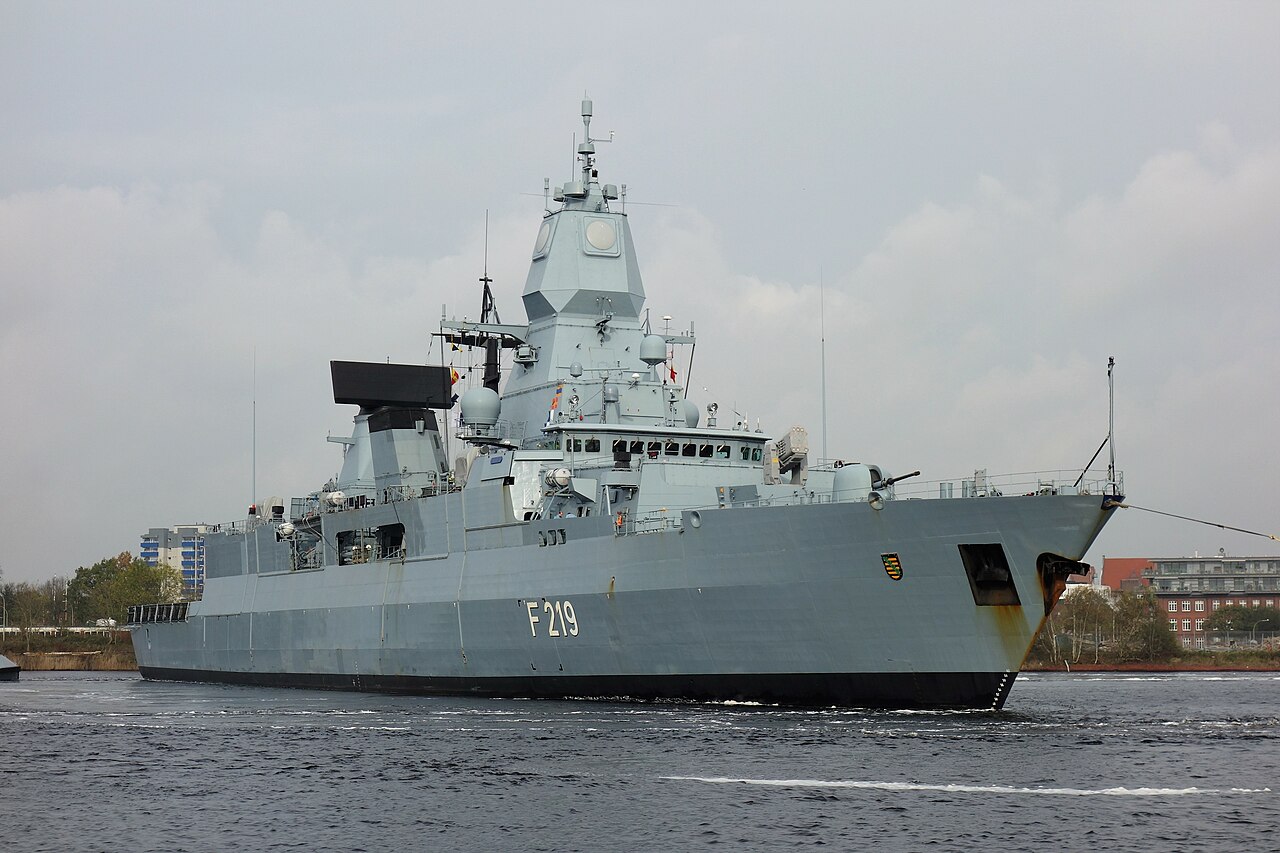
Germany is poised to assume command of a NATO naval contingent in the North Atlantic, with the frigateSachsenbecoming the lead vessel, taking over from the Royal Navy’s HMSDragon, as reported by the German Embassy in London.
This transition occurs concurrently with HMSDragon‘s deployment to the eastern Mediterranean, where the Type 45 destroyer has arrived to bolster regional security missions, encompassing the defence of Cyprus.
Berlin indicated this action mirrors a broader expansion of German military assets in the North Atlantic under NATO’s umbrella, and characterized the shift as an indication of robust UK-Germany collaboration.
These two naval vessels embody some of the most proficient anti-air warfare systems in their respective navies, albeit designed with differing philosophies.
HMSDragon, a Type 45 destroyer with a displacement of approximately 8,000 to 8,500 tonnes, is fundamentally structured around the Sea Viper air defence system. This integrates the SAMPSON radar with Aster 15 and Aster 30 missiles to deliver area air defence against aerial and projectile dangers. The class is engineered for advanced aerial combat, featuring sophisticated sensor integration and extended-range engagement capacity.
Conversely,Sachsen, a 5,800-tonne German frigate, is outfitted with a multi-tiered air defence suite centred on the SMART-L long-range radar and APAR fire control radar, coupled with SM-2 and ESSM missiles deployed from a 32-cell Mk 41 vertical launch configuration. Despite its reduced size compared to the Type 45, the Sachsen-class is conceived to offer naval formation air defence within NATO contingents, in addition to anti-surface and anti-submarine capacities.
Each vessel houses embarked helicopters and an assortment of close-range armaments, countermeasures, and electronic combat packages, allowing them to function as pivotal hubs within diverse national naval groups.