
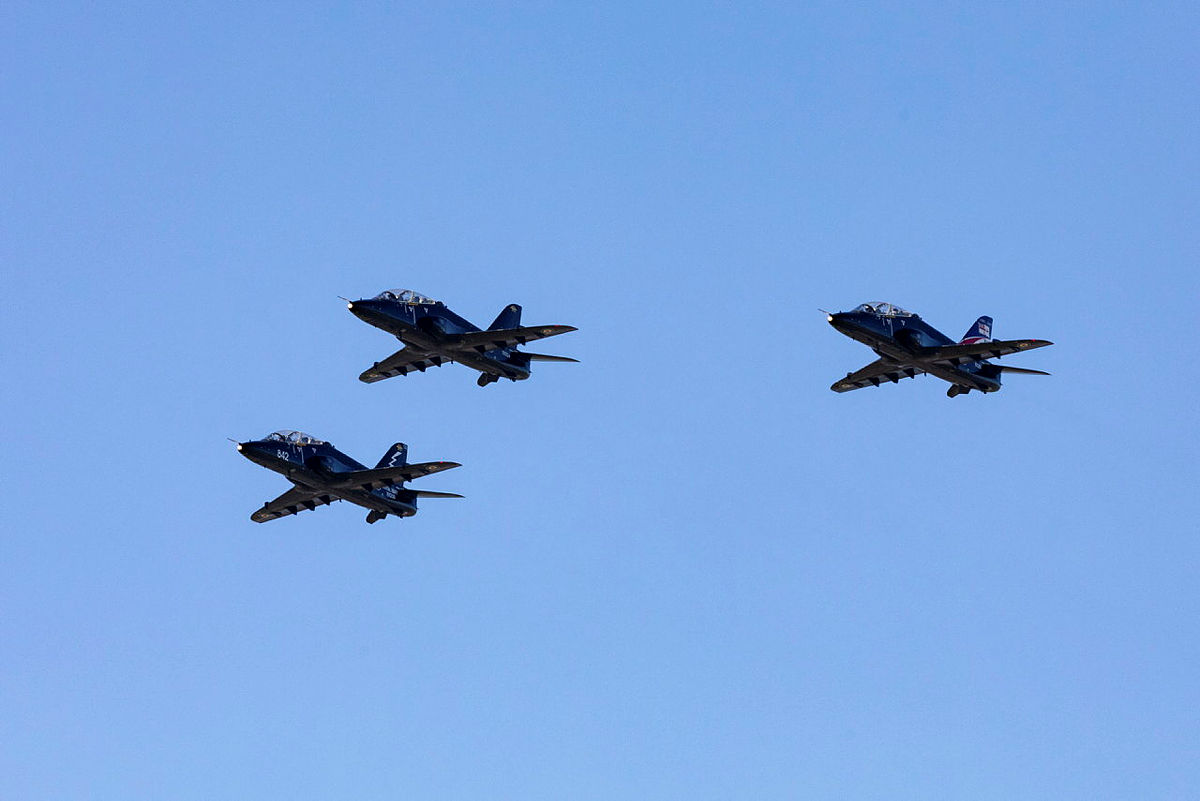
RAF Hawk T2 Jet Crashes Near Anglesey Base; Emergency Services Respond Following Crew Ejection
Anglesey, Wales – September 23, 2026– A BAE Systems Hawk T2 jet, operated by the Royal Air Force (RAF), crashed near RAF Valley in Anglesey, North Wales, on Wednesday afternoon. Emergency services, including air ambulance and Coastguard assets, were promptly dispatched to the incident site. Both crew members onboard the aircraft were reported to have ejected safely prior to the crash.
The incident occurred in the vicinity of the Royal Air Force base, a crucial training facility for the UK military. Eyewitness accounts suggest the aircraft encountered difficulties shortly after takeoff. One individual, observing from the shoreside, described witnessing the jet taking off and identifying what appeared to be flames. The eyewitness further stated that the aircraft subsequently pitched violently twice before both pilots ejected, with the Hawk then crashing approximately a mile away.
Following the report of the crash, a comprehensive multi-agency response was initiated. An air ambulance from Caernarfon was dispatched towards the RAF Valley area, alongside a Coastguard helicopter, highlighting the immediate concern for the welfare of the ejected crew. Local police and fire services also converged on the scene.
The Royal Air Force confirmed the incident, stating, “An incident involving an RAF T2 Hawk aircraft, flying out of RAF Valley, occurred near Anglesey. An investigation is underway and we will not comment further at this time.” This statement underscores the standard protocol for military aviation accidents, where initial focus is on emergency response and securing the site, followed by a thorough investigation into the cause.
North Wales Police provided further details regarding the coordinated response. Their statement noted, “Officers are currently in attendance to reports of an incident involving an RAF training aircraft in the Pencarnisiog area of Anglesey, alongside colleagues from the Royal Air Force, North Wales Fire and Rescue Services, Welsh Ambulance Service University Health Trust and Helimed. Please avoid the area until further notice. Updates will be issued when appropriate.” The request for the public to avoid the area is typical in such situations, ensuring emergency personnel can operate unimpeded and to secure potential debris fields.
The Role of RAF Valley and the Hawk T2 Aircraft
RAF Valley holds significant importance within the UK’s military aviation infrastructure. It serves as the primary centre for advanced fast-jet training for the Royal Air Force, playing a pivotal role in the UK Military Flying Training System (UKMFTS). The base is where aspiring fighter pilots undergo rigorous instruction before progressing to frontline aircraft.
The Hawk T2 aircraft, the specific model involved in the crash, is a two-seat advanced jet trainer integral to this system. Its primary purpose is to prepare pilots for flying sophisticated frontline fast jets, including the Eurofighter Typhoon and the F-35B Lightning II stealth fighter. The Hawk T2’s advanced cockpit and integrated training systems are designed to simulate a wide range of combat-air operations, allowing crews to practice complex tactical flying, simulated weapons employment, and other critical skills in a controlled environment before transitioning to operational conversion units. This makes it a foundational element in developing the UK’s combat air capabilities.
Powered by a Rolls-Royce Adour turbofan engine, the Hawk T2 replaced the earlier Hawk T1 in the RAF’s advanced training role, offering enhanced capabilities commensurate with modern fighter aircraft. RAF Valley has a long-standing history spanning decades as a hub for fast-jet flying training, with Hawk sorties routinely conducted over North Wales and the surrounding sea areas as part of its continuous training mandate. These training flights are essential for maintaining the proficiency and readiness of the RAF’s pilot corps.
Investigation and Safety Protocols
The immediate aftermath of such an incident involves several critical phases. The priority is ensuring the safety and well-being of the ejected crew members, followed by securing the crash site to prevent further hazards and preserve evidence. A comprehensive investigation will be launched by the Defence Accident Investigation Branch (DAIB) or a similar military safety authority. This process typically involves meticulously examining the wreckage, interviewing witnesses and ground crew, reviewing flight data recorders, and analyzing maintenance records. The goal is to determine the precise cause of the crash, which could range from mechanical failure to human error or external factors. The findings of such investigations are crucial for implementing preventative measures and enhancing aviation safety protocols across the military.
Why This Matters
The crash of an RAF Hawk T2 jet near Anglesey carries significant implications across several domains:
Military Aviation Safety:This incident immediately raises questions about military aviation safety protocols and the operational reliability of advanced training aircraft. While military flying inherently involves risks, any crash triggers a thorough review to identify potential systemic issues, design flaws, or training deficiencies. The findings of the investigation will be critical for preventing future incidents and maintaining confidence in the UK’s military aviation programs.
Pilot Training and Readiness:The Hawk T2 is a cornerstone of the UK’s fast-jet pilot training pipeline. An incident like this can lead to temporary disruptions in training schedules as investigations proceed and any necessary safety modifications or checks are implemented across the fleet. Ensuring a continuous supply of highly trained pilots for frontline aircraft like the Typhoon and F-35B is vital for national defense, making the integrity and efficiency of the training system paramount.
Personnel Welfare and Morale:The safe ejection of the two crew members is a relief, but the incident underscores the dangers faced by military personnel during training. The well-being of the pilots, both physically and psychologically, is a primary concern. Such events can also impact the morale of other aircrews and ground personnel, highlighting the inherent risks in their demanding profession.
Economic and Operational Costs:The loss of an advanced trainer aircraft like the Hawk T2 represents a significant financial cost, not only for the value of the aircraft itself but also for the resources required in the investigation, potential recovery efforts, and eventual replacement. Furthermore, any temporary grounding or operational limitations imposed on the Hawk T2 fleet could have wider implications for the readiness and training tempo of the RAF.
Public Trust and Local Community Impact:Military accidents, particularly those occurring near populated areas, can generate public concern and impact relations with local communities. The prompt and transparent handling of the investigation and communication with the public are essential for maintaining trust. For residents near RAF Valley, this incident serves as a stark reminder of the realities of military operations in their vicinity.
In conclusion, while the safe ejection of the pilots is a positive outcome, the crash of the Hawk T2 initiates a crucial process of inquiry and reflection within the Royal Air Force. The eventual findings will not only shed light on the specific circumstances of this event but will also inform future safety policies and operational procedures, ultimately contributing to the long-term effectiveness and security of the UK’s air defense capabilities.