
Audio of this article is brought to you by the Air & Space Forces Association, honoring and supporting our Airmen, Guardians, and their families. Find out more at afa.org
Tensions in the Persian Gulf escalated significantly on May 7, 2026, as the United States military conducted strikes against Iranian targets near the Strait of Hormuz. The strikes, which U.S. officials described as defensive actions, occurred amidst conflicting statements regarding the status of a month-old ceasefire between the U.S. and Iran.
U.S. Central Command (CENTCOM), which oversees American forces in the Middle East, issued a statement indicating that its forces “eliminated inbound threats and targeted Iranian military facilities responsible for attacking U.S. forces, including missile and drone launch sites; command and control locations; and intelligence, surveillance, and reconnaissance nodes.” The specific locations targeted were reportedly Qeshm Island, Bandar Abbas, and an Iranian naval facility in Minab, according to Fox News and Iranian state media, which reported explosions in the first two areas.
Despite the military engagement, U.S. officials maintained that they were still working to preserve the ceasefire agreement. President Donald Trump, in an interview with ABC News, characterized the U.S. actions as “just a love tap” and asserted, “The ceasefire is going. It’s in effect.” CENTCOM further emphasized that it “does not seek escalation but remains positioned and ready to protect American forces.”
The U.S. account of the events leading to the strikes described an attack on American naval vessels. According to CENTCOM, the guided-missile destroyers USS Truxtun, USS Rafael Peralta, and USS Mason were transiting the Strait of Hormuz towards the Gulf of Oman when they were reportedly attacked. The attack involved multiple Iranian missiles, drones, and small boats—tactics frequently associated with Iran’s Islamic Revolutionary Guard Corps (IRGC) in the narrow waterway. The IRGC Navy claimed responsibility for the assault. Both a U.S. official and the IRGC stated that Iran employed a combination of ballistic missiles, cruise missiles, and drones against the American ships. President Trump later stated in a social media post that the Iranian boats involved were destroyed and that the incoming Iranian projectiles were successfully intercepted by U.S. forces. While Iran claimed its attack had successfully damaged the U.S. destroyers, CENTCOM reported that no American assets sustained harm.
CENTCOM characterized the Iranian attacks as “unprovoked” and stated that the U.S. response constituted “self-defense strikes.” In contrast, Iranian officials accused the United States of violating the existing ceasefire agreement. President Trump, addressing the situation, issued a stark warning to Iran, stating on social media, “[J]ust like we knocked them out again today, we’ll knock them out a lot harder, and a lot more violently, in the future, if they don’t get their Deal signed, FAST!”
There remained ambiguity regarding the precise sequence of events, specifically whether the U.S. forces had been attacked prior to the commencement of U.S. strikes on Iranian territory. The Pentagon declined to provide further details on the incident, referring inquiries to CENTCOM’s public statement. A spokesperson for CENTCOM also did not offer additional clarification beyond the command’s initial message.
The U.S. targets during the retaliatory strikes reportedly included Iranian drone launching sites, coastal radars, and coastal anti-ship cruise missile sites, as confirmed by a senior U.S. official. These strikes followed earlier events in the region, including reported attacks on the United Arab Emirates and its oil hub of Fujairah on May 5, which U.S. officials, including Chairman of the Joint Chiefs of Staff Air Force Gen. Dan Caine, had initially downplayed. This occurred as they unveiled “Project Freedom,” an American initiative aimed at protecting shipping in the Strait of Hormuz.
The U.S. military has been actively enforcing a blockade of Iranian ports, a policy that led to a dramatic incident on May 6, 2026. During this event, a U.S. Navy F/A-18 Super Hornet fighter jet, launched from the USS Abraham Lincoln aircraft carrier, reportedly fired its 20mm cannon at the rudder of an Iranian oil tanker, M/T Hasna, as it attempted to breach the blockade and reach an Iranian port in the Gulf of Oman.
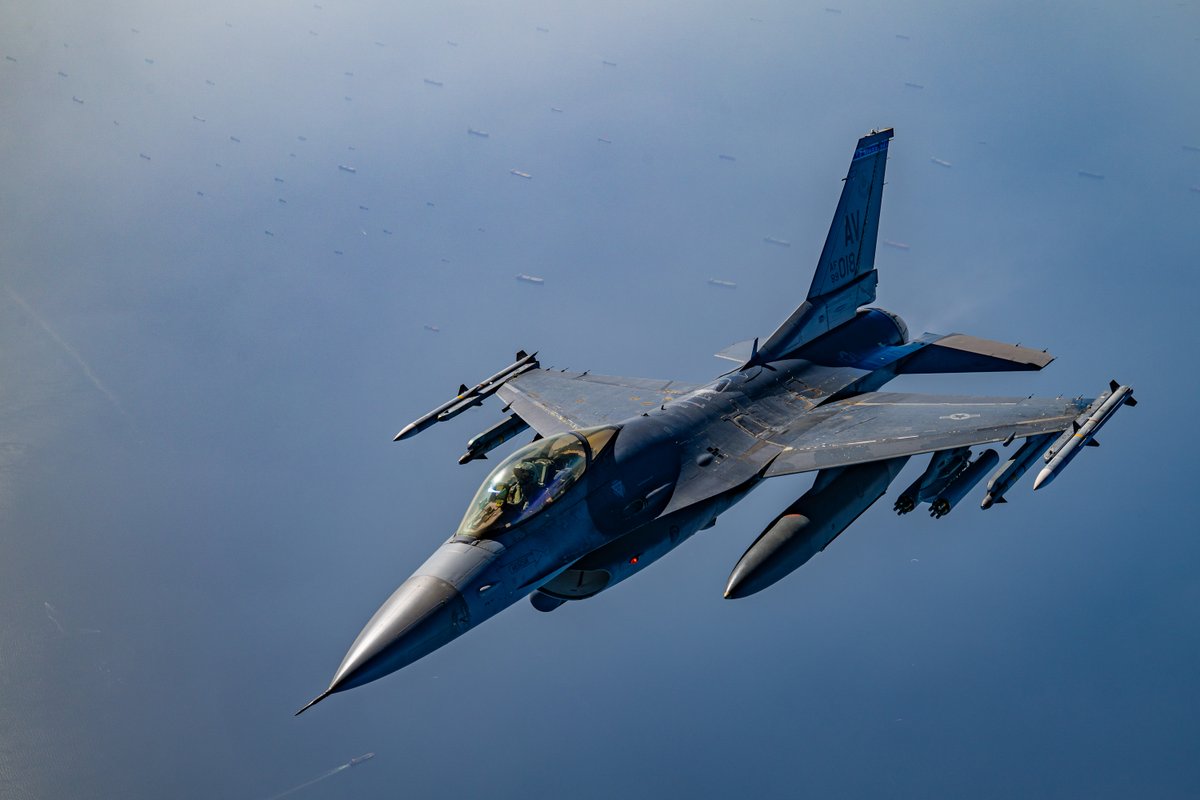
Secretary of Defense Pete Hegseth, in a May 5 press conference at the Pentagon alongside Gen. Caine, underscored the American commitment to the region: “American destroyers are on station, supported by hundreds of fighter jets, helicopters, drones, and surveillance aircraft, providing 24/7 overwatch for peaceful commercial vessels.”
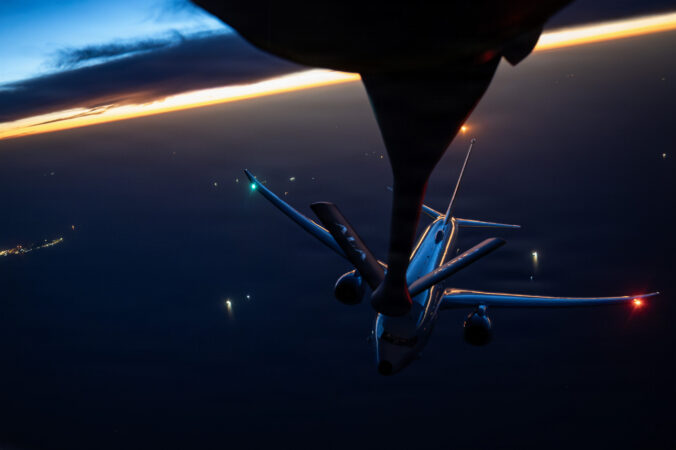
However, U.S. operations in the region faced temporary setbacks when Saudi Arabia and Kuwait suspended the U.S. military’s use of their bases and airspace. This move significantly impacted American airpower, which relies on these facilities for operations involving P-8 Poseidon maritime patrol aircraft, Air Force tankers, E-3 Sentry AWACS battle management planes, and EA-37 Compass Call electronic warfare planes, many of which typically operate from Prince Sultan Air Base in Saudi Arabia. Overflight access to both countries is crucial for U.S. military actions in the Middle East, particularly for supporting the blockade with a vast array of Air Force, Navy, and Marine Corps assets, including over 100 fighters, drones, tankers, and surveillance aircraft. President Trump had abruptly paused “Project Freedom” on May 5. By May 7, the same day the U.S. struck Iranian sites, Saudi Arabia and Kuwait lifted their restrictions on U.S. aircraft, restoring critical operational access.
Why This Matters
The recent military actions in the Strait of Hormuz represent a significant escalation in the ongoing tensions between the United States and Iran, carrying profound implications for regional stability, global economics, and international diplomacy. The Strait of Hormuz is a critical chokepoint, with approximately one-fifth of the world’s total oil consumption and a substantial portion of liquefied natural gas passing through it daily. Any disruption in this waterway, whether from direct military conflict or heightened security concerns, can lead to dramatic spikes in global energy prices and impact international trade routes, affecting economies worldwide.
The ambiguity surrounding the “ceasefire”—with the U.S. claiming it remains in effect even as it conducts strikes, and Iran accusing the U.S. of breaking it—underscores a dangerous lack of clear communication and mutual understanding. This situation increases the risk of miscalculation, where either side could misinterpret the other’s actions, potentially leading to an unintended, broader conflict. President Trump’s strong rhetoric, including threats of “more violent” actions, further complicates diplomatic efforts and hardens positions.
Militarily, these events highlight the sophisticated capabilities and readiness of both U.S. and Iranian forces. The Iranian use of missiles, drones, and small boats demonstrates their asymmetric warfare doctrine designed to challenge larger naval powers in confined spaces. The U.S. response, involving guided-missile destroyers and air assets, showcases its formidable projection of power but also its vulnerability to such tactics. The temporary withdrawal of access to Saudi and Kuwaiti airspace illustrates the delicate balancing act regional partners must perform, as they seek to avoid being drawn into a direct conflict while also maintaining alliances. Such restrictions could severely hinder U.S. operational flexibility and effectiveness in the future.
Diplomatically, the failure to solidify a durable agreement, despite talks of a ceasefire, signals a significant challenge for international mediation efforts. The “Project Freedom” blockade and the incident with the Iranian oil tanker highlight the economic pressure points in the conflict, which could intensify humanitarian concerns and further destabilize the region. The lack of clarity on who attacked first also undermines trust and makes de-escalation more difficult, as each side holds a narrative justifying its actions.
Ultimately, the unfolding situation in the Persian Gulf demands urgent attention from the international community. The potential for a full-scale conflict, with its devastating human and economic costs, remains high as long as military actions continue and diplomatic pathways remain fraught with suspicion and conflicting claims. The implications of this renewed flare-up extend far beyond the immediate belligerents, threatening global energy security and peace.
Audio of this article is brought to you by the Air & Space Forces Association, honoring and supporting our Airmen, Guardians, and their families. Find out more at afa.org