
Severe thunderstorms and a series of tornadoes swept across Mississippi on Wednesday night, inflicting widespread damage, toppling trees, and causing minor injuries to at least four individuals. State officials reported that over 1,000 structures sustained damage during the nocturnal weather event.
The National Weather Service (NWS) had issued tornado warnings for numerous cities and counties throughout the state as the severe weather system approached and passed. Of particular concern was a “particularly dangerous situation” designation issued for Franklin and Adams counties in Mississippi’s southwestern region. This specific alert is reserved by the NWS for instances where the potential for powerful, long-track tornadoes is exceptionally high, indicating a severe threat to life and property.
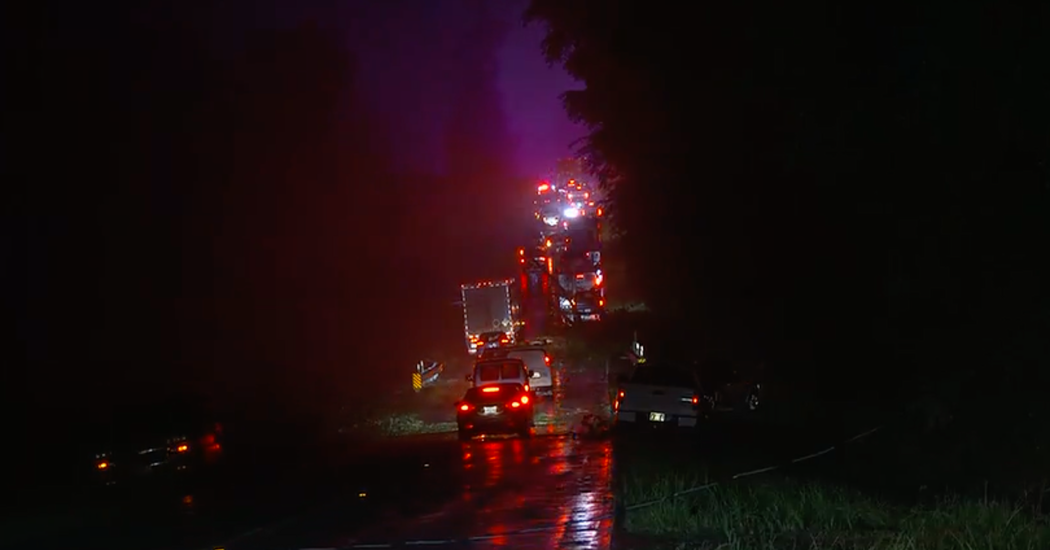
Scott Simmons, a spokesman for the Mississippi Emergency Management Agency (MEMA), informed 16 WAPT News on Wednesday that initial assessments indicated as many as 815 buildings were damaged across Franklin and Lincoln counties. The intense winds and accompanying precipitation left a trail of debris, including fallen trees and power lines, obstructing several roads and hindering immediate response efforts. In Lincoln County, the debris field necessitated the closure of southbound lanes on a segment of Interstate 55 for several hours, according to statements from the state’s transportation department, causing significant disruption to nocturnal traffic flow.
Further to the southeast, in Lamar County, approximately 100 miles from the state capital of Jackson, a separate tornado caused considerable damage. As of 11 p.m. local time on Wednesday, James Smith, the county director for the Mississippi Emergency Management Agency, confirmed that roughly 250 buildings, including a local church, had been damaged. He reported that four individuals sustained injuries, one of whom required hospital treatment for stitches, though all injuries were classified as minor. Mr. Smith noted in a phone interview that emergency services received multiple calls from residents trapped within their homes by fallen trees and debris. However, most individuals were able to extricate themselves before rescue teams arrived, suggesting a testament to community resilience and the relatively minor nature of the entrapments. He also indicated that the immediate danger from the tornado appeared to have passed.
Preliminary reports indicated at least 14 tornadoes touched down across the state since late Wednesday night, with the majority concentrated in the southwestern counties. The widespread damage and disruption to infrastructure led to significant power outages. PowerOutage.com reported that early Thursday morning, over 19,000 customers in the affected southwestern regions of Mississippi were without electricity, impacting homes and businesses.
The severe weather system continued its eastward trajectory. Before 1 a.m. local time on Thursday, the NWS reported that a severe thunderstorm, characterized by hail the size of nickels, was moving eastward at 40 miles per hour across Perry and Greene counties. Overnight, the storm system advanced into neighboring Alabama. The Alabama Emergency Management Agency subsequently advised residents that the state could anticipate potential heavy rainfall, large hail, and a few isolated tornadoes through early Thursday morning. A tornado watch, signifying a lower but still present level of danger compared to a tornado warning, was active for certain counties in both Alabama and Mississippi until 6 a.m. local time.
Looking ahead, Thursday was largely expected to offer a calmer weather pattern for Mississippi. Forecasters at the Storm Prediction Center indicated that the primary risk for severe storms would shift further east, encompassing southeast Alabama, portions of southern Georgia, and northern Florida. These areas were projected to experience potentially damaging winds and the possibility of a couple of tornadoes, underscoring the migratory nature of such powerful weather systems.
As daylight emerged on Thursday, emergency crews and state agencies began the arduous process of comprehensive damage assessment and initial cleanup efforts across the affected Mississippi counties. The focus remained on clearing roadways, restoring power, and providing assistance to residents whose homes were impacted. The swift onset and broad scope of the Wednesday night storms serve as a reminder of the inherent vulnerabilities of communities in regions prone to severe weather phenomena.
Why This Matters
The severe weather event in Mississippi, characterized by multiple tornadoes and widespread structural damage, underscores several critical aspects of disaster preparedness, community resilience, and infrastructure vulnerability in regions prone to extreme weather.
Firstly, the issuance of a “particularly dangerous situation” warning by the National Weather Service highlights the efficacy and importance of advanced meteorological forecasting. Such specific and high-level alerts provide communities with crucial time to prepare, seek shelter, and potentially mitigate casualties. The relatively minor nature of the reported injuries, despite extensive property damage, suggests that these warning systems, combined with public awareness, played a role in safeguarding lives. However, the nocturnal timing of the tornadoes presents unique challenges, as warnings may be harder to disseminate and individuals less likely to be immediately aware or able to react effectively while asleep.
Secondly, the scale of the destruction—over 1,000 damaged buildings and significant power outages affecting thousands—demonstrates the substantial economic and social disruption that even short-duration severe weather can inflict. The cost of repairs, reconstruction, and the economic toll on affected businesses and households can be considerable and long-lasting. Communities face immediate challenges in clearing debris, restoring essential services like power and transportation, and providing temporary housing. The closure of a major interstate (I-55) illustrates the broader impact on regional logistics and commerce, even temporarily.
Thirdly, this event brings into focus the ongoing efforts in disaster response and recovery. State agencies like the Mississippi Emergency Management Agency (MEMA) play a vital role in coordinating relief efforts, assessing damage, and supporting local communities. The ability of emergency services to respond rapidly, manage communication, and facilitate recovery is continuously tested by such events. The resilience of residents, as observed in individuals self-extricating from debris, also forms a crucial component of immediate post-disaster response.
Finally, while individual weather events cannot be solely attributed to long-term climate trends, the broader context of increasing frequency and intensity of severe weather phenomena in certain regions, including the U.S. Southeast, prompts ongoing discussions about climate change adaptation and mitigation strategies. These discussions often include strengthening building codes, improving urban planning to minimize vulnerabilities, and investing in resilient infrastructure. The recurring nature of such events in “Tornado Alley” and “Dixie Alley” regions necessitates continuous investment in preparedness and a sustained focus on community safety and recovery planning.