
Norwegian Naval Chief Emphasizes Enduring Need for Large Warships in North Atlantic Amidst Drone Debate
Oslo, Norway – Vice Admiral Rune Andersen, Chief of the Norwegian Joint Headquarters, has underscored the continued critical importance of large warships for operations in the North Atlantic, even as navies increasingly integrate cheaper, uncrewed platforms. Speaking at the Atlantic Future Forum in Oslo, Andersen articulated a strategic perspective emphasizing persistent presence and robust capabilities in a uniquely demanding environment, differentiating it from other maritime theaters.
The discussion at the forum highlighted a contemporary dilemma in naval strategy: the perceived lesson from conflicts like the one in Ukraine, where relatively inexpensive drones and missiles have inflicted significant damage on more costly military hardware. The panel’s moderator directly challenged this paradigm, noting the paradox of a discussion about “cheap mass beating expensive platforms” taking place aboard a 65,000-tonne aircraft carrier, while nations like Britain and Norway jointly commit to acquiring sophisticated Type 26 frigates.
Andersen acknowledged the evolving landscape of naval warfare and the imperative for modern navies to adapt. He agreed with the necessity of exploiting advancements in autonomy and connectivity, advocating for the development of “hybrid fleets” comprising both traditional crewed warships and uncrewed vessels. He stressed the importance of continuous reassessment of force composition, stating, “Because the opportunities are changing so fast, so our plans cannot be cut in stone.” This indicates a flexible approach to defense planning, responsive to rapid technological shifts and geopolitical developments.
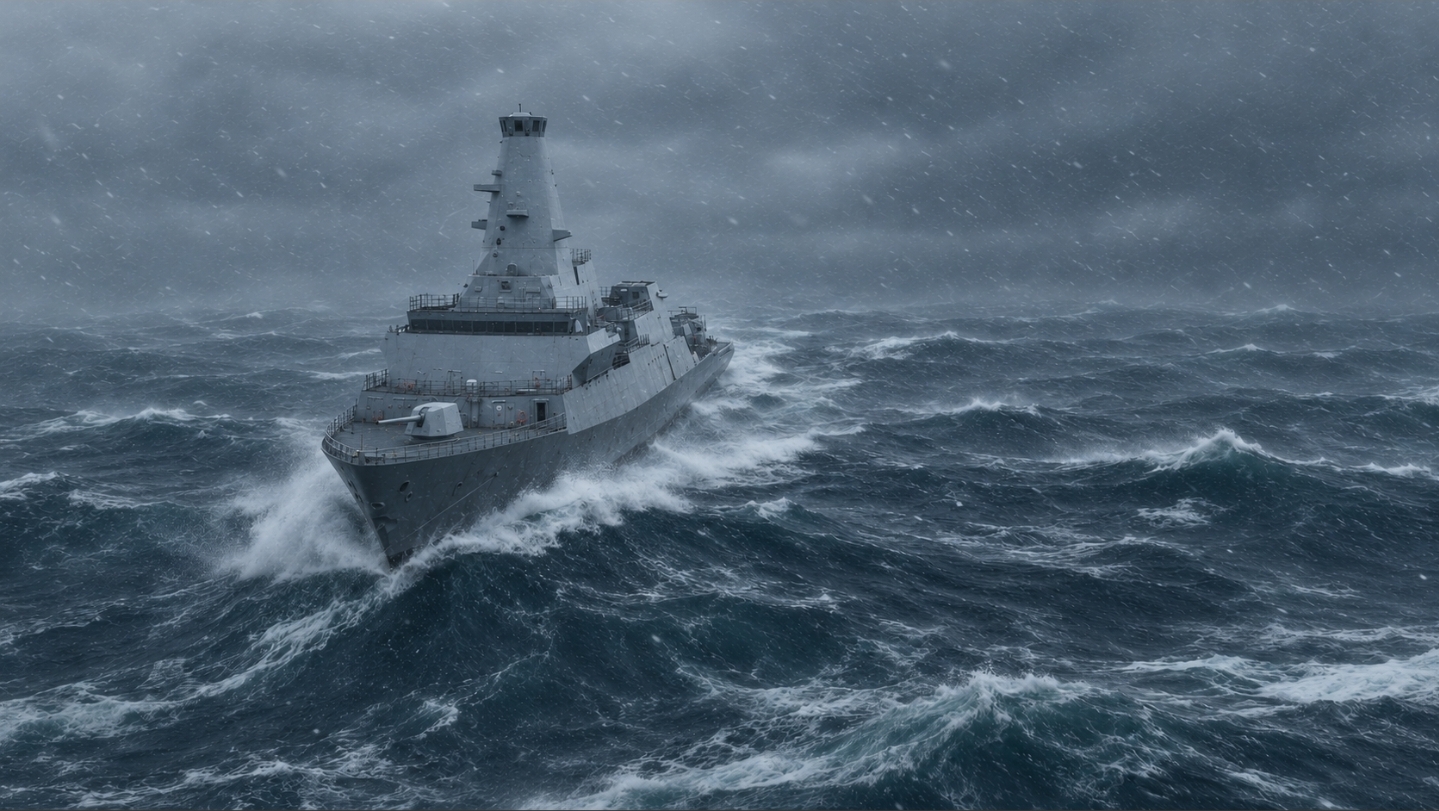
However, the Norwegian naval chief drew a sharp distinction between the operational requirements of the North Atlantic and those of more confined and sheltered seas like the Baltic or Black Sea. He explained that the North Atlantic demands “persistent presence weeks, months in a very harsh environment.” This contrasts significantly with operations in littoral or semi-enclosed waters, where distances are shorter and environmental conditions often less severe. The vastness, unpredictable weather, and extreme conditions of the North Atlantic necessitate vessels capable of extended endurance, resilience, and self-sufficiency.
Beyond the immediate future of war, Andersen also touched upon the “future of peace,” which he characterized as one of “instability,” distinct from the relative calm that prevailed for decades. In this environment, navies must be prepared for a wide spectrum of operations, ranging from routine constabulary work – such as patrolling exclusive economic zones, conducting search and rescue, or responding to environmental incidents – to complex inter-agency operations. In these contexts, a visible and continuous presence serves as a crucial demonstration of national determination and commitment.
Furthermore, Andersen stressed that if deterrence fails and conflict becomes unavoidable, the ability to project substantial power remains paramount. “If we go to war, if we have to go to war, we will. We will fight from a position of strength. We need to carry large, heavy striking power forward,” he asserted. This highlights the enduring requirement for vessels capable of deploying significant offensive and defensive capabilities, including long-range missiles, advanced anti-submarine warfare systems, and robust air defense, to counter peer adversaries effectively.
Adding another layer to the debate, Ned Baker, UK managing director of the defense technology firm Helsing, participating in the same panel, suggested that the choice between high-end and low-end platforms is not mutually exclusive. He posited that sophisticated, high-end sensors or advanced software systems can be integrated onto more affordable, low-end hulls. This perspective aligns with the concept of modularity and the increasing reliance on software-defined capabilities, potentially allowing navies to achieve advanced functionalities without necessarily requiring the largest and most expensive platforms for every mission.
The strategic decisions of Norway and the United Kingdom reflect this evolving thinking. Norway’s selection of the Type 26 frigate in 2025, a class known for its advanced anti-submarine warfare capabilities and adaptability, signals a commitment to high-end platforms for critical missions. Concurrently, the Royal Navy is actively developing its own “hybrid navy,” integrating crewed warships with squadrons of uncrewed systems, aiming for a synergistic fleet that leverages the strengths of both manned and unmanned technologies to maintain its operational edge in various global theaters, including the vital North Atlantic.
Why This Matters
The debate over the optimal composition of modern naval fleets, as articulated by Vice Admiral Andersen, carries significant implications for global security, defense spending, and technological innovation. The North Atlantic, a critical maritime domain, serves as a vital artery for transatlantic trade, a strategic corridor for NATO reinforcements, and a key area for monitoring Russian naval activity, particularly in the High North. Decisions made regarding naval assets in this region directly impact regional stability and the collective defense capabilities of NATO allies.
Firstly, the discussion underscores the **geopolitical importance of the North Atlantic**. As great power competition intensifies, particularly with a resurgent Russia expanding its naval presence and capabilities, maintaining a robust and visible presence in this area is crucial for deterrence and reassurance. The unique environmental challenges of the North Atlantic mean that not all naval platforms are equally suited for sustained operations, making the choice of vessel type a strategic imperative.
Secondly, this discourse shapes **future defense procurement and spending decisions** for nations worldwide. If large, expensive warships remain indispensable for certain missions and environments, it necessitates continued substantial investment in these platforms, potentially influencing national budgets and industrial policies. Conversely, the integration of drones and autonomous systems points to a shift in how navies can achieve mass and extend their reach, potentially offering cost efficiencies and new operational paradigms.
Thirdly, the emphasis on “hybrid fleets” and the modularity of technology highlights the **ongoing transformation in naval warfare through technological innovation**. The ability to deploy high-end sensors and software on diverse platforms, from large frigates to smaller unmanned vessels, points to a future where network-centric capabilities, artificial intelligence, and advanced data analytics will be as crucial as traditional firepower. This drives innovation in defense industries and fosters international collaboration on technology development.
Finally, the differentiation between “the future of war” and “the future of peace” in an era of instability signals a broader understanding of military roles. Navies are not just instruments of war but also tools for **diplomacy, deterrence, and crisis management**. Their persistent presence, whether for constabulary duties or demonstrating resolve, helps to shape the international environment, prevent escalation, and protect national interests in an increasingly complex and unpredictable world.