
This article’s audio content is presented by the Air & Space Forces Association, which celebrates and assists our Airmen, Guardians, and their families. Discover further details at afa.org
The Department of Defense’s anti-drone unit disclosed its plan to carry out a powerful laser demonstration alongside the Federal Aviation Administration, scarcely a month following the deployment of an armed forces laser on the southwest border, which compelled the FAA to suspend operations in El Paso, Texas’s overhead flight zone.
The FAA’s sudden February 11th decree occurred subsequent to American armed forces detachments stationed along the U.S.-Mexico frontier permitting agents from U.S. Customs and Border Protection to operate the defense laser apparatus. The closure endured for merely several hours, yet it generated bewilderment and alarm among legislators and government representatives. Specialists promptly characterized the event as a “learning example” illustrating the intricate network of permissions required to deploy such armaments close to populous zones and the repercussions when organizations neglect to cooperate effectively,
Presently, the Joint Interagency Task Force 401 and the FAA are slated to perform an exercise March 7-8 at White Sands Missile Range, N.M. The aim is “to particularly tackle FAA safety apprehensions while collecting information regarding the laser’s physical impacts on aircraft stand-ins, confirming the operational capability of automatic safety disengagement mechanisms, and contributing to assessments concerning flight crew ocular protection,” as per a March 6 Department of Defense communiqué.
“This represents a vital measure in ensuring our military personnel possess the foremost sophisticated instruments to safeguard the nation,” Army Brig. Gen. Matt Ross, Director of JIATF-401, stated in the communiqué. “By collaborating closely with the FAA and our collaborating governmental entities, we are guaranteeing these pioneering aptitudes are secure, potent, and prepared to shield Americans from nascent unmanned aerial vehicle menaces. Our success metric involves swiftly furnishing military operators with paramount [counter-unmanned aerial system] aptitude, and this trial advances that objective.”
U.S. Northern Command, Joint Task Force Southern Border, and the Army’s Portfolio Acquisition Executive for Fires additionally assisted in organizing the exercise. Representatives from the Department of Energy, National Nuclear Security Administration, Department of Homeland Security, Customs and Border Protection, and the New Mexico National Guard are likewise anticipated to be present.
American authorities have been reticent regarding the February 11th incident, other than to state it entailed narcotics syndicates from Mexico operating unmanned aerial vehicles at the frontier. The head of NORTHCOM, Air Force Gen. Gregory M. Guillot, informed legislators in March 2024 that approximately one thousand intrusions by remotely piloted aircraft systems take place each day adjacent to the U.S.-Mexico boundary.
The occurrence represented the most recent prominent instance of the perils that unmanned aerial vehicles—even diminutive, economical ones—pose to the American homeland. Though this menace was situated at the frontier close to the Army’s Fort Bliss, the Air Force has grappled with this problem since December 2023, when unrecognized aggregations of drones navigated unhindered above Joint Base Langley-Eustis, Va., for numerous days. Further drone intrusions subsequently transpired above air force installations in Ohio, Utah, and other locations, obligating the Air Force and its allied branches to assign paramount importance to discovering methods to discern, recognize, monitor, and, if requisite, neutralize these modest, low-cost drones.
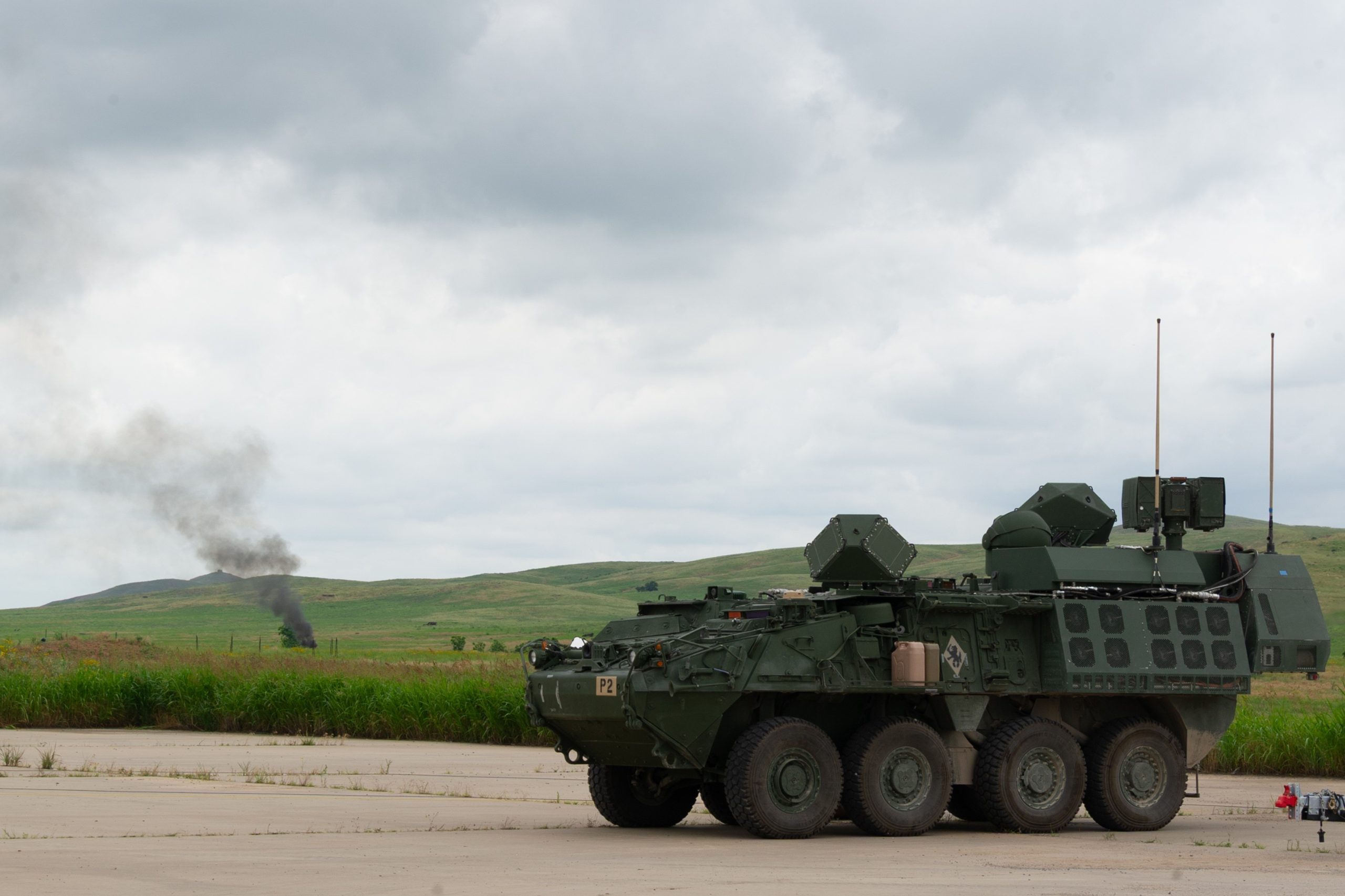
The specific laser technology employed remains uncertain regarding the El Paso drone incident. Reuters indicated the Army had stationed AeroVironment Inc’s LOCUST laser anti-drone armament system near El Paso International Airport. In December, AeroVironment provided the Army with two Joint Light Tactical Vehicles, outfitted with 20-kilowatt laser apparatuses, as a component of the second phase of the Army’s Multi-Purpose High Energy Laser prototyping endeavor. The Army has additionally performed multiple trials of its Directed Energy Maneuver-Short Range Air Defense, or DE M-SHORAD, which features a 50-kilowatt laser for anti-drone engagements.
This article’s audio content is presented by the Air & Space Forces Association, which celebrates and assists our Airmen, Guardians, and their families. Discover further details at afa.org