
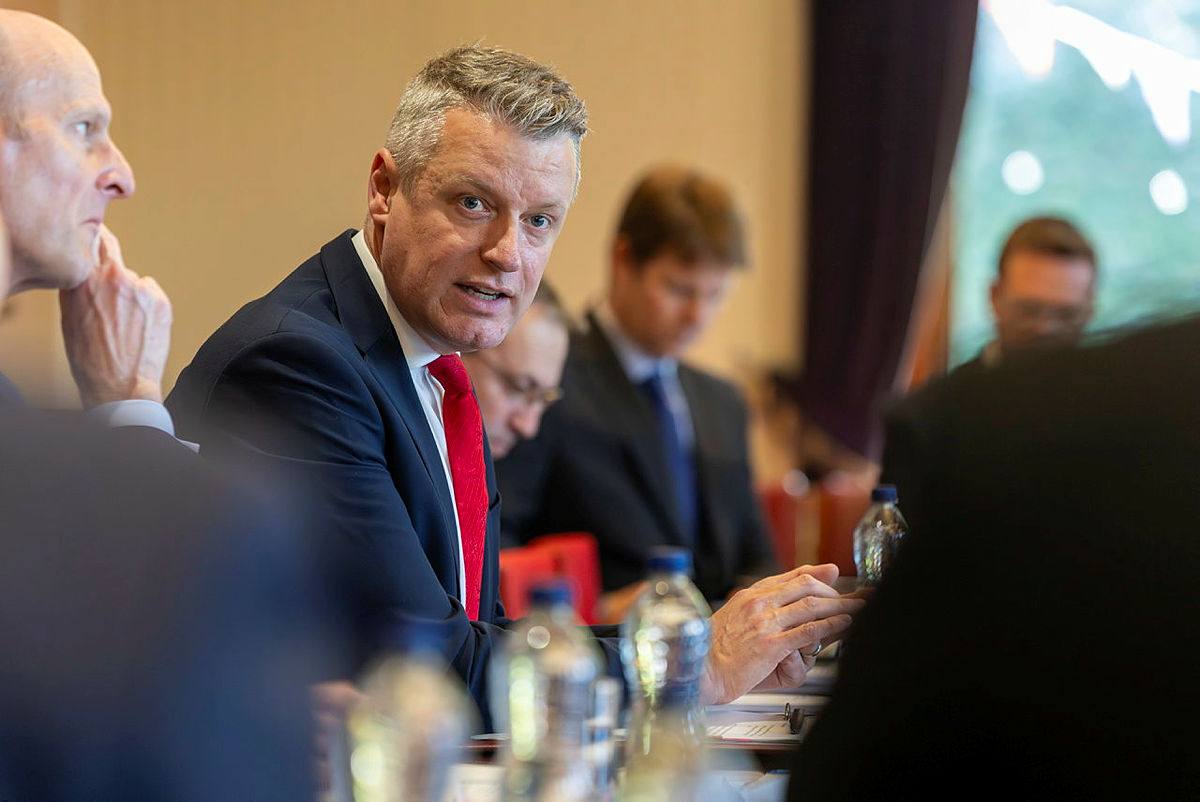
The Labour Party has issued a critical assessment of Reform UK’s defence posture, ahead of an anticipated announcement by Nigel Farage regarding the appointment of Reform UK’s first defence spokesperson. Labour’s critique, articulated by Luke Pollard, the party’s Shadow Minister for Defence Readiness and Industry, suggests that Reform UK lacks a comprehensive plan for national security, characterizing its proposed approach as “defenceless” and potentially detrimental to Britain’s international standing.
According to statements released by the Labour Party, Reform UK’s published pledges for its initial 100 days in government do not include specific provisions for defence or a broader national security strategy. Labour highlighted that it has taken Reform UK “nearly 2,000 days” to designate an individual to lead on defence matters, a timeframe that Labour interprets as a significant oversight in the current geopolitical climate.
Further to its critique, Labour cited an analysis, reportedly by The Independent, which indicated that Reform UK MPs participated in fewer than a third of over 200 defence debates and question sessions within a specified parliamentary period. The analysis, as cited by Labour, pertained to the period between July 2024 and July 2026, which would encompass future parliamentary activity. During this timeframe, Nigel Farage himself was noted to have participated in ten such instances. Labour used this analysis to project potential future engagement levels should Reform UK gain greater parliamentary representation.
Labour also referenced past remarks made by Nigel Farage concerning the conflict between Russia and Ukraine. Among these was a 2024 statement attributed to Farage, in which he reportedly said, “we provoked this war.” These comments were presented by Labour as indicative of a broader ambivalence towards national security issues and an alignment with narratives that challenge Western foreign policy consensus.
Luke Pollard, in his capacity as Labour’s Shadow Minister, emphasized the critical importance of national security, stating, “The British people can’t afford national security to be treated as an afterthought.” He described the delay in appointing a defence spokesperson as “an utter dereliction of duty by Nigel Farage.” Pollard further asserted that a Reform UK government’s approach would “wave a white flag to our enemies and weaken our standing on the world stage,” contrasting this with Labour’s stated aim to rebuild Britain’s international reputation.
Pollard linked Farage’s past comments and the perceived lack of focus on defence to a pattern of behaviour, stating, “Farage’s ambivalence when it comes to the defence of the realm should come as no surprise. He’s spent years parroting Kremlin talking points and his former Leader in Wales is currently in prison for taking pro-Russian bribes.” He concluded by reiterating Labour’s commitment to national security as the “first duty of any government,” citing Labour’s pledge for the “biggest increase in defence spending since the Cold War.” Pollard concluded, “Reform has treated defence as an afterthought – but in this volatile world, there are no second chances. Nigel Farage simply can’t be trusted to keep Britain safe.”
In response to such criticisms, Reform UK’s finance spokesman, Robert Jenrick, has previously stated the party’s commitment to increasing military funding. In August, Jenrick outlined Reform UK’s plan to fund the military at 3 percent of Gross Domestic Product (GDP) by 2030, indicating a clear financial target for defence spending within the party’s policy framework.
For comparison, the Labour Party, through Shadow Chancellor John Healey, also set a target date of 2030 for reaching 3 percent of GDP in defence spending, as announced in a recent budget proposal. Detailed plans for achieving this target are expected to be released at next year’s spending review. Labour’s current defence strategy, outlined in its £298 billion Defence Investment Plan, spans four years and includes an additional £15 billion in spending, reflecting their stated priority for enhancing military capabilities and readiness.
The exchanges between Labour and Reform UK underscore a growing focus on defence policy within the British political landscape, as parties articulate their commitments and strategies for national security amidst evolving global challenges. The forthcoming appointment of Reform UK’s defence spokesperson is expected to provide further clarity on the party’s detailed policy positions.
Why This Matters
The debate surrounding defence policy between major political parties in the UK is of paramount importance for several reasons, directly impacting national security, international relations, and economic stability. In an increasingly complex and volatile global environment, a robust and clearly articulated defence strategy is not merely a political talking point but a fundamental necessity for any nation.
Firstly, **National Security and Deterrence** are the primary concerns. A nation’s defence capabilities directly influence its ability to protect its citizens, territory, and interests from both conventional and emerging threats, including cyber warfare and terrorism. Public confidence in the government’s capacity to ensure national safety is intrinsically linked to the perceived strength and readiness of its armed forces. Clear defence policies, adequate funding, and effective leadership are crucial for maintaining a credible deterrent and responding to potential aggressions. When political parties dispute the adequacy of defence plans or leadership, it raises questions about the UK’s preparedness and resilience.
Secondly, **International Standing and Alliances** are significantly affected. The UK’s defence posture plays a critical role in its relationships with key allies, particularly within NATO. Commitments to defence spending, such as the 3% of GDP target, are often benchmarks for demonstrating a nation’s resolve and contribution to collective security. A perceived weakening of defence capabilities or a lack of clear strategy can undermine trust among allies, potentially diminishing the UK’s influence on the world stage and its ability to participate effectively in international security operations. Conversely, a strong defence policy can reinforce alliances and project stability.
Thirdly, **Economic Implications** of defence spending are substantial. Defence budgets represent significant public investment, impacting various sectors from manufacturing and technology to research and development. Decisions on spending levels (e.g., 3% of GDP) have direct consequences for industrial capacity, job creation, and technological innovation. The allocation of these funds reflects strategic priorities, balancing immediate operational needs with long-term investment in future capabilities. Debates over funding levels and the efficiency of defence procurement therefore have broad economic ramifications.
Finally, **Political Accountability and Public Trust** are at stake. Defence is considered one of the core responsibilities of government. When political parties present their defence policies, or face criticism for perceived gaps, it informs the electorate about their suitability for leadership. Public scrutiny of defence plans, past statements by leaders on international conflicts, and parliamentary engagement on security matters helps hold parties accountable. In an era of heightened global tensions, voters increasingly look to political leaders for clear, consistent, and credible approaches to safeguarding the nation, making this debate a critical component of democratic discourse.