
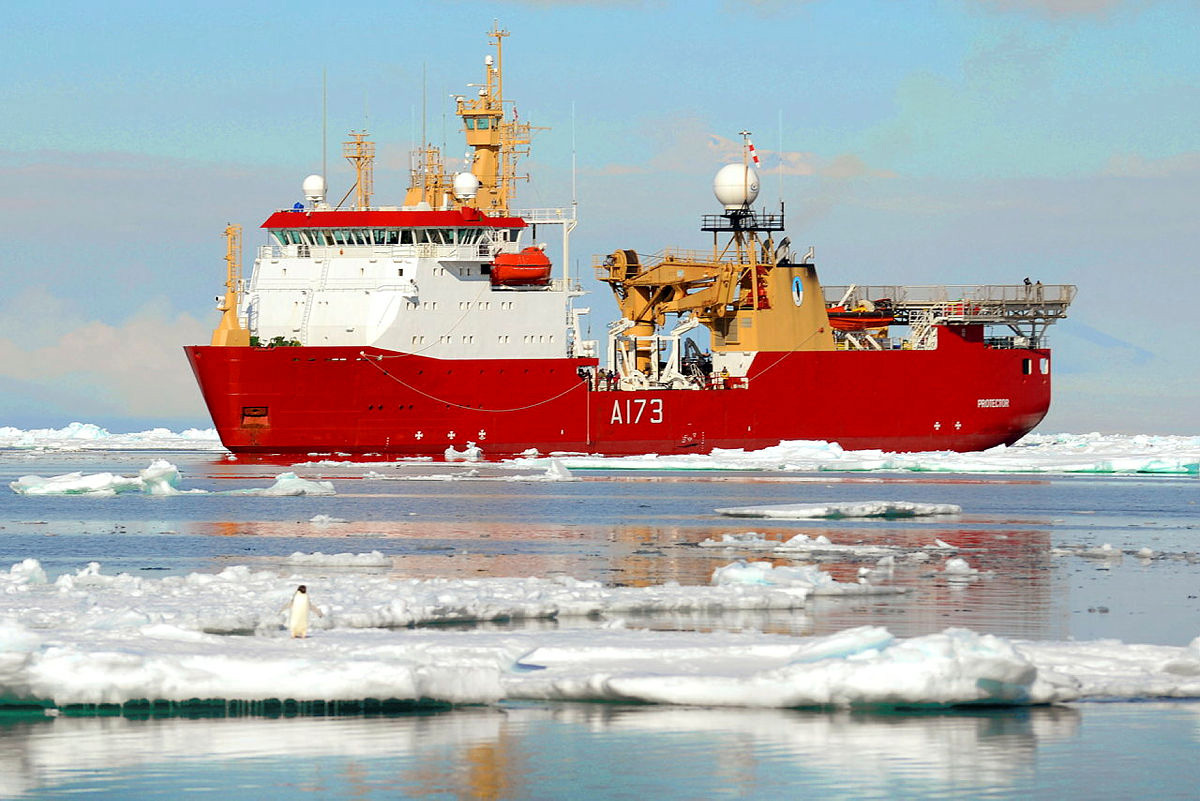
UK Advances Plans for Successor to Royal Navy’s Ice Patrol Ship HMS Protector Under Project Shackleton
The United Kingdom government has confirmed it is actively working on replacing HMS Protector, the Royal Navy’s ice patrol ship, with funding already allocated within the Defence Investment Plan for a new, more modern vessel. This significant initiative, officially named Project Shackleton, aims to ensure the continuity of Britain’s crucial presence, scientific support, and strategic capabilities in the challenging Antarctic region.
Parliamentary Scrutiny and Policy Shift
Details regarding the progression of the replacement project emerged following a parliamentary question from Ben Obese-Jecty, the Conservative Member of Parliament for Huntingdon. Mr. Obese-Jecty sought clarity from the Secretary of State for Defence on the steps being taken to reach a decision on both the procurement method and the replacement timeline, following an earlier answer provided on September 15th.
In response, Luke Pollard, the Minister of State for Defence, outlined a significant shift in strategic planning regarding the vessel’s future. He stated,“The previous Government’s plan was for HMS Protector to remain in service into the late 2030s and did not provide for a replacement vessel. We judged this approach to be unsustainable and therefore allocated funding within the Defence Investment Plan to deliver a successor capability.”This statement underscores a re-evaluation of the long-term viability and operational effectiveness of HMS Protector, leading to a proactive decision by the current administration to invest in a new, state-of-the-art asset for polar operations.
Project Shackleton: Analysis and Procurement
Project Shackleton has been designated as the framework under which this vital replacement effort is being managed. The Ministry of Defence (MOD) is currently undertaking a comprehensive analysis phase. Minister Pollard elaborated,“Through Project Shackleton, the Ministry of Defence is undertaking the necessary technical, commercial and delivery analysis to inform decisions on the preferred procurement approach and replacement timeline. Decisions will be taken once this work has concluded.”
This ongoing analytical phase is critical for defining the precise specifications and capabilities required for the new vessel. It involves rigorous technical assessments to ensure the successor ship can meet the demanding operational requirements of the Antarctic, commercial evaluations to explore the most cost-effective and efficient build options (which could include domestic shipbuilding or international acquisition), and delivery analysis to establish a realistic and achievable schedule for its design, construction, and eventual entry into Royal Navy service. The decisions regarding the chosen procurement method and the specific timeline for the vessel’s deployment will only be finalised once this thorough work has been concluded, ensuring a well-informed and strategically sound investment.
The Legacy of HMS Protector
HMS Protector, which has now been removed from service, played an indispensable and multifaceted role for the Royal Navy since its acquisition in 2011. The vessel was originally a civilian ice-strengthened ship named Polarbjørn, purchased from Norwegian owners after an initial period on charter. For over a decade, Protector served as the embodiment of Britain’s enduring presence and commitment to the Antarctic.
Its missions were diverse and critically important. These encompassed vital hydrographic survey work, essential for mapping uncharted waters and ensuring safe navigation in the treacherous polar regions. Protector also provided crucial logistical and operational support to the British Antarctic Survey (BAS), the UK’s national Antarctic operation, enabling scientists to conduct groundbreaking research in one of the world’s most remote environments. Furthermore, the ship was instrumental in upholding the United Kingdom’s obligations under the international Antarctic Treaty System, contributing to inspections and promoting the peaceful and scientific use of the continent.
The Enduring Importance of an Ice Patrol Capability
The continued need for a dedicated ice patrol ship, capable of operating reliably and effectively in extreme polar conditions, is multifaceted and strategic. Such a vessel is far more than just a naval asset; it is a versatile platform crucial for scientific advancement, diplomatic engagement, and the projection of national interests in a region of increasing global significance. In the Antarctic, an ice-capable ship provides unparalleled access to remote areas for scientific teams studying critical issues such as climate change, marine biology, and glaciology, facilitating research that has global implications.
Beyond its scientific utility, an ice patrol ship maintains a sovereign presence, reinforcing the UK’s commitment to the peaceful governance of the continent under the Antarctic Treaty and acting as a deterrent against potential illicit activities or unregulated resource exploitation. These vessels often perform vital humanitarian roles, including search and rescue operations in some of the world’s most treacherous marine environments. They also contribute significantly to hydrographic surveying, which is indispensable for safe navigation in poorly charted polar waters. The highly specialised ability to operate reliably amidst formidable ice conditions underscores the UK’s status as a key polar nation. The operational gap created by Protector’s removal from service highlights the urgency of its replacement to ensure these critical functions continue without interruption, maintaining Britain’s influence and capabilities in a region vital to global environmental stability and scientific understanding.
Why This Matters
The decision to replace HMS Protector and the ongoing work under Project Shackleton carry significant implications for the United Kingdom’s strategic interests, scientific endeavours, and international standing. This investment is crucial for several key reasons:
- Geopolitical Significance of the Antarctic:The Antarctic remains an area of increasing geopolitical interest, driven by its unique scientific value, potential future resource considerations (though currently restricted by treaty), and its critical role in regulating global climate systems. Maintaining a sovereign presence through a dedicated ice patrol ship enables the UK to assert its scientific and environmental stewardship, reinforce its historical claims (which remain suspended under the Antarctic Treaty), and participate actively and effectively in the governance of the continent. Without such a robust presence, the UK’s influence and its ability to monitor the activities of other nations in this strategically vital region could diminish significantly, potentially impacting future international agreements and resource management discussions.
- Continuity of World-Leading Scientific Research:The British Antarctic Survey (BAS) is a world leader in polar science, and its research relies heavily on logistical support from an ice-capable vessel to transport personnel, equipment, and vital supplies to its remote research stations, such as Rothera Research Station. The data collected by BAS scientists is indispensable for understanding global climate change, sea-level rise, ocean currents, and biodiversity in extreme environments. A prolonged delay or failure to replace HMS Protector could severely hamper ongoing research projects, impacting the UK’s substantial contribution to international scientific efforts and its global reputation as a pioneer in polar science.
- Upholding International Obligations and Treaty Compliance:The UK is an original signatory to the Antarctic Treaty, a landmark international agreement that designates the continent as a scientific preserve and explicitly forbids military activity, nuclear testing, and waste disposal. While a military asset, an ice patrol ship operates under the provisions of the Treaty by supporting scientific research, conducting inspections of other nations’ facilities, and verifying compliance. A sustained UK presence ensures the nation can actively participate in these inspection duties and uphold the peaceful, non-militarised use of the continent, thereby contributing significantly to regional stability and international cooperation.
- Maintaining Naval Capability and Readiness:An ice patrol vessel represents a highly specialized and unique capability within the Royal Navy. Its operation provides invaluable training opportunities for navigating and operating in extreme cold-weather environments, ensuring that the Navy maintains critical expertise relevant to global operations, particularly as Arctic routes become more accessible. The acquisition of a new, modern vessel will allow for the incorporation of the latest advancements in naval technology, potentially offering enhanced endurance, greater operational flexibility, improved environmental performance, and advanced research facilities, thereby strengthening the Royal Navy’s overall capabilities and readiness for diverse global challenges.
- Economic and Industrial Impact:The procurement process for a new, complex vessel of this type, especially if built domestically, could provide substantial economic benefits. It would support the UK’s shipbuilding and maritime defence industries, stimulate innovation in engineering and design, and create skilled jobs across the supply chain. Even if an international procurement route is chosen, the project represents a significant investment in the UK’s defence infrastructure and its long-term strategic interests, demonstrating a commitment to securing essential national capabilities.
- Environmental Monitoring and Protection:Beyond direct scientific support, an ice patrol ship plays a crucial role in environmental monitoring and protection in one of the world’s most pristine and fragile ecosystems. It can respond effectively to environmental incidents, conduct surveillance against illegal, unreported, and unregulated (IUU) fishing, and monitor adherence to international environmental regulations. This active presence is vital for safeguarding the unique Antarctic environment and its delicate ecosystems for future generations, aligning with the UK’s broader commitments to environmental stewardship and ocean governance.