
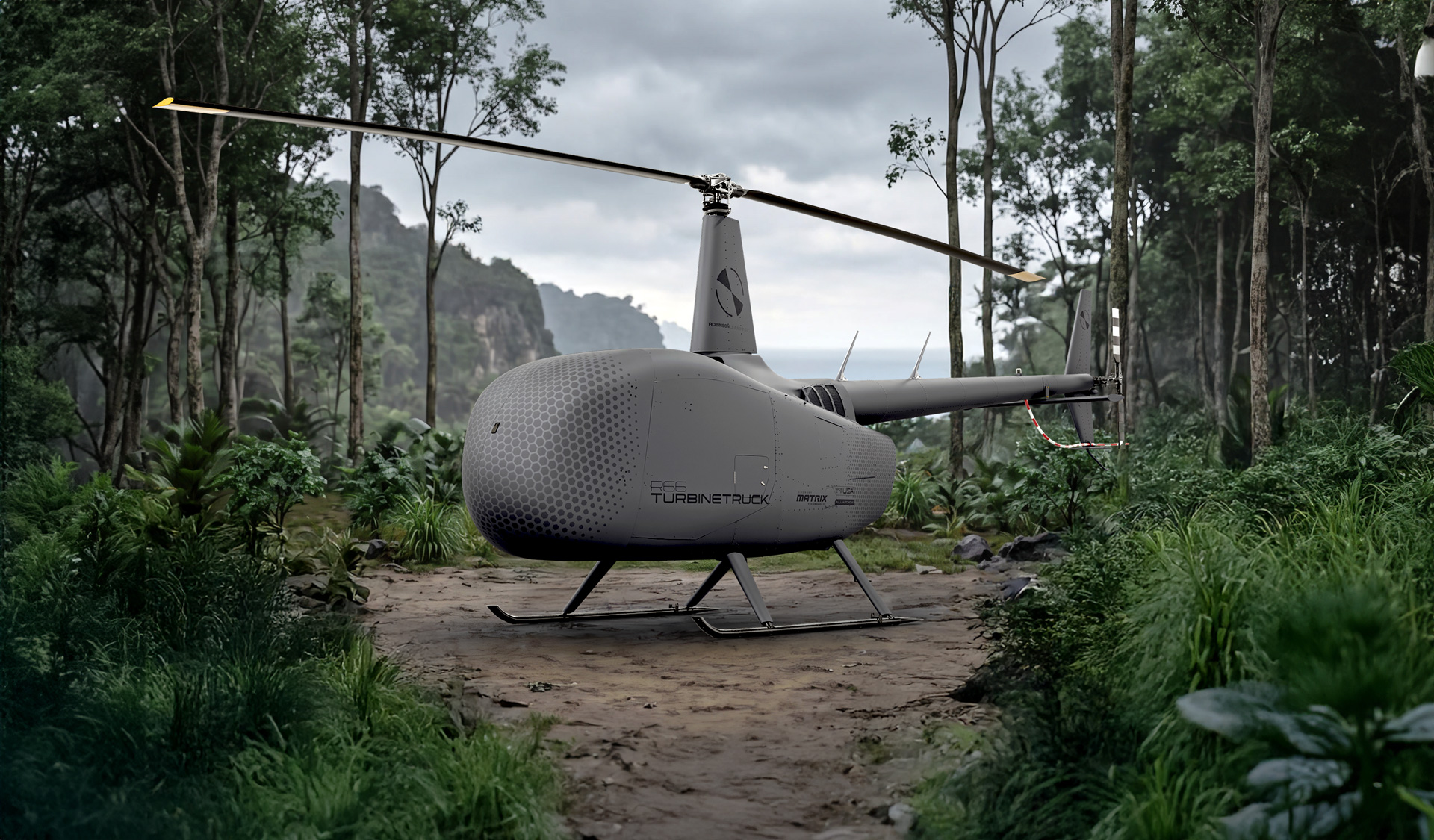
U.S. Marine Corps Awards Contract for Autonomous Cargo Helicopter to Sikorsky-Robinson Partnership
The United States Marine Corps has awarded a contract to Sikorsky, a Lockheed Martin company, for the Medium Aerial Resupply Vehicle, Expeditionary Logistics Increment 2 (MARV-EL Inc. 2) program. This contract selects the R66 TURBINETRUCK, an autonomous cargo helicopter developed through a collaboration between Sikorsky and Robinson Unmanned. The system integrates Sikorsky’s MATRIX autonomy flight control system with the robust and proven Robinson R66 helicopter airframe, marking a significant step in the development of uncrewed logistics capabilities for military operations.
The R66 TURBINETRUCK is designed to address a critical logistical gap within military operations, bridging the void between smaller tactical unmanned aerial systems (UAS) and larger, strategic cargo aircraft. While small drones offer agility and localized delivery, their payload and range are often limited. Conversely, large strategic airlifters require significant infrastructure and are less suitable for last-mile delivery in contested or remote areas. The TURBINETRUCK aims to fill this middleweight role, capable of transporting payloads ranging from 1,300 to 2,500 pounds over a combat radius of 100 nautical miles.
Intended for deployment in challenging environments, the system is engineered to operate effectively from austere forward operating bases, ship decks, and unimproved landing zones. Its primary mission is to deliver vital supplies such as ammunition, medical provisions, and other essential equipment directly to forward-deployed units. This capability is crucial for maintaining operational readiness and responsiveness, particularly in scenarios where terrain, adverse weather conditions, or enemy threats could impede traditional logistics convoys or crewed aircraft, thereby enhancing the safety of military personnel by reducing their exposure to high-risk logistical tasks.
Operating the R66 TURBINETRUCK involves a streamlined digital workflow. Mission parameters are input by an operator using a digital tablet, after which the system autonomously generates a flight plan. Utilizing an array of onboard sensors and advanced algorithms, the aircraft is guided to its designated target location with precision. This operational approach mirrors the autonomous capabilities demonstrated on other Sikorsky platforms, such as the S-70UAS U-Hawk helicopter, showcasing a consistent application of the MATRIX autonomy system across different aircraft types.
Officials from the participating companies have emphasized the strategic importance and intended benefits of the R66 TURBINETRUCK. Rich Benton, Vice President and General Manager of Sikorsky, highlighted the system’s design philosophy, describing it as simple, economical, and re-configurable, making it particularly suitable for deployment in high-risk or difficult-to-access environments. He noted that the program expands the application of uncrewed solutions for both military and potential civil customers, reflecting a broader trend in aviation.
David Smith, President and CEO of Robinson Helicopter Company, commented on the partnership’s ability to integrate the established performance and reliability of the R66 platform into the emerging field of unmanned logistics. He characterized the TURBINETRUCK as a substantial advancement in adapting proven rotorcraft technology into scalable, autonomous cargo solutions tailored for demanding operational settings. Paul Fermo, President of Robinson Unmanned, further underscored the need for logistics solutions that can evolve with dynamic mission requirements without introducing undue complexity, asserting that the combination of the MATRIX autonomous capability with the R66 airframe delivers this essential capacity reliably, irrespective of the operational environment.
The immediate next phase of the program involves Robinson Unmanned delivering the initial R66 TURBINETRUCK unit to Sikorsky. This will facilitate comprehensive integration, testing, evaluation, and demonstration activities. These capability demonstrations are specifically designed to illustrate the MATRIX autonomy system’s platform-agnostic nature and open architecture design, proving its adaptability and effectiveness when integrated with the new R66 airframe.
Why This Matters
The contract award for the R66 TURBINETRUCK represents a pivotal development in military logistics and the broader application of autonomous technology. For the U.S. Marine Corps, it signifies a strategic embrace of uncrewed systems to address critical operational challenges and enhance the safety of its personnel.
Historically, military logistics, particularly the delivery of supplies to forward-deployed units, has been one of the most hazardous aspects of combat operations. Convoys on the ground are vulnerable to ambushes and improvised explosive devices, while crewed aircraft face risks from enemy air defenses and challenging environmental conditions. By introducing an autonomous cargo helicopter, the Marine Corps aims to drastically reduce the exposure of its service members to these dangers, allowing critical supplies like ammunition, water, and medical aid to reach the point of need without putting human lives at direct risk.
Beyond personnel safety, this program enhances operational agility and expands the reach of expeditionary forces. The R66 TURBINETRUCK’s ability to operate from austere, unimproved landing zones and ship decks means that supplies can be delivered directly to units in remote or contested areas that would otherwise be difficult or impossible to access with traditional logistics methods. This capability is vital for maintaining a sustained operational tempo and ensuring that Marines have the necessary resources to execute their missions effectively, regardless of terrain or infrastructure limitations.
From a technological standpoint, the selection of the R66 TURBINETRUCK highlights the increasing maturity and reliability of artificial intelligence and autonomous flight systems in demanding environments. The integration of Sikorsky’s MATRIX autonomy system with a proven airframe like the Robinson R66 underscores a practical approach to rapid development and deployment of advanced capabilities. Furthermore, the emphasis on a “platform-agnostic and open architecture design” suggests a future where autonomous systems can be readily adapted to various aircraft, fostering interoperability and accelerating innovation across different military and potentially civil platforms.
This development could set a precedent for other military branches and international partners, influencing future investments in autonomous logistics and potentially accelerating the transition away from reliance on crewed aircraft for routine resupply missions in high-threat zones. It also opens avenues for exploring dual-use applications, such as humanitarian aid delivery to disaster-stricken or inaccessible regions, demonstrating the broader societal impact of military technological advancements.