
An emerging defense technology firm, delivering Ukrainian combat-proven self-governing platforms to partner armed forces, has commenced worldwide operations from its principal office in the United Kingdom.
UFORCE revealed its debut concurrently with an initial capital injection of $50 million, which it characterized as the most substantial inaugural seed capital raise for a defense tech nascent enterprise in the UK. This capital infusion, the company stated, appraises the entity at over $1 billion and is slated to facilitate augmented production and the advancement of cutting-edge self-governing technologies. The fundraising initiative was spearheaded by Lakestar and Shield Capital, as per the firm’s statement.
The entity endeavors to consolidate Ukrainian defense technology innovators and producers into a unified framework, crafted to provide battle-tested self-operating functionalities to partner armed forces. UFORCE affirmed its platforms, encompassing airborne, naval, and terrestrial uncrewed vehicles, have been deployed widely during the conflict in Ukraine since Russia’s comprehensive incursion in 2022.
The firm reported that its systems have executed numerous verifiable operational engagements. The company added that these technologies have performed accurate assaults, reaching distances of up to 1,000 kilometers, amidst Ukrainian military endeavors targeting Russian troops.
“Ukraine not only adjusted to modern warfare, it redefined it,”commented UFORCE co-founder and chief executive Oleg Rogynskyy.“We established an enterprise capable of taking these field-validated, not merely presentation-demonstrated, systems and furnishing them to partner nations presently confronting analogous and pressing perils.”
The company stated its innovations are engineered to offer multi-layered protection against nascent dangers, such as unmanned aerial vehicles and projectiles. The firm contended that the hostilities in Ukraine and current assaults utilizing Iranian-developed Shahed UAVs have underscored deficiencies in current aerial protection infrastructures.
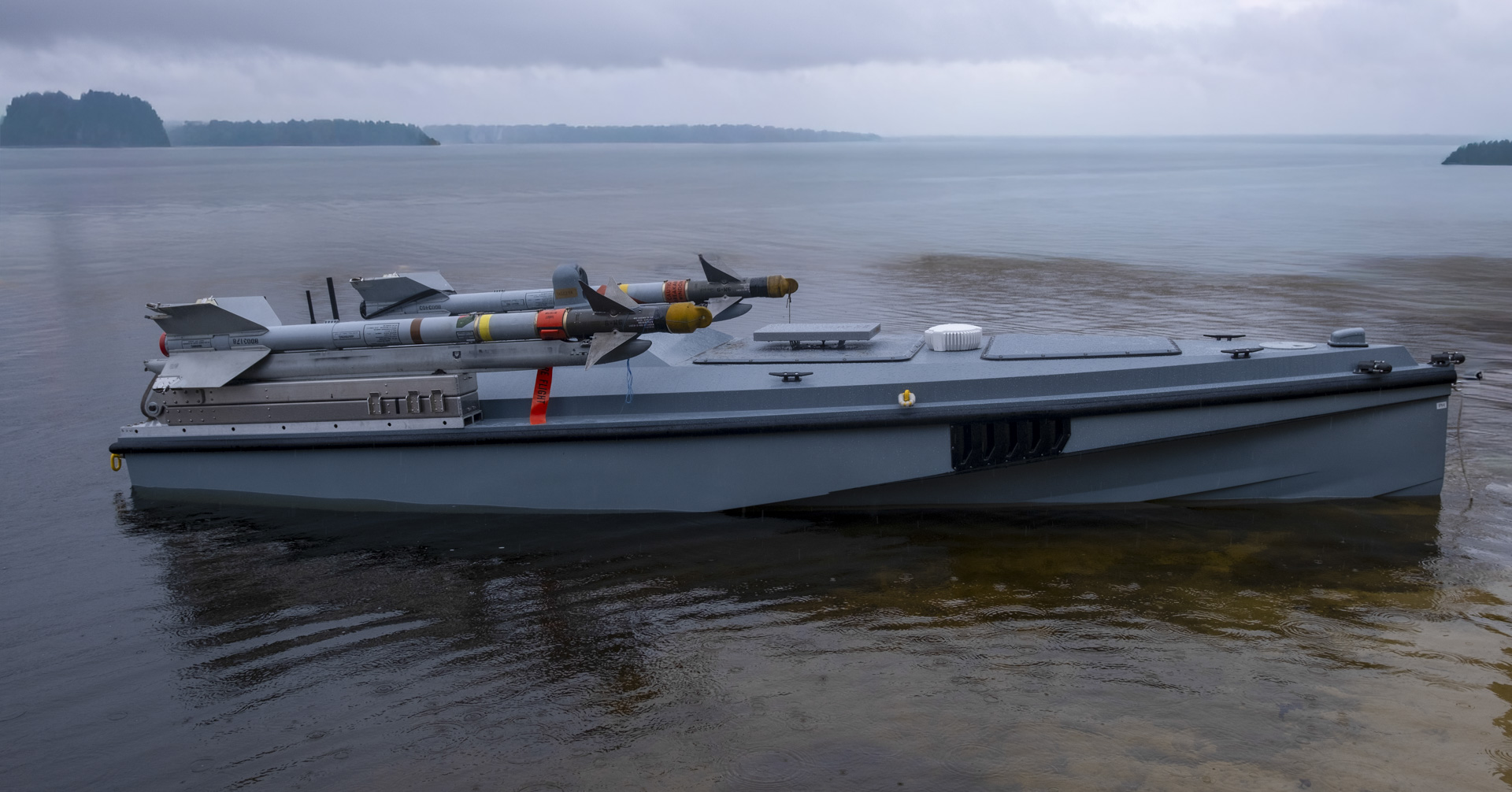
UFORCE asserts that its platforms are able to provide protective functionalities more affordably compared to conventional missile-centric air defense frameworks. The company drew attention to naval uncrewed surface craft, like the MAGURA system, which, it affirmed, possess the capacity to engage vessels and deploy economical interceptors against airborne dangers.
The firm stated it has already established an expanding global footprint, functioning in 15 sites across half a dozen partner nations, with a staff exceeding 1,000 individuals situated in hubs such as Kyiv, London and Silicon Valley. Furthermore, it indicated that its procurement pipeline for 2025 has attained nine-figure status and is expanding swiftly throughout various partner markets.
“What we are observing in Ukraine constitutes the future of combat: efficacious, swifter, and more economical to devise, supported by a team that is unyieldingly flexible and inventive,”remarked Klaus Hommels, founder and chairman of Lakestar.“UFORCE is the mechanism by which prowess extends to democratic associates and allies.”
Oleksiy Honcharuk, UFORCE’s board chairman, stated the enterprise also seeks to direct capital from Occidental collaborators into Ukraine’s defense tech industry.
“UFORCE embodies a genuine mutual benefit: it attracts capital from free nations into Ukraine while simultaneously bolstering the safety of those identical democratic states,”he affirmed.“Innovations forged by Ukraine’s unparalleled combat encounters are already demonstrating transformative potential.”
Raj Shah, Shield Capital’s managing partner, observed the systems had already proven their efficacy in operational environments.
“This is not merely conceptual R&D,”he asserted.“The UFORCE systems have been field-tested amidst electronic countermeasures, navigation-restricted zones, and direct kinetic dangers.”
UFORCE stated the debut also signifies a pioneering tangible industrial achievement connected to the UK-Ukraine Centennial Partnership Accord, which seeks to intensify collaboration between both nations spanning defense, safety, and technological domains.
The firm’s framework encompasses an array of self-governing mechanisms engineered in Ukraine, such as airborne attack UAVs, uncrewed maritime vehicles, and terrestrial robotic apparatuses, in addition to command and oversight software crafted to synchronize undertakings across diverse spheres.