
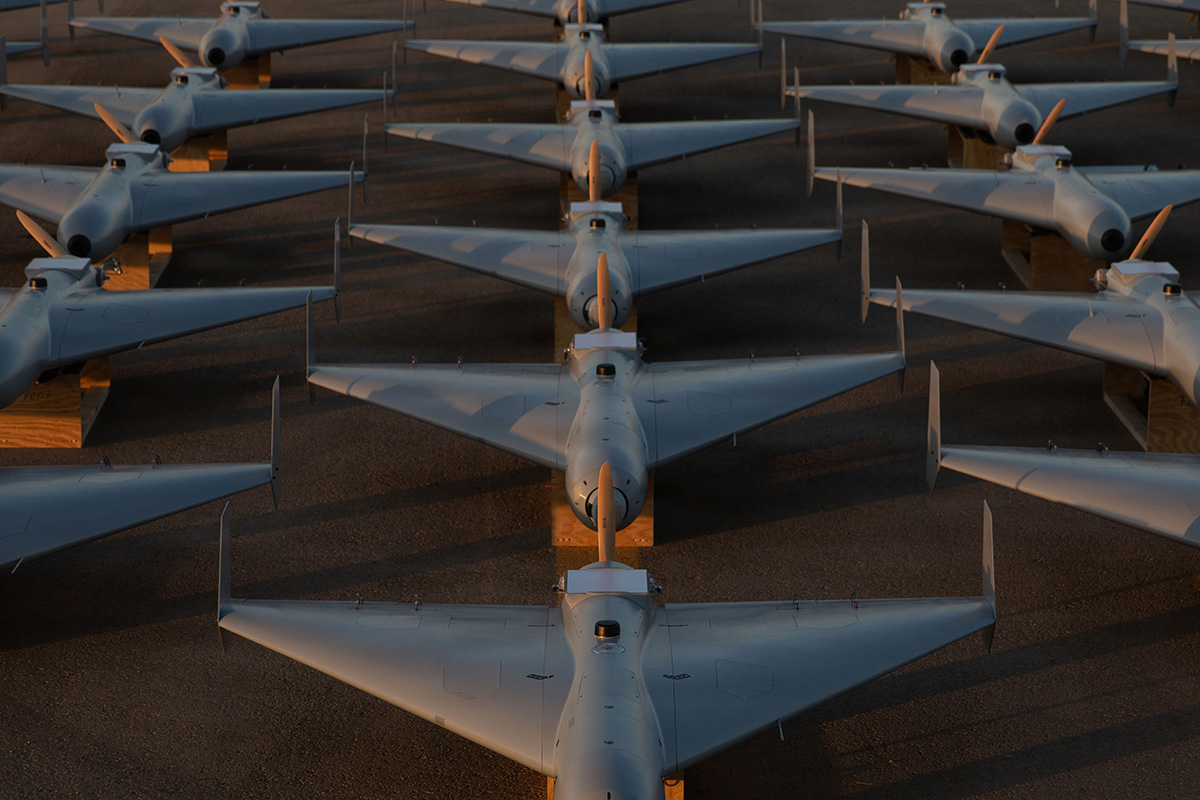
British Defence Intelligence has disclosed that Russia deployed roughly 4,400 single-use uncrewed aerial systems (OWA UAS) targeting Ukrainian sites in January 2026, marking a moderate reduction from approximately 5,100 launched in December 2025, the Ministry of Defence affirmed.
In its most recent briefing issued on 19 February 2026, Defence Intelligence remarked:“During January 2026, Russia initiated approximately 4,400 one-way attack uncrewed aerial systems (OWA UAS) against Ukrainian sites. This marked a noticeable decline from the roughly 5,100 OWA UAS Russia had deployed in December 2025, most likely attributable to less favorable atmospheric conditions throughout January 2026.”
Nevertheless, the analysis indicated a resurgence in Russian offensive operations during early February. Defence Intelligence observed:“The pace of daily launches rose considerably over the initial fortnight of February 2026, with Russia deploying an average of around 190 per day, up from approximately 140 daily in January 2026. This surge succeeded a brief halt in assaults on energy infrastructure, spanning from January 28, 2026, to February 2, 2026, a cessation largely respected by both parties. Russia promptly resumed extensive targeting of Ukraine’s energy sector on February 3, 2026.”
The report indicated Russia has extensively concentrated on energy infrastructure since the close of 2025. It asserted:“Key national infrastructure pertaining to energy (CNI) has constituted Russia’s principal objective since early October 2025. Russia has deployed over 20,000 OWA UAS and upwards of 300 of its top-tier air-launched missiles, discharged by its extensive bomber fleet, in efforts to systematically dismantle Ukraine’s electricity network and its ability to generate heat. Access to water is also suffering repercussions from this coordinated offensive as an indirect consequence.”
Defence Intelligence suggested that a decrease in missile deployment might allow Russia to replenish its reserves, even as it sustains pressure via other methods. It emphasized:“A cessation in this missile deployment permits Russia to accumulate its reserves for subsequent assaults, with its main objective highly likely to persist as energy CNI. Russia is also capable of compensating for any shortfalls in long-range bomber deployment by utilizing its collection of deep strike munitions. For this aim, short-range ballistic missiles have been extensively utilized by Russia, deployed in considerably larger quantities throughout this winter’s offensive compared to earlier stages of the conflict.”