
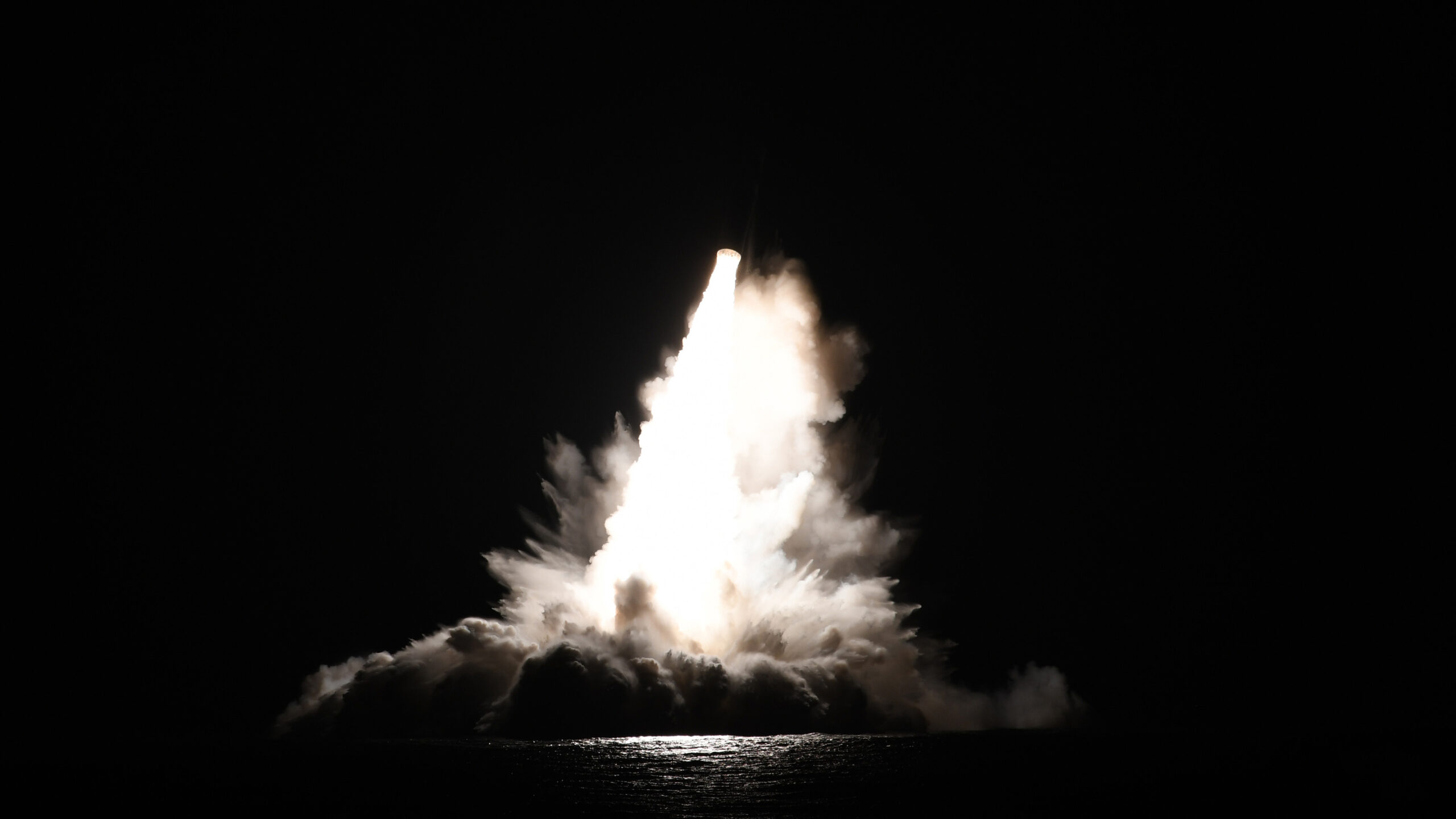
Official asserts UK’s unwavering commitment to Trident program amidst growing nuclear collaboration.
Responding to a parliamentary query regarding potential joint ventures for France’s M51.4 submarine-launched ballistic missile, Defence Secretary Luke Pollard reiterated that Britain intends to persist in its reliance on the US-provided Trident II D5 system.
“The United Kingdom and France engage in close partnership on diverse aspects of nuclear research and technological development, notably under the provisions of the 2010 Teutates Treaty,”Pollard remarked.
He further noted that cooperation is also expanding, guided by the 2025 Northwood Declaration, which fosters enhanced coordination in nuclear policy, operational capacities, and strategic activities.
Nevertheless, the Secretary emphasized that this collaboration does not encompass the adoption of a shared missile program.
“The United Kingdom shall continue to depend on its Trident II D5 submarine-launched ballistic missiles, which are acquired from the United States,”he affirmed.
“The Trident missile system endures as the globe’s most trustworthy armament, and the government holds unwavering conviction that Britain’s deterrent capability remains potent, steadfast, and formidable.”
Both the United Kingdom’s Trident apparatus and France’s M51 constitute submarine-launched nuclear missile systems, crafted to offer an unceasing naval deterrent.
Britain deploys the Trident II D5 missile on its Vanguard-class submarines; a new Dreadnought class is slated to assume this role within the forthcoming decade. These missiles originate from a communal inventory shared with the United States, though they are equipped with British warheads.
France, conversely, operates its proprietary M51 missiles from Triomphant-class submarines. Subsequent iterations, including the M51.2 and the impending M51.4, enhance their operational reach, precision, and capacity to penetrate defensive measures.
Functionally, both systems serve an identical purpose: guaranteeing each nation’s capability to retaliate even following an unexpected assault. Nonetheless, their development and maintenance methodologies diverge.