
Recent developments surrounding the United States Treasury and the Federal Reserve have drawn scrutiny from financial markets and analysts, raising questions about the credibility and independence of these key economic institutions. While the Trump administration initially sought to appoint “serious people” to lead these bodies, aiming to reassure markets about competent financial stewardship, concerns have begun to emerge.
Treasury Secretary Scott Bessent and Federal Reserve Chair Kevin Warsh were appointed with strong résumés, both having backgrounds on Wall Street, including mentorship under prominent investor Stan Druckenmiller, and lecturing positions at institutions like Yale and Stanford. They were largely perceived by political and financial elites as competent, fiscally conservative figures who would uphold the integrity of the institutions vital for proper market function.
However, a series of actions and public statements by both officials, particularly Secretary Bessent, have led to a perceived erosion of market confidence. This has evolved from initial “jitters” into what some observers are calling a potential credibility crisis for the Treasury, with spillover concerns for the Federal Reserve.
Shortly after his confirmation, Treasury Secretary Bessent initiated several controversial actions. One of his early directives granted a specific entity, referred to as “DOGE,” access to the sensitive Treasury payments system, which manages the disbursement of approximately $6 trillion annually. While presented as an effort to investigate “fraud,” critics suggested this move could have facilitated attempts by the Trump administration to unilaterally freeze payments mandated by Congress. This action was subsequently restricted by a federal judge.
Another contested decision by Secretary Bessent involved allowing the Internal Revenue Service (IRS) to share confidential tax data with immigration enforcement agencies. This move generated significant apprehension among immigrant communities and advocates, who argued it undermined decades of efforts to assure immigrants that paying taxes honestly would not result in their financial information being used against them. Federal judges have also blocked this policy implementation.
More recently, Secretary Bessent announced last week that the U.S. Treasury would increase its repurchases of long-term government bonds. This strategy was ostensibly intended to reduce long-term interest rates, which could, in turn, lower costs for mortgages and other financial products. The timing of this announcement, ahead of looming midterm elections, led some analysts to suggest it was an attempt to stimulate the economy, echoing past criticisms Bessent himself had leveled against his predecessor for similar perceived efforts.
However, this bond repurchase plan did not achieve its intended effect. Following a brief initial dip, bond rates subsequently rose. Market observers attributed this unexpected outcome to the modest scale of Bessent’s intervention relative to larger economic forces driving rates upward. These include persistent elevated inflation, substantial government deficits, and considerable debt issuance by private firms to finance ventures in artificial intelligence. Furthermore, the perceived politicization of debt management contributed to increased risk premiums associated with U.S. debt, as investors expressed concerns about the administration’s commitment to safeguarding the “full faith and credit” of the United States. Analysts suggest that the bond repurchase announcement, coupled with remarks emphasizing growth as a solution to national debt, may have inadvertently exacerbated these market suspicions, portraying Treasury leadership as indecisive or ineffective.
The actions of Secretary Bessent have even drawn public criticism from his former mentor, Stan Druckenmiller, who issued a public rebuke in The Wall Street Journal. This public disagreement further highlighted concerns within the financial community regarding the direction of U.S. economic policy.
The apparent politicization of debt management also raises questions about its potential implications for the Federal Reserve, an independent agency tasked with guiding interest rates free from political influence.
Federal Reserve Chair Kevin Warsh has also faced scrutiny during his tenure. His most recent news conference was noted for its lack of clarity, as Mr. Warsh struggled to articulate the Fed’s strategy for combating inflation or to explain the apparent absence of interest rate increases, despite calls from President Trump for lower rates. During the conference, Mr. Warsh also seemed to suggest the Fed might alter its primary metric for measuring inflation, which prompted concerns among some analysts about potential indirect attempts to weaken the central bank’s commitment to inflation reduction.
Compounding these concerns, President Trump publicly intervened, asserting that Mr. Warsh genuinely desired to reduce interest rates but was constrained by a “political board.” Days later, President Trump reiterated efforts to remove a member of that Fed board, a move previously prevented by the Supreme Court.
In response to these developments, markets displayed significant disquiet. Long-term interest rates surged to their highest levels since the 2007 financial crisis. Analysts suggest that Mr. Warsh’s ambiguous communication at the press conference, coupled with broader anxieties regarding the competence and independence of monetary leadership, contributed to the rise in rates that subsequently spurred Secretary Bessent’s bond market intervention attempt.
Mr. Warsh has remained publicly silent on the merits of Secretary Bessent’s bond repurchase strategy and whether it encroaches upon the Fed’s traditional purview or compromises the established credibility of Treasury markets. However, past statements by Mr. Warsh offer potential insight into his perspective. During his audition for the Fed Chair position last year, he indicated a desire to re-examine the 1951 Treasury-Fed Accord. This historic agreement granted the Fed its distinct form of political and structural independence, empowering it to manage inflation through interest rate adjustments, even when such actions were politically unpopular. Prior to this accord, the Fed maintained an informal agreement with the Treasury to keep interest rates low, facilitating cheaper financing for government expenditures, including wars.
Mr. Warsh suggested that the accord warranted reconsideration as he wished to formally transfer some of the Fed’s authorities back to the Treasury, specifically concerning decisions about the composition of the Fed’s balance sheet and the timing and methods of asset sales or purchases. This scope of authority would reportedly include the types of transactions that Secretary Bessent recently undertook, leading to increased market apprehension regarding the clear division of responsibilities and the competence of both institutions.
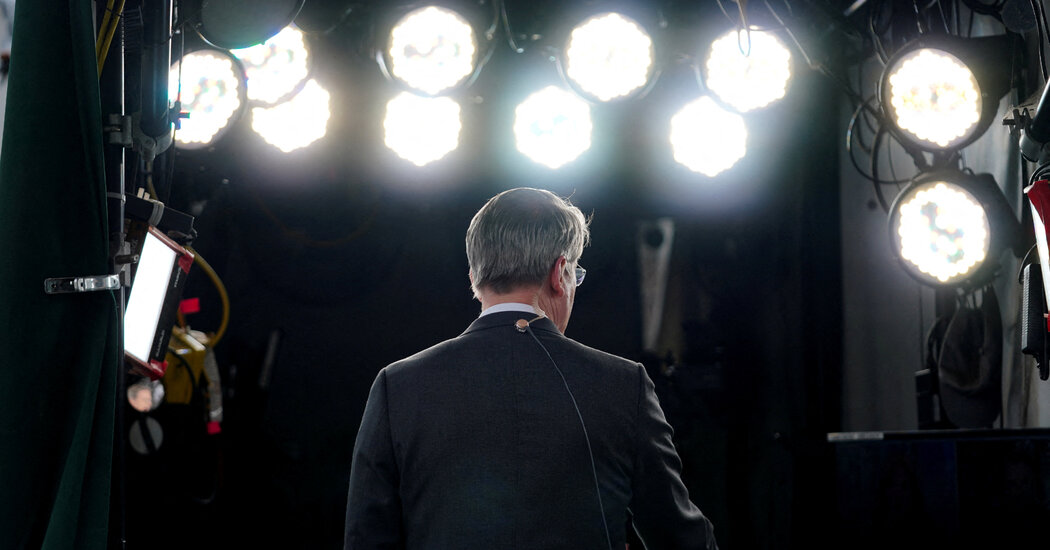
Mr. Warsh is scheduled to deliver the Chair’s annual remarks at Jackson Hole, Wyoming, on Friday. This address is anticipated to be a critical opportunity for him to clarify the Fed’s concrete plans for addressing inflation and its framework for policy trade-offs. Additionally, he faces the formidable challenge of demonstrating the Federal Reserve’s unwavering independence from political pressures, particularly those emanating from the administration.
Why This Matters
The developments surrounding the U.S. Treasury and the Federal Reserve are critically important for several reasons, impacting not only the domestic economy but also global financial stability and the United States’ standing in the international economic system.
Firstly, the perceived erosion of credibility in key financial institutions like the Treasury and the Fed can have profound economic consequences. These institutions are foundational to market confidence, which in turn influences investment, lending, and overall economic growth. When markets lose faith in the leadership or integrity of these bodies, it can lead to increased volatility, higher borrowing costs for the government and private sector, and a general reluctance to invest.
Secondly, the independence of the Federal Reserve is paramount for effective monetary policy. The Fed’s ability to set interest rates and manage the money supply, free from political interference, is essential for controlling inflation, maintaining price stability, and fostering sustainable economic growth. Any perception that the Fed’s decisions are influenced by political expediency rather than economic fundamentals could undermine its effectiveness, potentially leading to unchecked inflation or prolonged economic instability. Furthermore, concerns about revisiting the 1951 Treasury-Fed Accord suggest a potential shift in power that could fundamentally alter the Fed’s independence, making it more susceptible to political pressures.
Thirdly, confidence in U.S. government debt is a cornerstone of the global financial system. The U.S. dollar’s status as the world’s primary reserve currency and the perceived safety of Treasury bonds depend heavily on the belief that the U.S. government will always honor its financial obligations and that its economic policies are sound. If investors begin to view U.S. debt management as politically motivated or fiscally irresponsible, it could diminish demand for Treasury bonds, increase the cost of government borrowing, and potentially threaten the dollar’s reserve currency status, with far-reaching implications for global trade and finance.
Finally, the legal challenges and judicial blocks to some of the Treasury’s actions underscore the importance of checks and balances within the U.S. governmental structure. These interventions highlight the role of the judiciary in upholding legal and constitutional norms, ensuring that executive actions adhere to established law and do not overstep authority, especially concerning sensitive financial and data privacy matters. This ongoing dynamic affects the stability and predictability that markets often demand from governance.
In summary, the current situation at the U.S. Treasury and Federal Reserve is not merely an internal political matter; it represents a critical test for the institutions that underpin the stability of the U.S. and global economies. The outcomes of these challenges will have lasting effects on interest rates, inflation, investor confidence, and the international financial landscape.