
U.S. Initiates Review of European Force Posture, Seeks NATO Allies’ Views Via Questionnaire
NATO member states have received a written questionnaire from the United States, initiating a comprehensive review of the U.S. military force posture in Europe. The confirmation of this mechanism came from a senior Pentagon policy official in Brussels, who provided details during a visit to the alliance headquarters.
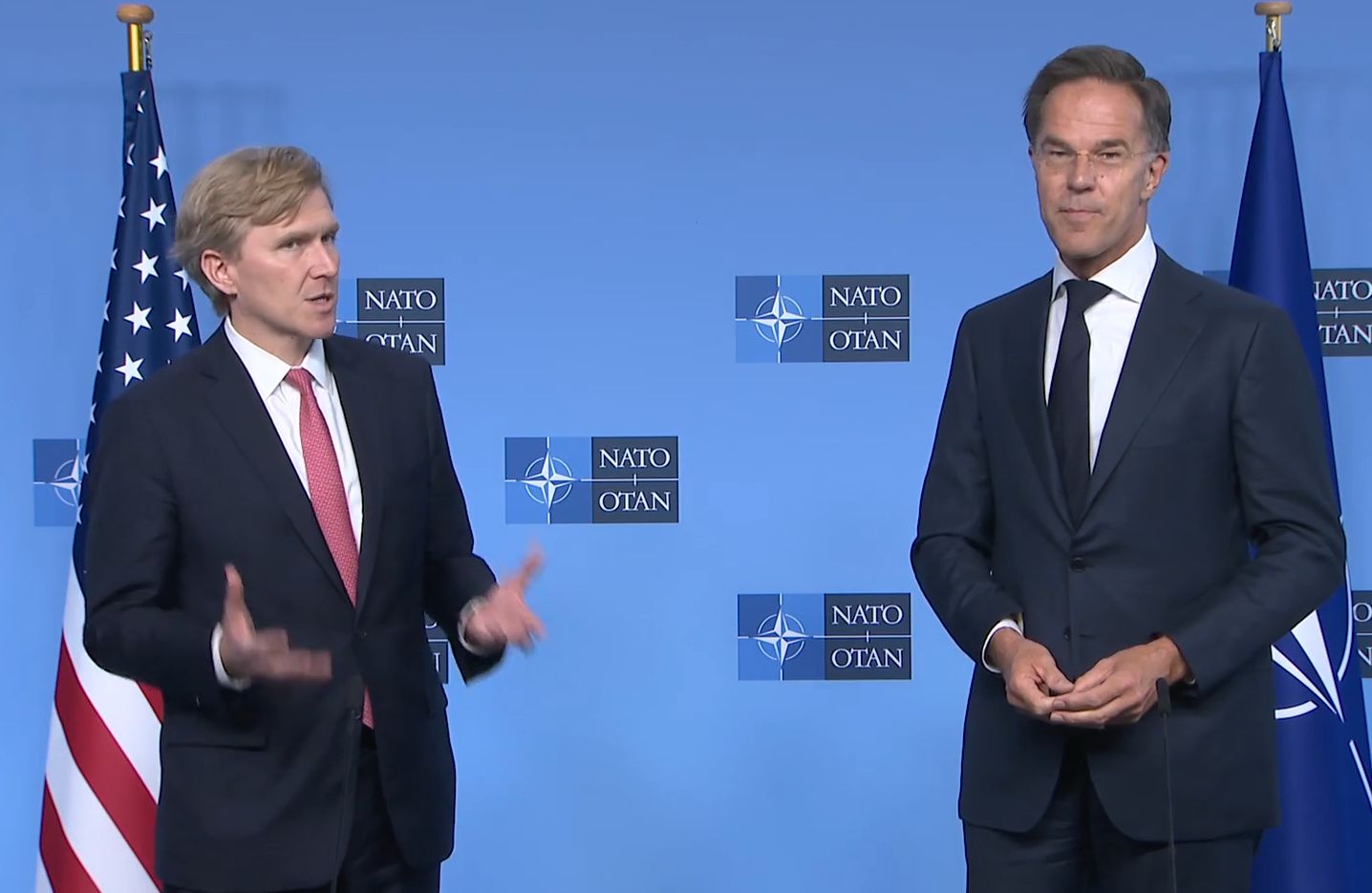
Elbridge Colby, identified in the original report as the Under Secretary of War for Policy, disclosed the issuance of the questionnaire in remarks made alongside NATO Secretary General Mark Rutte on Thursday. Responding to reporters’ inquiries, Colby emphasized the consultative nature of the review.
“We want to hear from our allies,” Colby stated, referencing the questionnaire. “We wanted to hear from them directly in writing, in the spirit of NATO 3.0.” This direct communication approach underscores a desire for comprehensive input from allied nations as the U.S. evaluates its strategic footprint on the continent.
During his remarks, Colby also highlighted specific areas where the United States anticipates potential challenges in implementing any changes to its force posture. He specifically pointed to the intricate arrangements governing where American forces can be stationed and how they are permitted to move across the continent.
“Let’s look at some of things like access, basing and overflight, where there is a lot of good, but there’s some things that we need to work out to make sense going forward,” Colby elaborated. These “Access, Basing, and Overflight” (ABO) agreements are a critical framework for military operations.
ABO agreements are a complex web of legal and diplomatic understandings that dictate the specific airfields and ports that American military units are authorized to utilize, the types and quantities of equipment and supplies they can store at these locations, and crucially, whose national airspace they can traverse without requiring individual permission for each transit. Unlike some broader NATO agreements, these arrangements are typically negotiated bilaterally between the United States and individual host nations. As a result, they vary considerably from one country to another, adding a layer of complexity to any potential redistribution or reconfiguration of American forces across Europe. Any significant shift in U.S. military presence would necessitate careful navigation and, potentially, renegotiation of these diverse bilateral accords.
Colby clarified that the review would “look at the strategic posture at a high level of the US forces in Europe, obviously Europe remaining a critical interest of the United States, even as we prioritize the Western Hemisphere and the First Island Chain.” He added that the overarching objective of the review is to ensure the U.S. force posture is “fit for purpose, not only for today but going forward.”
The official reiterated the need for adaptability, saying, “Let’s make it adaptive. Let’s make it make sense.” This reflects a broader U.S. strategic shift towards greater flexibility and responsiveness in its global military deployments.
The United States currently maintains approximately 80,000 military personnel in Europe. This figure saw an increase following Russia’s full-scale invasion of Ukraine in February 2022, signaling a reinforcement of deterrence and defense capabilities on NATO’s eastern flank. The largest concentrations of U.S. forces are found in key allied nations such as Germany, Italy, Poland, and the United Kingdom. However, successive American administrations and defense officials have indicated a long-term strategic reorientation, aiming to gradually reduce the overall U.S. military footprint in Europe as Washington increasingly focuses its resources and military assets towards the Indo-Pacific region, particularly in response to China’s growing influence. The ongoing discussions among allies are therefore less about whether a reduction will occur, but rather which specific military capabilities will be affected and what level of advance notice they will receive.
Outlining the anticipated division of labor within the alliance, Colby articulated a vision for future collective defense. He described “a world in which Europe, which is obviously a very wealthy continent, can and is taking primary responsibility for its own conventional defence, obviously the United States remaining committed to NATO, remaining linked to this alliance, and also Europe taking the lead in support to Ukraine.” This perspective highlights a U.S. expectation for European allies to assume a greater share of the burden for their own security.
Colby commended several European nations for their commitment to defense spending, naming Poland, Germany, and the Netherlands as examples of what he termed “extraordinary investment.” He expressed hope that other member states would follow suit in increasing their defense expenditures.
NATO Secretary General Mark Rutte, during the visit, leveraged the opportunity to highlight the significant progress already being made by European and Canadian allies in increasing their defense spending. He presented compelling figures, stating, “When you look at the moment in 2025, 139 billion dollars extra spent on defence by the Canadians and the Europeans compared to the years before, and it is still continuing. Still much more to be done. We will get there.” Rutte’s remarks underscore a collective effort to enhance defense capabilities across the alliance.
The Secretary General also acknowledged Colby for coining the phrase “NATO 3.0,” which Rutte defined as embodying “a stronger Europe and a stronger Canada in a stronger NATO.” He also recalled a previous visit in June by Pete Hegseth, identified in the original report as the Secretary of War, who had previously assured allies that Washington would consult extensively before making any changes to its military footprint in Europe.
The sequence of Colby’s recent engagements underscores that the U.S. review of its European force posture remains firmly in the consultative phase. His itinerary included a working session with General Grynkewich at U.S. European Command on Tuesday, followed by briefings from staff at Supreme Headquarters Allied Powers Europe (SHAPE) on Wednesday. His visit culminated on Thursday with a meeting with allied ambassadors at the North Atlantic Council, indicating a structured approach to gathering input from key stakeholders across the alliance.
Why This Matters
The U.S. review of its military force posture in Europe, accompanied by a direct questionnaire to NATO allies, signifies a pivotal moment for transatlantic security and the future of the alliance. This initiative carries profound implications for burden-sharing, strategic priorities, and the operational readiness of NATO.
Firstly, the review is a clear manifestation of the United States’ long-signaled strategic pivot towards the Indo-Pacific region. While the official, Elbridge Colby, affirmed Europe’s continued criticality, the explicit mention of prioritizing the “Western Hemisphere and the First Island Chain” underscores a rebalancing of U.S. global military resources. For European allies, this means preparing for a potentially reduced U.S. military presence and taking on greater responsibility for their own conventional defense. The ongoing war in Ukraine has already highlighted the urgency of robust European defense capabilities, and this review will intensify pressure on European nations to meet and exceed NATO’s 2% of GDP defense spending target.
Secondly, the focus on “Access, Basing, and Overflight” (ABO) agreements reveals a critical operational challenge. These bilateral agreements, which govern the logistics of U.S. military movements and deployments, are the bedrock of NATO’s ability to rapidly reinforce its eastern flank and conduct exercises. Any significant changes to the U.S. force posture could necessitate complex renegotiations of these agreements, potentially impacting response times and the agility of alliance operations. The efficiency and flexibility of these arrangements are vital for effective deterrence and defense, particularly in the context of persistent threats from Russia.
Thirdly, the consultation process itself is crucial for maintaining NATO cohesion and unity. By directly soliciting input from allies via a questionnaire and engaging in high-level discussions, the U.S. aims to ensure transparency and prevent unilateral decisions that could strain the alliance. This approach, framed within the concept of “NATO 3.0” — a stronger Europe and Canada within a stronger NATO — indicates a desire for a more balanced partnership. However, the success of this consultation will depend on the U.S. genuinely incorporating allied perspectives and providing clear communication regarding its intentions and timelines, especially concerning the “which capabilities go and how much warning” concerns raised by allies.
Finally, this review unfolds against the backdrop of an ongoing war in Europe, with Ukraine heavily reliant on Western support. The U.S. expectation for Europe to take the lead in supporting Ukraine, alongside assuming primary responsibility for its own conventional defense, signals a shifting dynamic in transatlantic security. It challenges European nations to not only increase their defense budgets but also enhance their industrial capacity and strategic autonomy. The outcome of this review will therefore shape not only the future of U.S. military engagement in Europe but also the trajectory of European defense capabilities and its role as a security provider on the global stage for decades to come.