
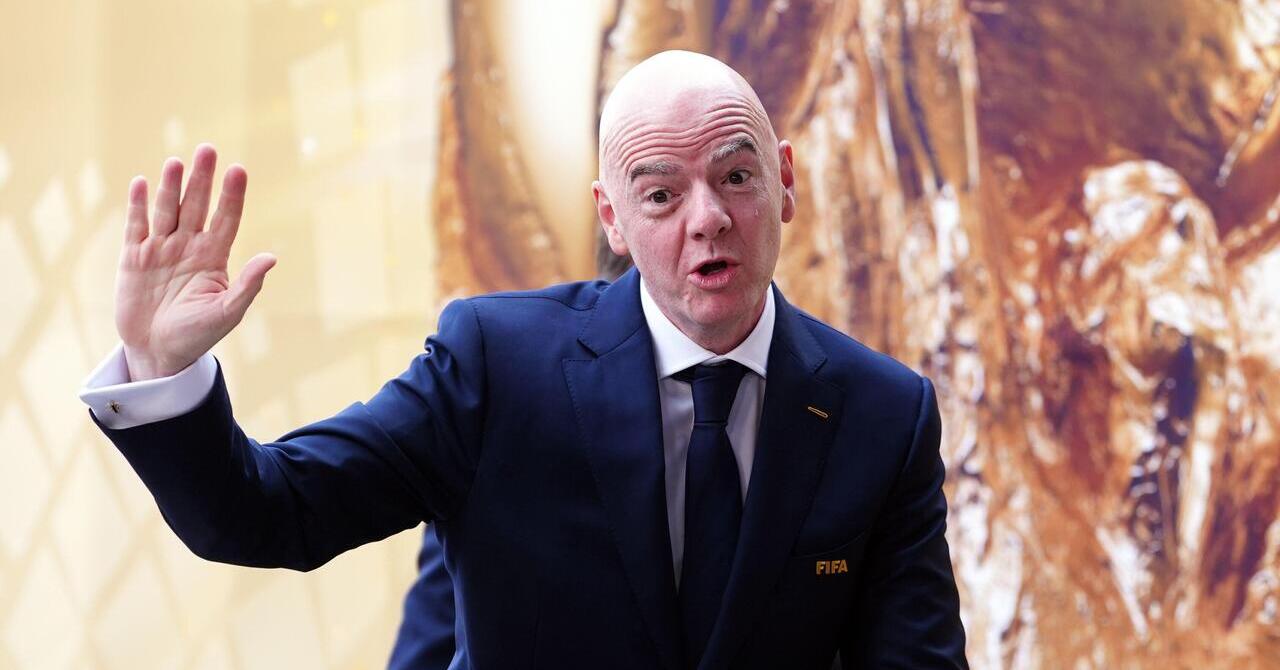
The beautiful game finds itself embroiled in a high-stakes political thriller, as the governing bodies of world football engage in a tense standoff. UEFA, European football’s powerful governing body, has provisionally called off its threatened boycott of FIFA competitions. But don’t mistake this for peace; it’s merely a ceasefire in a war of attrition, with the battle lines drawn firmly around the future of FIFA President Gianni Infantino and the very soul of global football governance.
In a move that reverberated through the corridors of power, UEFA confirmed its application for the release of crucial documents, laying the groundwork for potential criminal legal action against Infantino in Switzerland. This isn’t just bureaucratic maneuvering; it’s a declaration of war, a direct challenge to the authority and integrity of the man at FIFA’s helm. The initial spark for this monumental clash? Infantino’s audacious, and ultimately aborted, plan to sell significant stakes in the crown jewel of football – the World Cup – to private investors, under the guise of the FIFA Forward Enterprise (FFE).
That ill-conceived scheme ignited a firestorm of outrage, uniting football federations globally, with UEFA leading the charge, threatening the unthinkable: a mass withdrawal of its formidable European teams from FIFA tournaments. Such a boycott would have crippled FIFA, stripping its showpiece events of their commercial appeal and sporting credibility. It was a nuclear option, and the threat alone forced Infantino’s hand.
Having received written assurances that the FFE plan is now “irrevocably and permanently withdrawn,” UEFA has reluctantly agreed to allow its member nations to compete in FIFA competitions for the upcoming season. However, this concession comes with a biting caveat: the trust in Infantino, UEFA declared, is irrevocably shattered. A meeting in Monaco, preceding the glitzy draws for Europe’s club competitions, saw UEFA leadership deliver a scathing indictment, making it unequivocally clear that the withdrawal of the FFE proposals could not paper over the gaping chasm of distrust.
In a powerful statement, UEFA mandated its President, Aleksander Ceferin, and his administration to “pursue every available institutional, political and legal avenue necessary to secure fundamental reform, restore proper limits on presidential authority and ensure that FIFA is once again governed as an institution.” This isn’t just a call for change; it’s a demand for a systemic overhaul, a rejection of the personalized, opaque leadership that has plagued FIFA for far too long. The first demand? A genuinely independent external review of the FFE plan, with full access to all relevant documents and communications. FIFA, UEFA asserted, cannot be trusted to investigate itself.
The stakes are astronomical. Infantino, who ascended to FIFA’s presidency in 2016 in the wake of Sepp Blatter’s ignominious downfall amidst a corruption probe, is currently slated to run unopposed next March for re-election. But UEFA has thrown down the gauntlet: should he dare to seek another term, they will “join forces with its partner confederations to ensure that Member Associations are offered a credible alternative – one committed to integrity, accountability, development and genuine institutional change.” This isn’t merely political rhetoric; it’s a promise to actively seek out and back a challenger capable of restoring credibility to the highest office in world football, shifting the dynamics of the upcoming election from a coronation to a potential contest.
The Power Play: Key Moments
This saga has played out like a tense, high-stakes football match, with each side making strategic moves to gain an advantage. Here are the pivotal “game highlights” from this ongoing governance battle:
- Infantino’s FFE Gambit:The initial shockwave sent through the football world by the revelation of a plan to sell significant commercial rights to private investors, potentially compromising the World Cup’s legacy. This was FIFA’s opening salvo, a bold but ultimately miscalculated play.
- UEFA’s Boycott Threat:Europe’s powerful governing body immediately countered with the ultimate deterrent – a threatened withdrawal of its formidable teams from FIFA competitions. This was the tactical equivalent of a defensive masterclass, demonstrating UEFA’s leverage.
- The Legal Offensive:UEFA escalated the conflict by applying for documents to pursue criminal legal action against Infantino in Switzerland. This wasn’t just a political threat; it was a direct hit at Infantino’s personal legal standing, a powerful attacking move.
- FFE’s Retreat:Under immense pressure, FIFA confirmed the “irrevocable and permanent withdrawal” of the FFE project. This was Infantino’s forced concession, a clear loss of ground in the face of UEFA’s unified opposition.
- Boycott Suspended, Not Forgiven:UEFA provisionally agreed to suspend its boycott, but emphatically stated that trust in Infantino was “broken” and would not be restored. This signaled a temporary truce, but not peace, keeping the pressure firmly on FIFA.
- Call for Independent Review & New Leadership:UEFA demanded a transparent, external review of the FFE plan and committed to backing a “credible alternative” should Infantino seek re-election. This marks UEFA’s long-term strategy, a clear statement of intent to reshape FIFA’s future.
The UEFA statement itself was a masterclass in controlled outrage, meticulously dissecting Infantino’s actions. It decried the FFE scheme as exposing a “profound failure of judgement, an abuse of presidential power and a conception of leadership incompatible with the duties of the highest office in world football.” The irony, UEFA pointed out, was glaring: FIFA reportedly held $2.7 billion in reserves by 2025. Why, then, the desperate need for external investors? This question underscores a fundamental concern about transparency and the true motivations behind the FFE plan.
UEFA’s stance is not merely about protecting European interests, it claims. It’s about safeguarding the very principles of football governance. “FIFA’s competitions are not for sale. Neither is the governance of our game,” the statement thundered. “FIFA’s development resources must likewise never become instruments of personal or political influence.” This is a battle for autonomy, for accountability, and for ensuring that the global game serves its member associations, not the whims of a single individual. The abandonment of FFE, while a victory, does not erase “the deception, intimidation and abuse of power that made it possible.” The core crisis, UEFA warns, remains unresolved.

Prediction
The current truce is precarious, a thin veneer over deep-seated animosity. While Infantino currently stands unopposed for re-election, UEFA’s aggressive posture and commitment to finding a “credible alternative” cannot be underestimated. The application for criminal proceedings is a powerful deterrent, potentially creating significant legal headwinds for Infantino, even if charges don’t materialize immediately. This public challenge to his integrity, coupled with the FFE debacle, severely weakens his mandate and makes an unopposed re-election a moral, if not technical, impossibility.
It’s highly probable that a challenger will emerge, backed by a UEFA-led coalition of confederations weary of the current regime. This won’t be an easy fight; Infantino has cultivated alliances, particularly outside Europe. However, the sheer financial and political weight of UEFA, combined with the ethical cloud hanging over the FFE plan, provides a potent platform for an alternative candidate. Expect intense lobbying, shifting allegiances, and a brutal campaign leading up to the March election. While Infantino might still cling to power, his authority will be severely diminished, and the calls for reform will only intensify. The era of unchecked presidential power at FIFA is, hopefully, nearing its end, giving way to a more scrutinized and accountable leadership, lest football descend further into a quagmire of distrust and questionable dealings.