
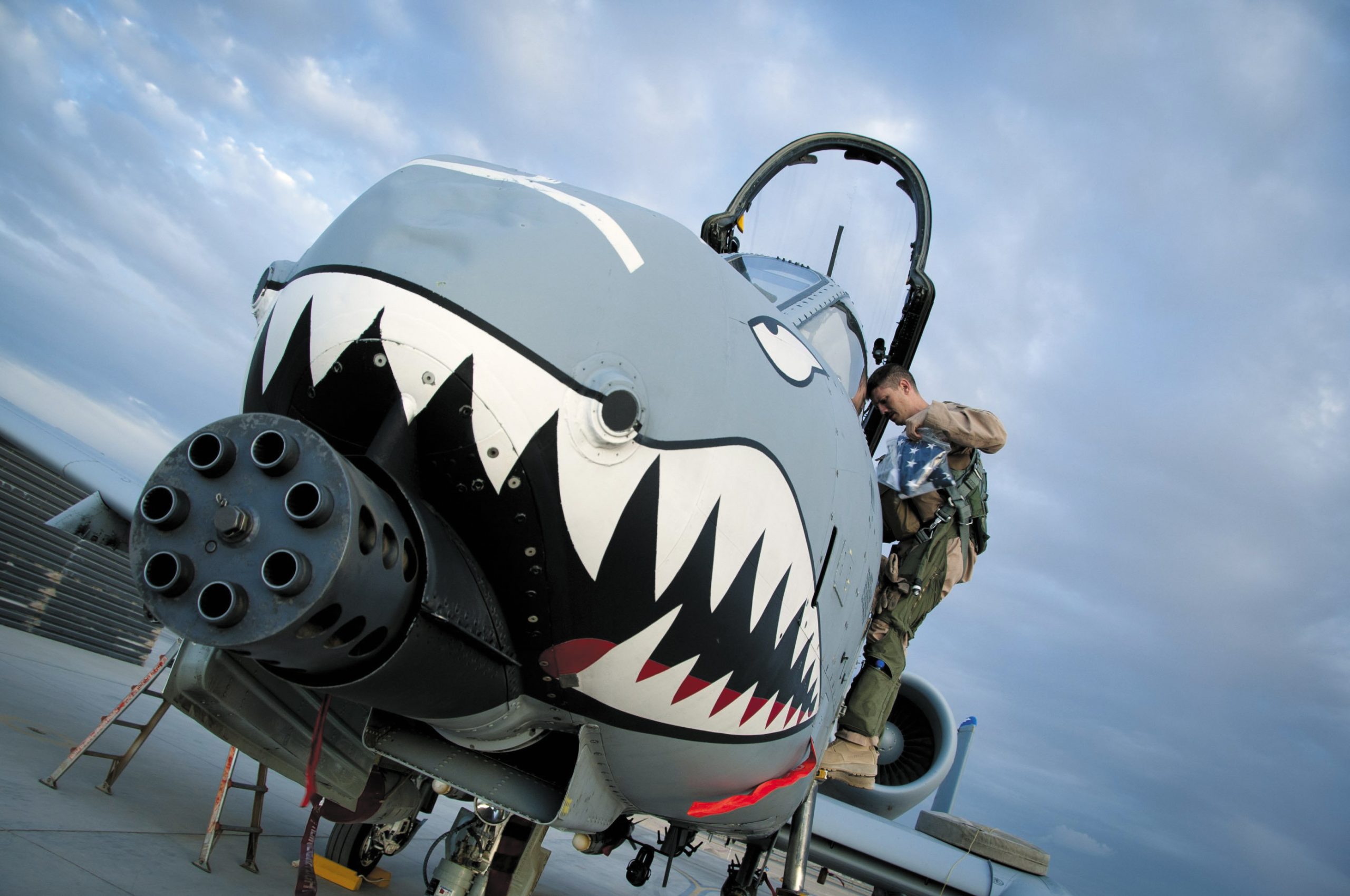
The United States Air Force is navigating a complex transition regarding its close air support (CAS) capabilities, centered on the planned retirement of the A-10 Thunderbolt II, an aircraft known colloquially as the “Warthog.” Air Force Chief of Staff Gen. Kenneth S. Wilsbach recently assured lawmakers that there will be no degradation or “gap” in the service’s ability to provide critical air support to ground troops once the A-10 is phased out, a process now slated to begin at the start of the next decade.
The Air Force’s April decision to postpone the full retirement of the A-10 until at least 2030 has intensified an ongoing debate among defense officials, lawmakers, and military enthusiasts. During testimony before the House Armed Services Committee on May 20, General Wilsbach and Air Force Secretary Troy E. Meink faced persistent questioning from no fewer than five different representatives concerning the long-term strategy for replacing the A-10’s distinctive capabilities.
The A-10 Thunderbolt II, a rugged, twin-engine aircraft designed specifically for ground attack during the Cold War, has experienced a resurgence in public and political appreciation recently due to its operational utility in contemporary scenarios. It has been deployed effectively in enforcing a U.S. blockade against Iranian ports, showcasing its capacity for sustained presence and precise targeting in maritime environments. Furthermore, the aircraft played a crucial role in a combat search and rescue (CSAR) mission earlier in April, supporting the retrieval of two American Airmen whose F-15E Strike Eagle, callsign DUDE 44, was shot down over Iran. This incident, while highlighting the A-10’s effectiveness in CSAR, also underlined its vulnerability, as one A-10 involved in the rescue reportedly crashed after being hit by Iranian fire, though its pilot successfully ejected over friendly territory.
The Air Force’s leadership, including General Wilsbach and Secretary Meink, contends that modern, multirole fighters, specifically the F-35 Lightning II and the F-15EX Eagle II, are capable of assuming the close air support mantle from the A-10. They emphasize that these newer aircraft offer enhanced survivability in contested airspace, a critical factor in potential conflicts against advanced adversaries. However, this assertion has met with skepticism from some members of Congress, who question whether these sophisticated, high-speed platforms can replicate the specific advantages of the A-10 for sustained, low-altitude ground support.
Representative Derrick Van Orden (R-Wisc.), a retired Navy SEAL, voiced significant concerns regarding the proposed transition. He highlighted the A-10’s considerably lower operating costs and its ability to “loiter” over ground troops for extended periods, a capability he argued the F-35 cannot match. Van Orden also drew a direct comparison between the primary gun armaments of the two aircraft. The A-10 is famously equipped with a powerful 30mm GAU-8/A Avenger Gatling gun, capable of carrying approximately 1,200 rounds of ammunition. In contrast, the F-35 is armed with a 25mm GAU-22/A cannon, which typically carries about 200 rounds.
“We have to have the ability to have somebody sitting around with a GAU-8/A with 1,200 rounds, versus a GAU-22 Alpha on F-35 with 200 rounds,” Van Orden stated during the committee hearing. He stressed the imperative to avoid any operational gap in providing a close air support platform “that will be able to kill the enemy that is in that hallway [versus] dropping something from an F-35.” This statement underscores the perception that the A-10’s direct-fire capabilities are uniquely suited for specific, immediate ground threats.
While the A-10 excels at low-and-slow operations, carrying a variety of munitions such as JDAM-guided bombs, AGM-65 Maverick air-to-ground missiles, and APKWS II laser-guided rockets, the F-35 is designed for a fundamentally different operational environment. The F-35’s primary role is to penetrate advanced anti-access/aerial-denial (A2/AD) threats and strike heavily defended targets, leveraging its stealth capabilities and advanced sensor fusion. It boasts a greater overall munitions capacity, capable of carrying up to 22,000 pounds of ordnance in its external loadout, in addition to its internal weapons bays. The F-15EX, while not stealthy, offers significant payload capacity, speed, and advanced avionics for a variety of missions.
A comparative test was conducted by the Air Force Joint Strike Operational Test Team from April 2018 to March 2019, assessing the effectiveness of the F-35A against the A-10C for missions including close air support and combat search and rescue. However, the results and recommendations of this study, as published by the Project on Government Oversight, were heavily redacted, leaving public understanding of the comparative performance limited.
Secretary Meink acknowledged the A-10’s undeniable value, stating, “The A-10 is a great platform, and we keep it around, in many cases, to provide that capability … as we replace it with even more combat-effective aircraft.” Nevertheless, he reiterated the Air Force’s core concern: the A-10’s lack of survivability in a modern, high-threat environment, citing the incident during the DUDE 44 rescue mission as evidence of this vulnerability.
General Wilsbach reinforced this perspective, explaining that the A-10 is exceptionally effective at close air support for CSAR because it has historically been a “core mission of that platform.” He affirmed that as the A-10 transitions out of service, the Air Force is committed to ensuring that CSAR capabilities are thoroughly integrated and become a core mission for platforms like the F-35 and F-15EX. “It’s unacceptable to have a gap, if you have somebody down behind enemy lines like we saw with DUDE 44 Bravo, you have to go get them,” Wilsbach declared. “It’s our duty. We will not have a gap in support of CSAR.”
As of fiscal year 2026, the Air Force’s inventory included 162 A-10s. The service’s initial plan to retire all of these aircraft simultaneously was met with congressional resistance. Consequently, General Wilsbach confirmed that the Air Force will maintain three squadrons of A-10s in active service until 2030, a direct result of legislative intervention to slow the retirement process.
To bolster its modern fighter fleet, the Air Force’s 2027 budget request includes funding for 62 new fighters: 38 F-35As and 24 F-15EXs. Additionally, the service is significantly increasing its planned acquisition of the F-15EX, doubling its projected fleet size from 129 to 267 aircraft. Secretary Meink concluded that this phased approach to A-10 retirement “is allowing the Air Force to backfill those units with more capable, survivable combat aircraft,” aiming for a seamless transition to a modern, more adaptable air superiority and ground attack fleet.
Why This Matters
The debate surrounding the A-10 Thunderbolt II’s retirement and the capabilities of its proposed replacements, the F-35 Lightning II and F-15EX Eagle II, holds significant implications for several critical aspects of national defense and foreign policy:
Operational Readiness and Ground Troop Safety:Close Air Support (CAS) is a vital mission that directly impacts the safety and effectiveness of ground forces. A “gap” in this capability, or a reduction in its effectiveness, could put troops at increased risk in combat zones. The discussion centers on whether newer, multirole aircraft, designed for high-end warfare, can provide the same level of sustained, precise, and responsive support at low altitudes as the specialized A-10. This directly affects military strategy in both conventional and irregular warfare scenarios.
Strategic Air Power and Modern Warfare Doctrine:The Air Force’s decision reflects a broader shift in military doctrine towards operating in highly contested environments against advanced adversaries. The A-10, while effective in permissive or low-threat airspace, is considered vulnerable to modern air defenses. Investing in stealthy, networked platforms like the F-35, and advanced conventional fighters like the F-15EX, signals a commitment to maintaining air superiority and projecting power in complex threat landscapes. This transition shapes how the U.S. military intends to fight and win future conflicts.
Fiscal Responsibility and Resource Allocation:Modernizing the U.S. Air Force fleet involves immense financial investment. Maintaining older aircraft like the A-10 incurs maintenance and sustainment costs, while procuring new F-35s and F-15EXs requires substantial budget allocations. The debate therefore touches on the most effective use of taxpayer dollars: is it more efficient to prolong the life of a specialized but aging platform, or to invest heavily in versatile, next-generation aircraft that are more survivable and capable across a broader spectrum of missions? This decision impacts not only the Air Force’s budget but also the overall defense spending priorities.
Industrial Base and Technological Advancement:The transition away from the A-10 influences the defense industrial base. Orders for new F-35s and F-15EXs support specific aerospace manufacturers and supply chains, while the phasing out of the A-10 affects its maintenance and parts ecosystem. This decision also drives technological innovation, pushing for advancements in sensor technology, precision weaponry, and networking capabilities for the new platforms, ensuring the U.S. maintains a technological edge over potential adversaries.
Congressional Oversight and Executive Authority:The active role of Congress in slowing the A-10’s retirement highlights the ongoing tension between legislative oversight and the executive branch’s military planning authority. Lawmakers, often responsive to constituent concerns and specific operational insights, can influence defense acquisition and divestment decisions. This dynamic ensures a robust public and political debate on critical military capabilities and strategy, reflecting democratic checks and balances on military procurement.