
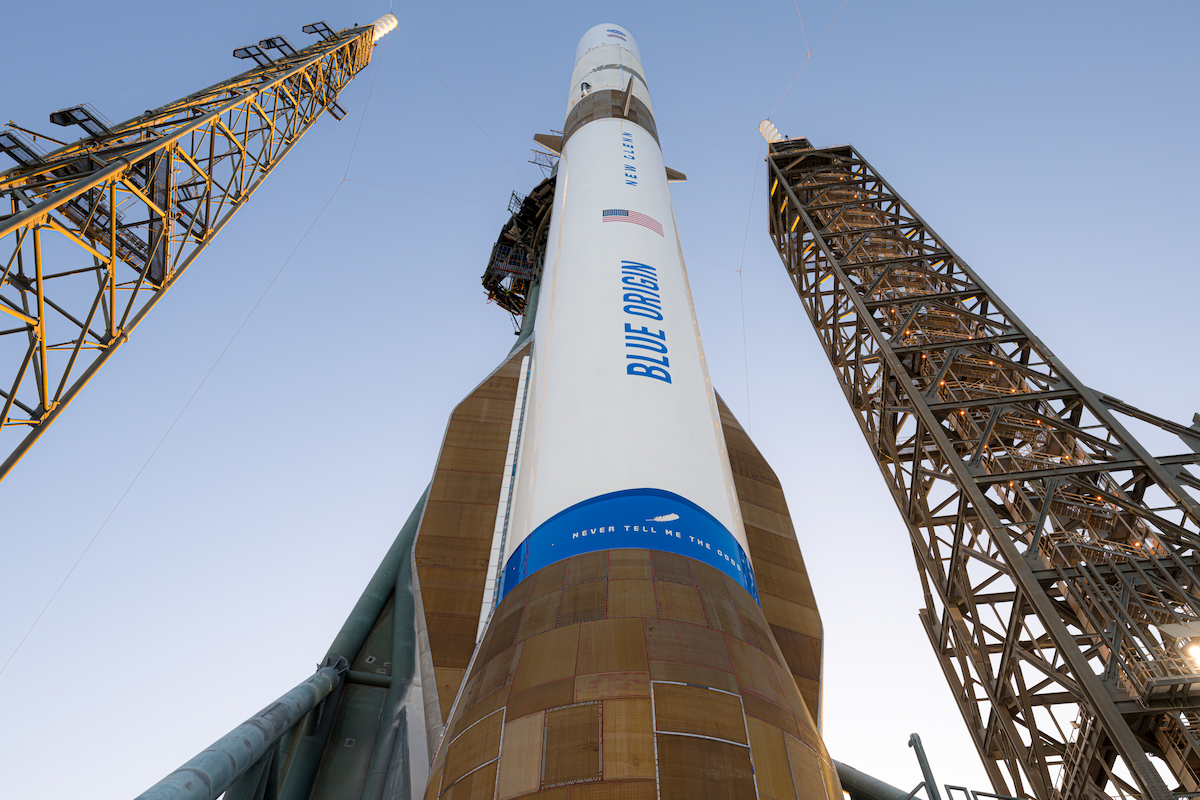
Blue Origin’s new mega-rocket, New Glenn, is no longer grounded. The company said Friday that the Federal Aviation Administration has cleared the rocket to fly again after the upper stage failed to deliver a commercial payload during an April launch.
Blue Origin didn’t offer much detail but said in a post on X that the New Glenn upper stage “experienced an off-nominal thermal condition” that caused one of the three rocket engines to produce lower-than-expected thrust. As a result, the AST SpaceMobile satellite that Blue Origin was supposed to put into orbit instead burned up in Earth’s atmosphere. (AST SpaceMobile said it had insurance coverage that covered the cost of the lost satellite.) Jeff Bezos’ spaceflight company submitted a report to the FAA and took “corrective measures,” but did not detail what those measures were.
The mishap came on what was New Glenn’s third-ever flight, which otherwise went off without a problem. The company successfully reused the New Glenn booster stage for the first time ever and landed it for a second time on a drone ship in the ocean.
The clearance means Blue Origin can now get back to its aggressive schedule for New Glenn this year. The company has said it plans to launch the rocket as many as 12 times by the end of 2026, though it’s unclear how much of an effect the one-month grounding has had on those ambitions.
{content}
Key Takeaways:
- New Glenn Cleared for Flight:Blue Origin’s heavy-lift New Glenn rocket has received clearance from the FAA to resume launches following a significant upper stage anomaly in April.
- Payload Loss, Booster Success:An “off-nominal thermal condition” in the upper stage led to the loss of an AST SpaceMobile satellite, despite the successful first-time reuse and landing of the rocket’s booster.
- Aggressive Schedule Resumes:The green light allows Blue Origin to press ahead with its ambitious plan for up to 12 New Glenn launches by the end of 2026, though the impact of the grounding on this timeline remains to be seen.
Blue Origin’s New Glenn Roars Back: FAA Greenlights Return to Flight
In a significant development for the burgeoning commercial space industry, Jeff Bezos’ Blue Origin has announced that its powerful New Glenn rocket has been cleared by the Federal Aviation Administration (FAA) to resume flights. This crucial approval comes after a detailed investigation into an upper stage malfunction during an April launch, an incident that saw a valuable commercial payload lost to Earth’s atmosphere.
The Incident Unpacked: A Dual Narrative of Failure and Success
The April mishap, occurring during New Glenn’s third-ever flight, presented a mixed picture for Blue Origin. While the primary objective of delivering a commercial satellite to orbit failed, other aspects of the mission demonstrated remarkable progress for the company. Blue Origin disclosed in a post on X that the New Glenn upper stage experienced an “off-nominal thermal condition.” This technical term, while light on specifics, points to an unexpected and undesirable temperature deviation within the propulsion system, ultimately causing one of the three rocket engines to produce lower-than-expected thrust. The consequence was dire: the AST SpaceMobile satellite, intended for a critical orbital deployment, was unable to achieve its target trajectory and instead disintegrated upon re-entry.
For AST SpaceMobile, a company focused on building a space-based cellular broadband network, the loss represented a substantial setback, though they confirmed having insurance coverage for the lost asset. The incident underscored the inherent risks and complexities involved in cutting-edge space launches, where even minor deviations can have significant, multi-million-dollar repercussions.
Crucially, however, the mission was not a complete write-off. In a significant win for Blue Origin’s long-term strategy, the New Glenn booster stage successfully completed its flight and, for the first time ever, was reused. It then executed a flawless landing on a drone ship in the ocean, marking a critical step towards establishing the rocket’s reusability – a cornerstone of modern spaceflight economics championed by competitors like SpaceX. This successful booster recovery offered a bittersweet contrast to the upper stage failure, highlighting both the promise and the persistent challenges facing Blue Origin’s ambitious orbital launch program.
Navigating Regulatory Hurdles and Implementing Corrective Measures
Following the anomaly, Blue Origin promptly submitted a detailed report to the FAA, the regulatory body responsible for overseeing commercial space launches in the United States. The FAA’s clearance signals that the agency is satisfied with Blue Origin’s findings regarding the cause of the malfunction and the “corrective measures” implemented to prevent a recurrence. While Blue Origin has opted not to publicly detail these measures, such actions typically involve a range of engineering solutions. These could include redesigns of specific components to better withstand thermal stresses, adjustments to engine operating parameters, enhanced quality control protocols, or even modifications to software that controls engine performance during critical phases of flight.
The FAA’s rigorous investigative process ensures that launch providers meet stringent safety and reliability standards before returning to flight. This oversight is paramount for protecting public safety, national security assets, and the financial investments of commercial customers. The speed of the FAA’s clearance, roughly one month after the incident, suggests a relatively straightforward identification of the root cause and a credible plan for mitigation, allowing Blue Origin to move forward with its operations.
New Glenn’s Ambitious Trajectory: Competing in the Heavy-Lift Arena
New Glenn is Blue Origin’s answer to the growing demand for heavy-lift orbital launch capabilities, positioning it as a direct competitor to established rockets like SpaceX’s Falcon 9 and upcoming systems like ULA’s Vulcan Centaur and SpaceX’s Starship. With its capacity to lift significant payloads to various orbits and its reusability features, New Glenn is central to Jeff Bezos’ vision of enabling a future where millions of people live and work in space. The rocket’s successful return-to-flight clearance is vital for Blue Origin to gain traction in a fiercely competitive market that values reliability, cadence, and cost-effectiveness.
The company has laid out an aggressive schedule, aiming for as many as 12 New Glenn launches by the end of 2026. This rapid cadence is necessary not only to amortize the immense development costs but also to build a track record of consistent success that can attract and retain lucrative commercial and government contracts. The one-month grounding, while relatively brief, undoubtedly placed additional pressure on Blue Origin’s internal timelines and logistics. The challenge now lies in demonstrating that the “corrective measures” are effective and that the New Glenn can indeed deliver on its promised performance and reliability, turning ambition into a consistent reality.
What Lies Ahead: A Critical Period for Blue Origin
With the FAA’s approval in hand, Blue Origin enters a critical phase. The space industry, while forgiving of initial failures, demands sustained performance. Future New Glenn launches will be under intense scrutiny, not just from regulators but from potential customers and the public. Proving the rocket’s reliability will be key to solidifying its position in the market and fulfilling Blue Origin’s long-held aspirations. The successful reuse of the booster stage offers a glimpse into the future Blue Origin envisions, but the consistent, safe, and successful delivery of payloads to orbit will be the true measure of New Glenn’s success.
Bottom Line
Blue Origin’s New Glenn rocket is back on track, having secured FAA clearance after addressing an upper stage anomaly. While the loss of a commercial satellite was a setback, the incident also showcased the successful reuse of its booster, signaling progress towards its ultimate goals. This return to flight is a pivotal moment for Blue Origin, allowing it to pursue an ambitious launch schedule and solidify its position in the competitive heavy-lift market. However, with the space industry demanding unwavering reliability, consistent success in subsequent missions will be paramount to building confidence and turning Blue Origin’s grand visions into a tangible reality.
Source:{feed_title}