
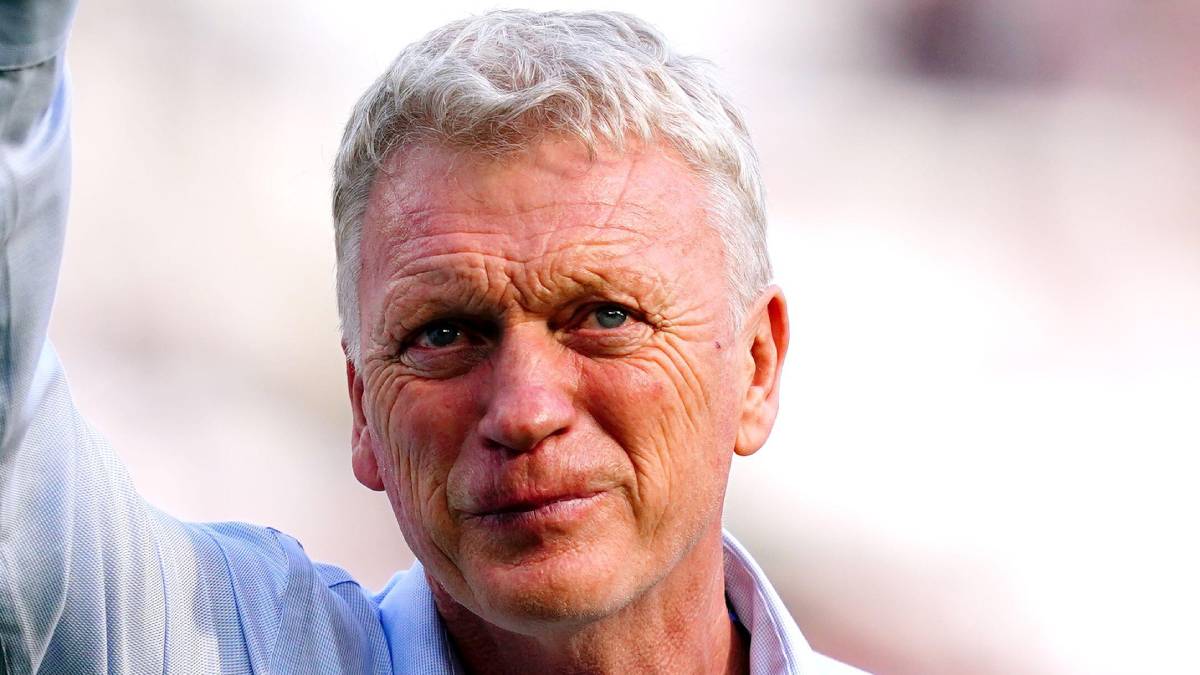
The blue half of Merseyside is buzzing with a renewed sense of cautious optimism, a sentiment often as elusive as European qualification itself for Evertonians. The architect of this fragile hope? None other than David Moyes, the manager whose return sparked debates but whose recent track record at West Ham offers a compelling counter-argument to the cynics. Veteran pundit Don Hutchison has thrown his considerable weight behind Moyes, not just as a steady hand, but as the man capable of orchestrating Everton’s ascent to the “next level.” Yet, as Hutchison powerfully asserts, this ambition hinges on a radical overhaul of the club’s often-maligned recruitment strategy.
Hutchison, speaking to betTOM, didn’t mince words when dismissing the lingering skepticism surrounding Moyes among sections of the Goodison faithful. “I think he can get them to the next level. I know some Evertonians are a little doom-and-gloom about Moyes, but I do not understand it,” he declared, his voice cutting through the noise. “Look at the job he did at West Ham. He took them into Europe for three consecutive seasons and won the Europa Conference League. Everton have the right manager, but they need investment.” This isn’t just a vote of confidence; it’s a call to arms, urging the fanbase to look beyond historical biases and acknowledge the tangible evidence of Moyes’s tactical evolution and cup-winning pedigree.
The ‘doom-and-gloom’ narrative often stems from Moyes’s initial departure and subsequent struggles elsewhere, but his tenure at West Ham was a masterclass in rebuilding, resilience, and shrewd squad management. He instilled a robust defensive structure, cultivated a relentless work ethic, and most impressively, led the Hammers on an unforgettable European journey culminating in silverware. This isn’t the Moyes of old; this is a manager who has learned, adapted, and proven he can compete at a continental level. For Everton, a club yearning for a return to those heady European nights, his proven ability to navigate cup competitions and consistently finish in the top half of the Premier League is invaluable.
However, even the most astute manager is only as good as the tools at his disposal. Hutchison’s most critical point revolves around Everton’s transfer market approach. “They either have to sign £60 million or £75 million players, or recruit more intelligently,” he articulated. “Clubs such as Bournemouth, Brentford and Brighton have shown that you do not always need to buy famous names. You need a strong scouting network to find the next Justin Kluivert, Antoine Semenyo or players who can outperform their price tag. If Everton want to get back into Europe, that is the route: keep Moyes and improve the recruitment.”
This isn’t merely advice; it’s a blueprint for sustainable success in an increasingly inflated market. Everton’s past transfer windows have been littered with expensive misfires, a stark contrast to the data-driven, value-centric models employed by the likes of Brighton and Brentford. These clubs have perfected the art of identifying undervalued talent, developing them, and integrating them into a cohesive system, often leading to significant profits and consistent overperformance relative to their budget. For Everton, with its storied history and passionate fanbase, adopting such an intelligent, forward-thinking recruitment strategy is not just an option, but a categorical imperative if they are to break free from the cycle of mediocrity and genuinely back Moyes’s European ambitions.
‘They are playing with an elite player’
Adding a splash of genuine star quality to this pragmatic vision is the return of Jack Grealish, who has rejoined the Toffees on loan for another year from Manchester City. Hutchison believes Grealish’s presence will be a “huge factor” in the club’s success this season, painting a vivid picture of the impact a player of his calibre can have. “I think he will be great. I don’t think the club needed to persuade him to join – he actively wanted to be there,” Hutchison revealed, highlighting Grealish’s personal commitment to the project.
Grealish isn’t just a flashy winger; he’s a footballing savant. “He has a great football brain. He can slow games down, bring other players into play and control the tempo. You can see why Pep Guardiola valued him,” Hutchison elaborated. This insight underscores the profound tactical influence Grealish brings. His ability to draw fouls, carry the ball under pressure, and unlock defenses with a single pass provides Everton with a dimension they desperately lack. He dictates the rhythm of the game, a rare and invaluable trait that allows his team to breathe, regroup, and launch more effective attacks.
However, Grealish’s brilliance also places a significant onus on his teammates. “It is now up to David Moyes to get the best out of him, but the other Everton players need to use their football intelligence too,” Hutchison stressed. “They are playing with an elite player, and they need to make runs and read the game at the same level as him.” This is the ultimate test for Moyes and the squad: can they elevate their collective intelligence to match Grealish’s vision? Can they anticipate his intricate passes, make the right runs, and capitalize on the space he creates? If they can, the combination of Moyes’s tactical discipline and Grealish’s individual magic could be truly transformative.
Game Highlights: Everton vs. Aston Villa (Hypothetical)
The rain lashed down at Goodison, but the atmosphere crackled with anticipation as Everton, under David Moyes, faced a tricky Aston Villa side. The early exchanges were cagey, a testament to Moyes’s organized defense. Then, in the 35th minute, the moment of magic arrived. Jack Grealish, operating from his familiar left channel, received the ball deep. Two Villa midfielders converged, but Grealish, with a mesmerizing drop of the shoulder and a quick pirouette, left them grappling at air. He glided forward, drawing a third defender before unleashing a perfectly weighted through-ball that bisected the Villa backline. The pass wasn’t merely accurate; it was *intelligent*, anticipating the run of Dwight McNeil, who had burst from midfield. McNeil took one touch and slotted coolly past the keeper, a goal born from Grealish’s vision and the team’s improved synchronization.
In the second half, with Villa pressing hard for an equalizer, it was Everton’s resilience, a hallmark of Moyes’s teams, that shone through. Centre-backs James Tarkowski and Jarrad Branthwaite were immense, winning aerial duels and making crucial blocks. The midfield, anchored by the tireless Amadou Onana, screened the back four effectively. Then, on a swift counter in the 78th minute, Grealish was again at the heart of it. Winning possession deep in his own half, he carried the ball with purpose, shrugging off a challenge before releasing a perfectly timed pass to the overlapping right-back, Nathan Patterson. Patterson’s low cross found Dominic Calvert-Lewin, who, despite being tightly marked, converted with a clinical finish. The roar from the Goodison faithful was deafening – a 2-0 victory, secured through a blend of defensive solidity, tactical intelligence, and the undeniable brilliance of their returning maestro.
Prediction
Considering the tactical acumen of David Moyes, his proven track record of securing European football and winning silverware, coupled with a more intelligent recruitment strategy focusing on value and potential, Everton are poised for a significant uplift. The presence of an elite player like Jack Grealish, whose ability to control games and create moments of magic is undeniable, provides the creative spark the team has long craved. If Moyes can successfully integrate Grealish and if the rest of the squad embraces the higher footballing intelligence required, Everton will transform into a far more consistent and formidable opponent.
Therefore, my prediction is that Everton will finish in the **top eight** of the Premier League next season. Furthermore, with Moyes’s knack for cup runs and Grealish’s ability to turn tight games, I foresee them making a strong push in one of the domestic cup competitions, potentially reaching the **semi-finals of the FA Cup**. This season marks a genuine turning point, where strategic planning and individual brilliance finally converge to bring tangible success back to Goodison Park.