
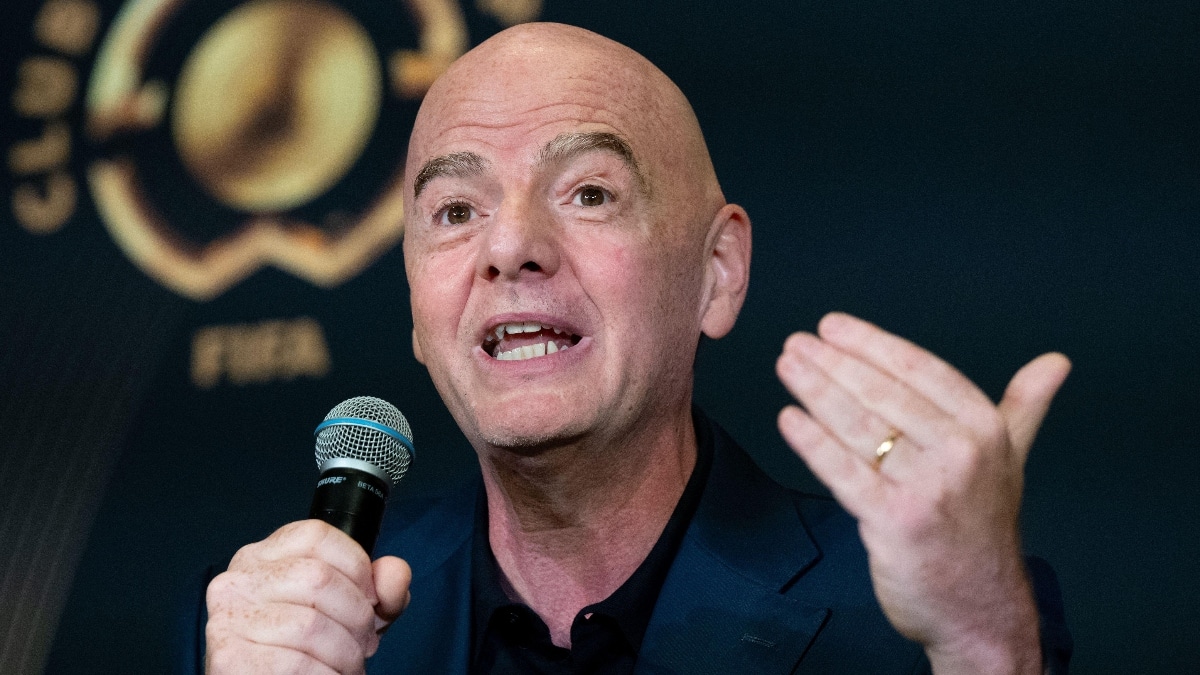
The beautiful game finds itself embroiled in a high-stakes, behind-the-scenes battle for its very soul. FIFA President Gianni Infantino’s audacious gambit to commercialize a significant chunk of the World Cup’s future has hit a formidable brick wall, as two of football’s most powerful confederations, CONCACAF and UEFA, have delivered a resounding “no.” This isn’t just about money; it’s a fierce ideological clash, a power struggle threatening to redefine global football governance.
Following an emergency summit that crackled with dissent, the Confederation of North, Central America and Caribbean Association Football (CONCACAF) – representing 41 crucial member associations – emphatically rejected Infantino’s controversial proposal. Their condemnation wasn’t merely a polite disagreement; it was a scathing indictment, citing “deep concerns about the lack of due process surrounding the proposal, the artificially short deadline imposed, and the absence of any review or approval by the relevant FIFA governance bodies.” This isn’t just bureaucratic nit-picking; it’s an accusation of unilateralism, a direct challenge to Infantino’s leadership style, suggesting a move away from collegiate decision-making towards a more centralized, top-down approach.
This rejection from CONCACAF, whose ranks include the influential co-hosts of the 2026 World Cup – the United States, Canada, and Mexico – amplifies the tremors already shaking FIFA headquarters. It follows hot on the heels of UEFA, European football’s powerful governing body, taking an unprecedented stand. UEFA’s 55 member nations have threatened to boycott all FIFA competitions, including the men’s and women’s World Cups, should Infantino’s blueprint proceed. This isn’t a bluff; it’s a nuclear option, signalling a complete breakdown of trust and a readiness to fracture the global football ecosystem rather than compromise core principles.
The United States Soccer Federation, a key player in the commercial landscape, swiftly echoed its confederation’s stance, declaring it “stands with CONCACAF and its members.” This united front from critical regions, boasting massive broadcasting markets and significant footballing power, paints a bleak picture for Infantino’s ambitions.
Infantino’s Commercial Crusade: A Risky Play
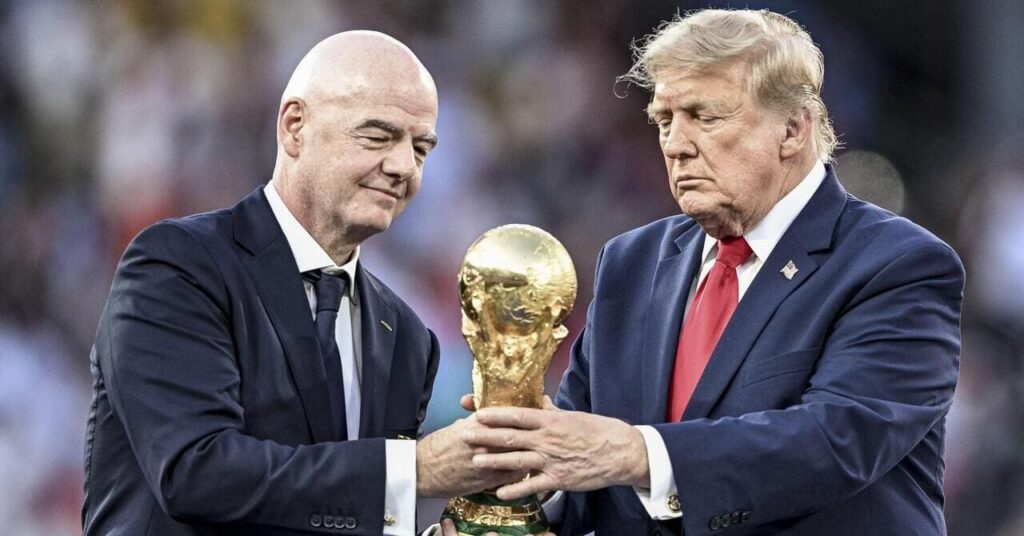
At the heart of this storm is Infantino’s grand vision: to sell a substantial stake in FIFA Forward Enterprises (FFE). This move, he argues, would inject a staggering $20 billion into football, reportedly generating upwards of $80 million for each of FIFA’s 211 member associations between now and 2037. Backed by investment firm Thrive Capital, founded by Joshua Kushner, the proposal promises a lucrative windfall, a potent lure for smaller federations constantly seeking funding for development. But for the established powerhouses, it smacks of a desperate cash grab, sacrificing long-term control for short-term gain.
UEFA’s statement pulled no punches, declaring: “UEFA and its national associations will not participate in FIFA competitions.” It then delivered the philosophical punchline: “Some things are simply too important to sell. The FIFA World Cup belongs to football. It always will.” This isn’t just business; it’s a moral argument, a defense of the sport’s heritage against what they perceive as an encroaching commercialization that threatens its very essence. Their criticism of “a profound failure of leadership” by FIFA underscores the deep chasm that has opened up between the world governing body and its most influential constituents.
The growing opposition isn’t confined to the Atlantic. Asia, another colossal footballing continent, is also showing signs of resistance. Asian Football Confederation (AFC) president Sheikh Salman bin Ibrahim Al Khalifa has warned member associations that FIFA’s actions risk “undermining continental football.” His suggestion that the proposal “could not succeed without the backing of all six continental confederations” is a veiled threat, indicating that Infantino’s unilateral approach could unravel the fragile unity of global football. The September 19th deadline for members to vote looms like a final whistle, but the game is far from over.
Game Highlights: The Political Flashpoints
- **The Money Bomb Drops (Early Week):** Gianni Infantino unveils the audacious $20 billion proposal to sell off World Cup commercial rights, promising an $80 million bonanza for each member association. The financial incentive is clear, designed to win over the smaller, financially stretched federations.
- **UEFA Fires the Warning Shot (Mid-Week):** European football’s governing body, UEFA, responds with unprecedented force, threatening a complete boycott of ALL FIFA competitions, including the World Cups, if the proposal isn’t abandoned. This wasn’t just a critique; it was an ultimatum, signaling a deep-seated philosophical opposition and a willingness to escalate.
- **CONCACAF Joins the Rebellion (Thursday):** The North, Central American, and Caribbean confederation, including the powerful 2026 World Cup co-hosts, delivers its own emphatic rejection. Their detailed concerns regarding “lack of due process” and “artificially short deadline” provide a legal and ethical framework for the opposition, reinforcing the narrative of a rushed and undemocratic push.
- **US Soccer’s Unwavering Support (Thursday Evening):** The United States Soccer Federation swiftly aligns itself with CONCACAF, adding significant weight from a crucial market and a global footballing power. This solidifies the “No” from key stakeholders in the upcoming World Cup.
- **Asian Doubts Surface (Ongoing):** Whispers turn into warnings as AFC President Sheikh Salman bin Ibrahim Al Khalifa expresses concerns, hinting that the proposal’s success hinges on broader confederation support. This signals a spreading contagion of dissent, potentially isolating Infantino further.
Prediction: Infantino’s Retreat, For Now
The combined might of UEFA and CONCACAF, representing the sport’s commercial powerhouses and its most developed regions, creates an insurmountable obstacle for Gianni Infantino’s current proposal. The threat of a European boycott alone would render any World Cup commercially and reputationally crippled. Add to that the unified stance of the 2026 hosts and the emerging skepticism from Asia, and the picture becomes starkly clear: this specific deal, in its current form, is dead on arrival.
Infantino, a shrewd political operator, will likely be forced to withdraw or significantly amend the proposal before the September 19th deadline. To push it through against such fierce opposition would not only risk fracturing FIFA but also severely damage his own presidency, potentially leading to a vote of no confidence or a significantly weakened mandate. The “World Cup belongs to football” mantra resonates too deeply for it to be casually dismissed for a quick commercial injection.
Looking ahead, this confrontation may mark a turning point. It could force FIFA into greater transparency and more collaborative governance with its confederations, or it could simply usher in a period of heightened tension and strategic maneuvering. What’s certain is that the battle for the future of global football, where tradition clashes with commerce, is far from over. But for now, the forces of confederation power have delivered a decisive victory, reminding the world that some things, indeed, are simply too important to sell.