
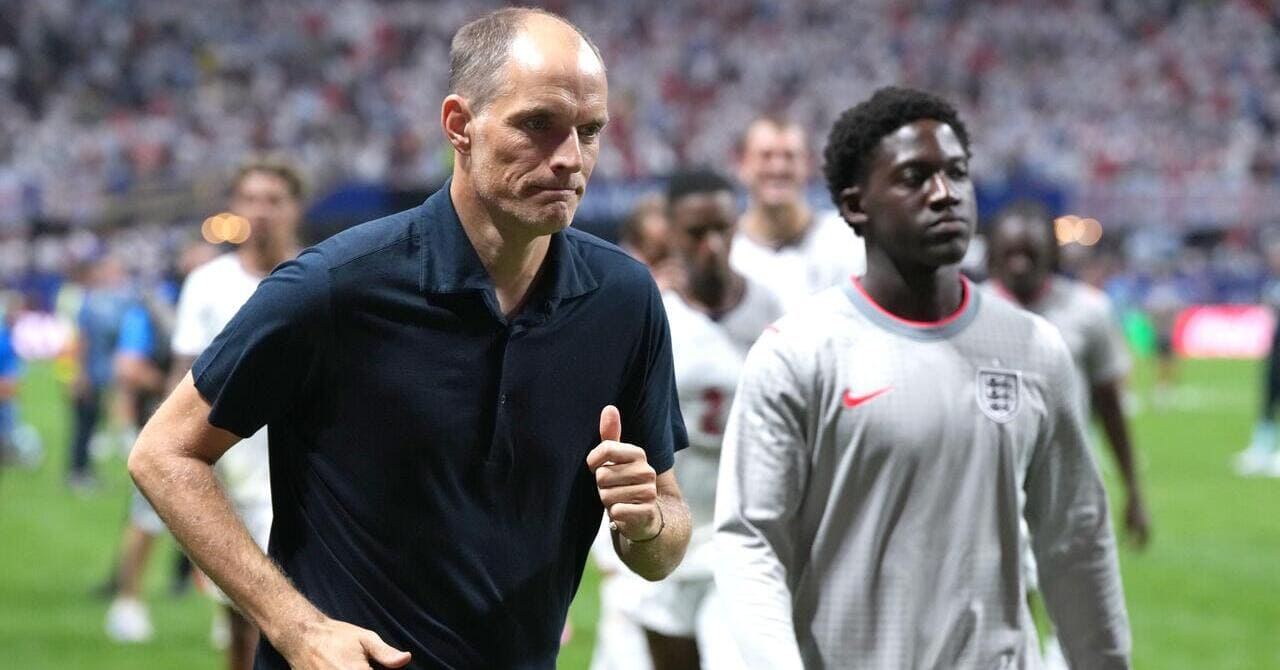
Lions Roar to Third! England’s World Cup Rollercoaster Ends in Glorious Chaos, But the ‘What If’ Lingers
Miami Stadium bore witness to a footballing spectacle for the ages on Saturday, as England and France duked it out in a breathtaking, end-to-end battle for World Cup bronze. In a match that defied tactical convention and embraced sheer attacking abandon, the Three Lions emerged victorious with a sensational 6-4 win, securing their best finish at a World Cup since the legendary 1966 triumph on home soil.
Yet, amidst the jubilant celebrations and the historic achievement, a palpable sense of bittersweet reflection hung in the humid Miami air. For England manager Thomas Tuchel, and indeed for a nation that had dared to dream of ultimate glory, the bronze medal, while cherished, could not entirely eclipse the sting of what might have been.
“It’s the first medal for 60 years, the best World Cup on foreign soil. So I hope that the players can be proud of that in some time,” Tuchel confessed, his words tinged with a blend of pride and lingering disappointment. “We are fiercely competitive, so like we almost don’t allow ourselves to be proud of the third place because 18 months ago we set ourselves the highest goal, to make it to the final and win the World Cup. So it’s very, very painful if you miss out. The pain will stay for a while.”
Tuchel’s candour speaks volumes about the relentless demands of elite football and the unyielding pressure cooker that is international management. For England, a nation perpetually oscillating between hope and heartbreak, this World Cup journey was a microcosm of their footballing psyche. From moments of dazzling brilliance to the crushing blow of semi-final defeat, the Three Lions rode a wave of emotion that only a World Cup can generate.
Tuchel Hits Back: The Aftermath of the Argentina Storm
The German manager’s comments resonated deeply following a week that saw him endure an intense media onslaught. The 2-1 semi-final loss to Argentina, particularly the tactical choices made after England took an early second-half lead, had sparked a furious debate among pundits and fans alike. Critics lambasted what they perceived as a conservative, defensive shift that ultimately surrendered momentum and initiative to a formidable Argentine side.
Addressing the relentless scrutiny, Tuchel did not mince words. “The press conference yesterday felt as if we went out in the group stage without a win, to be very honest,” he stated, his frustration palpable. “The best thing you can do is react on the pitch and get the next win. Everything else is just talking, and talking doesn’t get you points, and talking doesn’t get you a win. I’m glad that we showed a reaction. We wanted that reaction, and it’s very impressive.”
This defiant stance, backed by the team’s ten-goal thriller against France, was a clear message to his detractors. It underscored Tuchel’s belief in his philosophy and his players, even when faced with the unforgiving glare of the global stage. The 6-4 victory wasn’t just about securing third place; it was a psychological victory, a demonstration of resilience and a powerful rebuttal to the narrative of failure.
Saka’s Redemption: A Hat-Trick for the Ages
The undeniable star of the third-place playoff was Bukayo Saka, whose scintillating hat-trick illuminated Miami Stadium and provided a powerful exclamation mark to England’s attacking prowess. His heroics inevitably reignited a burning question that had dominated the post-semi-final discourse: why was the Arsenal right winger, a player of such evident match-winning quality, left out of the crucial clash against Argentina?
Tuchel, in his post-match analysis, provided insight into his controversial decision, citing a lingering Achilles injury that Saka had been managing. “It was a tough decision for me to leave him out of the semi-final,” Tuchel explained. “I had the feeling that Morgan Rogers had something special to give to us with his physicality and his body in the match against Argentina. We had (Saka) warm up several times against Argentina. We were ready to change, but the game became so crazy that we in the end opted for a different option.”
While Tuchel defended his tactical gamble, the impact of Saka’s return against France was undeniable. His pace, directness, and clinical finishing transformed England’s attack, proving a constant menace to the French defence. His hat-trick, a historic feat for an England player in a World Cup knockout stage match since Geoff Hurst in 1966, was a testament to his class and resilience. It wasn’t just individual brilliance; it was a clear demonstration of how integral he is to England’s offensive fluidity.
“But nothing has changed during the World Cup for me. Bukayo is a fantastic teammate, fantastic football player, key player for us, and that will not change. He showed it again today and I’m happy for him,” Tuchel affirmed, acknowledging Saka’s undeniable importance. The game against France served as a powerful reminder of what England gains with Saka operating at his peak – a dynamic, unpredictable threat capable of unlocking the tightest defences.
Game Highlights: A Ten-Goal Thriller in Miami
The third-place playoff was anything but a consolation match; it was a riot of goals and attacking intent that had fans on the edge of their seats. Here’s how the chaotic drama unfolded:
- Early Blitz (10’ – 25’):England started with furious intent. Jude Bellingham’s powerful header from a corner opened the scoring in the 10th minute, followed by a clinical finish from Harry Kane just five minutes later after a sublime through ball from Phil Foden. France, initially stunned, responded with Kylian Mbappé converting a penalty in the 22nd minute after a VAR review for a foul in the box, setting the tone for the frantic affair.
- Saka Takes Centre Stage (35’ – 58’):Bukayo Saka restored England’s two-goal cushion in the 35th minute, cutting in from the right and firing a left-footed shot into the far corner. However, France’s Antoine Griezmann pulled one back just before half-time (43’) with a clever finish, making it 3-2 at the break. Saka then bagged his second shortly after the restart (52’) with a close-range tap-in after a goalmouth scramble, further showcasing his predatory instincts.
- Back-and-Forth Bedlam (65’ – 78’):The second half continued the goal-fest. France equalised through Ousmane Dembélé (65’) with a blistering run and shot, and then incredibly took the lead for the first time in the match in the 70th minute through a thunderous strike from Eduardo Camavinga outside the box. The momentum had swung dramatically.
- England’s Resurgence & Saka’s Hat-trick (82’ – 90+2’):Refusing to lie down, England found another gear. Foden levelled the score at 5-5 in the 82nd minute with a brilliant individual effort, weaving past two defenders before slotting home. The decisive moment came in injury time when Saka completed his sensational hat-trick (90+2’), calmly slotting home after being put through on goal, sparking wild celebrations. Raheem Sterling then put the icing on the cake (90+5’) with a powerful finish to make it 6-4, sealing a truly unforgettable match.
A Bronze Lining, A Golden Lesson
Finishing third at the World Cup is, by any objective measure, a significant achievement for England. It represents tangible progress and a validation of the talent within the squad. However, the raw emotion emanating from Tuchel and the players underscores a vital lesson: this generation of English footballers is not content with moral victories or historical footnotes. They demand the ultimate prize.
The journey to the semi-finals, the tactical debates, the individual brilliance, and the ultimate bronze medal have all contributed to a richer, more complex narrative for the Three Lions. It’s a narrative of growth, of confronting high expectations, and of learning to navigate the razor-thin margins that separate glory from heartbreak.
Prediction: The Road Ahead for the Three Lions
Looking ahead, the question isn’t whether England possesses the talent to win a major tournament, but whether they can consistently execute under the most intense pressure, especially in the defining moments. The painful exit against Argentina will undoubtedly serve as a crucial learning experience for Tuchel and his squad. The need for tactical flexibility, the courage to stick to an attacking philosophy even when leading, and the delicate balance of managing key players’ fitness are all areas for reflection.
With a core of world-class talents like Saka, Bellingham, Foden, and Kane, complemented by emerging stars, England’s future remains incredibly bright. The experience gained from this World Cup, particularly the semi-final disappointment, could be the catalyst for future success. Tuchel’s contract and commitment will be key, as will the continued development of the squad’s tactical maturity.
My prediction is that England will enter the next European Championship as one of the firm favourites, emboldened by their bronze medal but acutely aware of the final step they missed. This generation has tasted the near-glory, and that hunger, combined with the lessons learned in Miami, will propel them to an even stronger challenge for silverware. The pain of missing the World Cup final will fuel their fire, and I believe they will reach the final of the next major tournament, whether it be the Euros or the subsequent World Cup. The ultimate victory, however, will depend on their ability to conquer those last, most challenging moments.