

The roar of the crowd, the electrifying surge of a counter-attack, the deft touch that unlocks a stubborn defense – these are the moments Mohammed Kudus lives for, and these are the moments Tottenham Hotspur have been starved of. Now, in a gut-wrenching turn of events, the North London faithful face the devastating reality that their dynamic Ghanaian maestro will miss the remainder of the season, his campaign torpedoed by a fresh hamstring injury. It’s a cruel blow that not only shatters Spurs’ already fragile hopes but casts a long, ominous shadow over Ghana’s 2026 World Cup ambitions.
The news, confirmed after an individual training session this week, delivers a seismic shockwave through N17. Mohammed Kudus, the 25-year-old attacking force, is set for surgery, facing a recovery period estimated at a daunting three months. This timeline doesn’t just end his Premier League season; it puts his participation in the upcoming World Cup with Ghana into serious, perhaps irreparable, doubt. The very thought sends shivers down the spines of fans who have witnessed his fleeting, yet undeniable, brilliance.
The incident unfolded on Monday, a seemingly innocuous individual session where Kudus felt a familiar, unwelcome twinge in his hamstring. By Tuesday, the grim reality was laid bare by scans: a fresh injury, necessitating an intervention he had desperately tried to avoid. For a club embroiled in a desperate fight for survival, losing their most potent creative outlet – a player who, despite his prolonged absence, still sits atop several attacking metrics – is nothing short of a catastrophe.
A Cruel Twist of Fate: The Agony of a Near Return
This isn’t just an injury; it’s the crushing climax of a painstaking saga. Kudus originally succumbed to injury in Tottenham’s 1-1 draw at home to Sunderland on January 4, limping off after just 19 minutes. What initially seemed a manageable setback spiraled into something far more severe. Eschewing the standard surgical route at the time, Kudus embarked on a pilgrimage to Amsterdam, seeking specialist advice from connections forged during his formative years at Ajax. The decision was made: manage the problem, protect the body, with one eye firmly fixed on the grand stage of the summer’s World Cup.
For close to 100 grueling days, Kudus toiled through a relentless rehabilitation program. The plan was meticulously crafted: an April return, enough time to regain match sharpness, to once again ignite the Spurs attack, and to be primed for Ghana’s North American campaign in June. Hope surged as he was pictured back in first-team training this week, a beacon of light in Tottenham’s darkening season. But that flicker was cruelly extinguished on Monday. One individual session, one wrong movement, and everything came crashing down. Surgery is now the inevitable path, and with a typical post-operative recovery of around three months, Kudus is not only almost certainly done for the club season but now faces a desperate, uphill battle against time to be anywhere near fitness when the global spectacle begins.
Game Highlights: A Glimpse of Genius
To truly understand the magnitude of this loss, one must recall the sheer dynamism Mohammed Kudus brings to the pitch. Even in a disjointed Spurs season, his individual moments of brilliance have shone through like diamonds in the rough. Imagine the electrifying burst of pace as he leaves defenders in his wake, his low center of gravity allowing him to twist and turn in tight spaces, creating something out of nothing. His statistics speak volumes: third for chances created with 23, joint highest for successful dribbles per 90 minutes, and more completed dribbles than any other Spurs player, despite missing over three months.
Think back to the 2022 World Cup in Qatar, where he emerged as Ghana’s undisputed talisman. His two goals, including a stunning header against South Korea and a clinical finish, were a testament to his innate ability to deliver on the biggest stage. For Tottenham, his absence since January has meant the lack of that unpredictable spark, that audacious run, that perfectly weighted pass that can slice open a defense. His return was supposed to inject that vital quality, to turn draws into wins, and defeats into fighting performances. Now, that void remains, deeper and more painful than ever.
Ghana’s World Cup Dream: A Nightmare Unfolding
For Ghana, the timing of this injury could not be more devastating. The Black Stars recently parted ways with head coach Otto Addo following dispiriting defeats to Austria and Germany. The incoming manager now inherits a squad not only in transition but one cruelly stripped of its most influential attacking figure. Kudus is more than just a player; he is the heartbeat of Ghana’s offensive threat, direct, explosive, and blessed with the kind of game-changing ability that defines international tournaments.
Ghana finds itself in a challenging Group L alongside footballing giants England, formidable Croatia, and tenacious Panama. Their tournament kicks off against Panama in Toronto on June 17, followed by a blockbuster clash with England in Boston on June 23, and a final group stage encounter against Croatia in Philadelphia on June 27. The three-month surgery timeline places Kudus right at the absolute outer limit of any realistic World Cup return. Even in the most optimistic scenario – smooth surgery, flawless rehabilitation, zero setbacks – he would be stepping onto the pitch having just recovered from his second significant hamstring issue of the season. The ethical and tactical dilemma facing Ghana’s new coach is immense: risk an undercooked, potentially fragile Kudus in a group of this magnitude, or prioritize his long-term health and the team’s cohesion? It’s a choice no coach wants to make, especially with the weight of a nation’s hopes on their shoulders.
De Zerbi’s Baptism of Fire: Reality Bites at Spurs

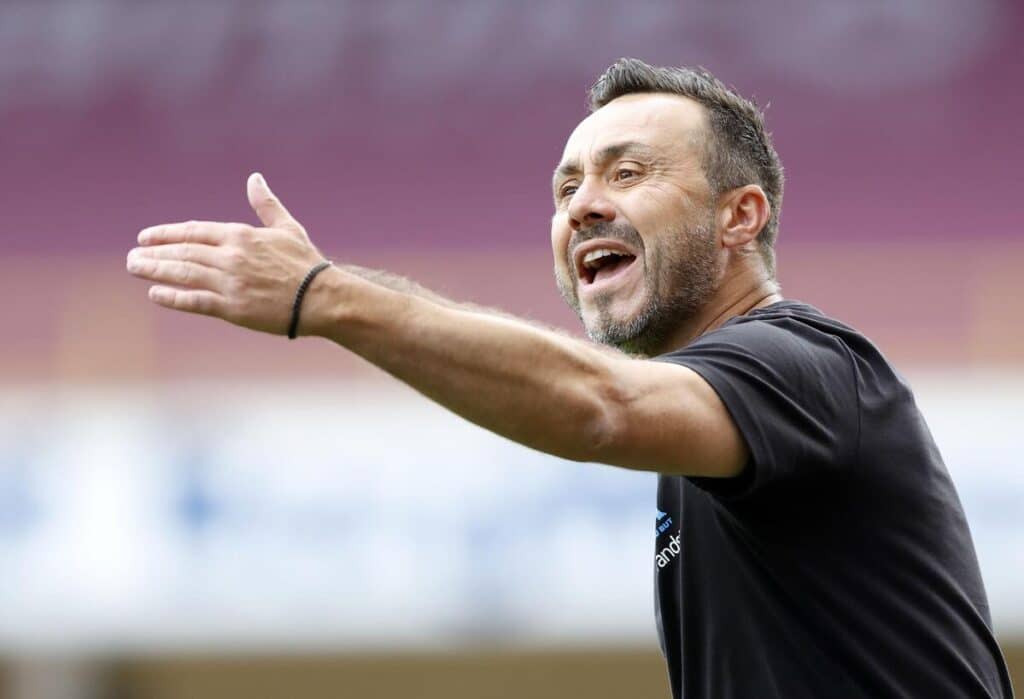
At club level, the timing of this devastating blow could not be worse for Tottenham. New head coach Roberto De Zerbi inherited a treatment room overflowing with absentees, and now his most incandescent talent joins the casualty list permanently for the season. Kudus’s influence is starkly highlighted by his attacking contributions despite his lengthy layoff. He’s a player who, through sheer individual quality, elevates those around him, drawing defenders and creating space. His absence compounds the already immense pressure on De Zerbi, whose remit is to steer a rudderless ship away from the relegation rocks.
With seven games remaining, Spurs desperately needed Kudus’s flair, his directness, and his proven ability to produce moments of magic. Without him, De Zerbi must now dig even deeper into his tactical playbook, hoping to unearth a collective solution where individual brilliance once reigned. The season is not over, but this latest setback is a hammer blow, significantly dampening any lingering optimism and pushing Tottenham further into the treacherous currents of the Premier League’s bottom half.
Prediction: A Season of Despair, A World Cup of What Ifs
The road ahead looks incredibly bleak for both Tottenham and Ghana. For Spurs, the loss of Mohammed Kudus is likely the final nail in the coffin of their Premier League status. Without his creative spark and goal threat, their remaining fixtures against increasingly desperate opposition will prove insurmountable. Expect Tottenham to succumb to the pressure, ultimately facing relegation to the Championship as De Zerbi’s challenging tenure begins with a catastrophic descent. The squad, already thin and morale-sapped, simply lacks the individual quality to compensate for Kudus’s absence.
As for Ghana, their World Cup hopes have taken a monumental hit. Even if Kudus defies medical prognoses and makes a miraculous recovery, he will be woefully short of match fitness and vulnerable to further injury. The new coach will be faced with an unenviable decision, and the smart money is on Kudus either missing the tournament entirely or playing a severely limited role. Facing England and Croatia, the Black Stars need every ounce of their attacking prowess. Without their talisman, Ghana will struggle to escape Group L, likely finishing third or fourth, their tournament defined by the heartbreaking question: “What if Kudus had been fit?”