
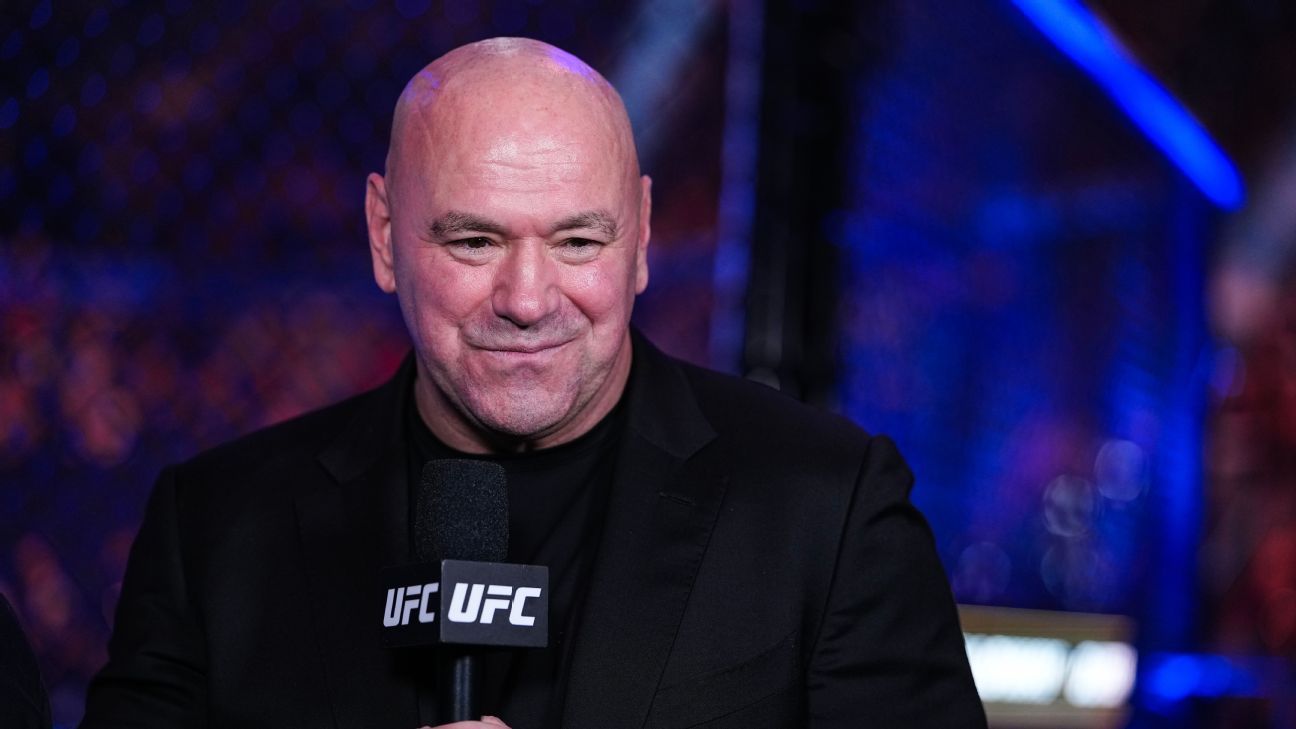
After months of addressing inquiries about this spring’s upcoming White House combat roster, UFC CEO Dana White on Saturday unveiled a six-bout schedule for Freedom Fights 250, slated for June 14 in Washington, D.C., on the White House South Lawn. Topping the bill, lightweight champion Ilia Topuria and interim champion Justin Gaethje will vie for the designation of “undisputed.” Alex Pereira and Ciryl Gane are set to contest the provisional heavyweight championship in the co-main event.
Twelve male competitors — with no mention of Jon Jones or Conor McGregor — secured a coveted spot at the White House spectacle and will have the chance to demonstrate their combat prowess at the nation’s capital. ESPN reporters Brett Okamoto, Andreas Hale, and Jeff Wagenheim assessed the lineup and offered their preliminary perspectives on the best fights, the squandered chances, and what the composition of this landmark occasion reveals about the current condition of the UFC.
On paper, how does this card stack up against the UFC’s all-time best?
Wagenheim:White vowed this would constitute “the greatest fight card ever assembled,” and the UFC CEO ought to have been more discerning. After all, he was the organizer of six of the seven UFC events that showcased three title contests. Those represented the promotion’s most pivotal spectacles, and subordinate to them are the numerous combat rosters throughout history with two championships on the line. This event on the South Lawn — featuring one title fight and a provisional title bout between Pereira and Gane, which is essentially a World’s Fourth-Best Heavyweight trophy — simply falls short of the elevated anticipations White generated while endeavoring to market the UFC’s intentions.
Okamoto:Its standing isn’t particularly elevated; however, this isn’t so much a criticism of the current lineup as it is an acknowledgment of the esteemed legacy of prior events. To be frank, every time there is a significant juncture in the sport, it cannot invariably contend with all the previous monumental occasions. A multitude of superior rosters have emerged over the past 30-plus years, boasting more prominent news, compelling narratives, and comprehensive quality. But that doesn’t mean this card is poor.
Topuria headlining is exceptional. He has been absent from contention for some time, making it easy to overlook how incredibly dominant he was last summer when he defeated Charles Oliveira via knockout, securing a championship in two divisions. Certainly, Jones or McGregor would have been a more prominent main attraction, but neither of those two is comparable to Topuria’s current fighting prowess. Had Tom Aspinall not been injured and Pereira been contesting for the recognized championship, that would have significantly enhanced the appeal. Given the current state of the MMA scene, the lineup is robust and presents a domestic underdog in the main event, which seems fitting.
Hale:The schedule is acceptable, perhaps even exceeding average, yet its unveiling struck me as anticlimactic. There aren’t any astonishing bouts that people could have been eagerly awaiting (Islam Makhachev vs. Topuria; McGregor vs. Michael Chandler; Jones vs. Pereira, etc.). Instead, the card comprises competent, though not dazzling, confrontations. To be clear, there are some captivating encounters, but this fails to even enter the top 10 UFC spectacles of the 2020s.
What does the composition of the card tell you about the current condition of the UFC?
Wagenheim:While the roster isn’t depleted, it certainly could benefit from more luminous personalities, should the UFC aspire to transcend its niche sporting status. When your most prominent personality is an individual who hasn’t competed in half a decade (McGregor), your second biggest is emerging from retirement within another organization (Ronda Rousey), and your third biggest is someone the chief executive deems unsuitable to top the bill for this White House show (Jones), you’re not prepared to infiltrate popular culture. There are many exceptionally gifted combatants in the UFC, some of whom are on this card, but the broader athletic audience is largely unfamiliar with them.
Okamoto:The UFC is somewhat lacking in prominent figures, but this has been evident for some time. The UFC no longer cultivates headliners with its former efficacy, and I anticipate no alteration to this trend. For one, the UFC schedule has hosted an average of 40 to 45 events annually, continually vying for our focus for close to a decade. Populating 14-bout rosters with distinct competitors weekly impacts the organization’s capacity to cultivate celebrity fighters, but its commercial appraisal has reached unprecedented heights. It has demonstrated its capability to thrive without dependence on individual luminaries.
Which confrontation is the most influential?
Okamoto:One must choose the headlining contest. It’s alluring to suggest an alternative and venture beyond conventional thought, but right now, Topuria is among the scarce major celebrities potentially featured on the UFC’s lineup. His amalgamation of combat technique and personal magnetism (and undefeated record) is genuinely uncommon. If he prevails in this bout in a magnificent manner, with the U.S. White House as a backdrop, he has a chance to attract a multitude of fresh admirers. The subsequent progression for Topuria following a victory might realistically involve ascending to confront Makhachev in what would be the most significant contest the UFC could stage, possibly by year-end. And conversely, Gaethje, the American underdog, in his third and ultimate attempt at an undisputed championship? The main event is unquestionably the most influential encounter.
Hale:Pereira vs. Gane, unquestionably. While he may not be facing Jones, he is contending for an unparalleled third championship across three distinct weight divisions. It might not represent the recognized championship, but Pereira ascending from middleweight to light heavyweight and then to heavyweight to secure a third global title constitutes a historic feat. “Poatan” is already a prominent figure, but is progressively advancing toward legendary status.
Which confrontation will capture the spotlight?
Okamoto:Mauricio Ruffy vs. Michael Chandler. An obvious choice. Regardless of recent critiques regarding Chandler’s performance, he remains captivating. He possesses an relentless, aggressive approach, occasionally to his own disadvantage. Ruffy is genuinely among the most aesthetically pleasing combatants to witness currently in the sport. He personifies the “art” of martial combat. Chandler will directly engage him, allowing events to unfold naturally. It promises to be an intense exchange of blows for its duration.
Wagenheim:Consistently, my principle dictates that if Gaethje participates in a combat event, his bout inherently becomes the paramount draw. That he’s facing Topuria, occupying the second position in ESPN’s pound-for-pound top 10, renders this incontrovertiblythepremier contest. But should we apply a strict interpretation, where “stealing the show” implies eclipsing the main attractions, I suppose I would indicate the co-main event, showcasing ESPN’s second-ranked pound-for-pound fighter, Pereira. His opponent, Gane, isn’t precisely renowned for his thrilling style, but he’s unlikely to engage Pereira in grappling, thus allowing us to observe “Poatan” in his preferred environment.
Which confrontation isn’t on the card that ought to be?
Hale:A championship bout for female combatants. The apparent response would be Kayla Harrison vs. Amanda Nunes, but spinal surgery has sidelined Harrison, the women’s bantamweight titleholder, for the indefinite future. But the UFC failed to arrange even a single contest to highlight the female contingent of MMA within this lineup? No Mackenzie Dern strawweight championship defense against Zhang Weili or Valentina Shevchenko flyweight defense is a significant squandered chance.
Okamoto:Paddy Pimblett vs. Arman Tsarukyan. Do you know the singular element absent from this lineup? Conflict. Who will pursue contention and create a stir at the pre-fight press conference? Who will offer spectators (both seasoned and nascent) that narrative of animosity? Pimblett and Tsarukyan are presently two of the sport’s most engaging combatants, even beyond their bouts. If the UFC had pitted them against one another as the third encounter on the primary card, they would have clashed intensely, and they would have aimed barbs at Topuria. And they would have supported the headlining event as a pair of elite lightweights capable of filling in should any unforeseen circumstance befall Topuria or Gaethje.
Wagenheim:Truthfully, I am content with precisely what the UFC has envisioned for Washington. There are more significant contests available, but they are suited for an alternative metropolis — the combat capital of Las Vegas — and another fitting arena for the most magnificent exhibitions of pugilism: New York’s Madison Square Garden. The White House is a locale for ceremonial grandeur, and that defines the essence of this demonstration.