
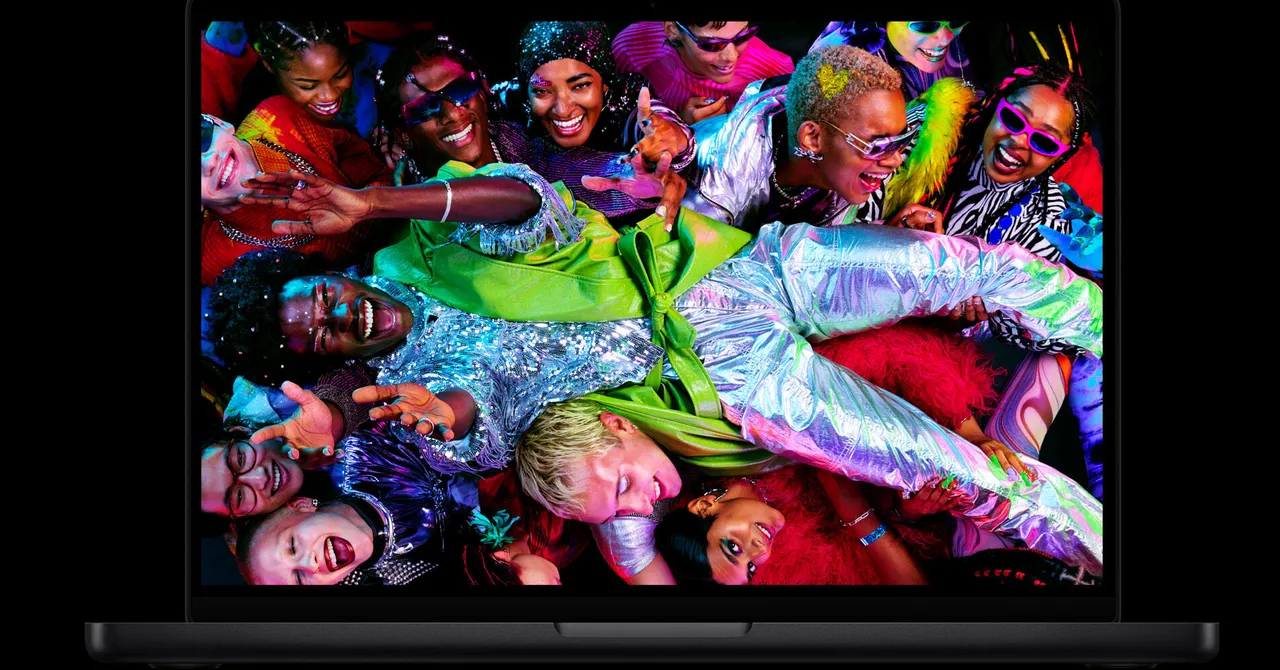
In addition to its affordably-pricediPhone 17e and M4 iPad Air unveiled on Monday, Apple has just revealed several enhancements for its MacBook Pro, MacBook Air, and its infrequently updated desktop monitor range. Apple appears to be reserving its anticipated basic MacBook model for Wednesday’s live presentation in New York City, yet today’s disclosures are likely to please prospective buyers looking to upgrade.
The MacBook Air has now been upgraded to the newest M5 processor. This is a rather conservative enhancement, but it aligns it with Apple’s most recent chip that first appeared in the MacBook Pro during the previous autumn. There are no significant alterations to its physical components—it now features 512 GB of initial storage capacity with “more rapid SSD technology”—but customers can still acquire the Air with either a 13- or 15-inch display dimension.
This portable computer also incorporates Apple’s N1 wireless module, which supports Wi-Fi 7 and Bluetooth 6, representing the newest communication protocols. It still comes with the typical 16 GB of system memory, and regrettably, there’s a $100 increase in cost attributable to the expanded storage capacity. It now commences at $1,099 for the 13-inch variant and $1,299 for the 15-inch variant. Apple states that advance orders can be placed starting Wednesday, with retail availability commencing on March 11.
Of greater note, Apple is extending the M5 processor family with the M5 Pro and M5 Max, which can now be found in the 14-inch and 16-inch MacBook Pro models. Consistent with prior iterations of Apple’s proprietary chips, the “Pro” and “Max” configurations provide substantially enhanced multicore central processing unit and graphical capabilities.
The M5 Pro and M5 Max are available with as many as 18 CPU cores (composed of 12 performance cores and 6 “super” cores), an increase from the M4 Max’s 16 cores. The M5 Pro can reach up to 20 GPU cores, while the M5 Max expands to 40 GPU cores. Owing to the four supplementary CPU cores, Apple indicates that the M5 Pro achieves a 30 percent improvement in multithreaded CPU performance compared to the M4 Pro. With its four additional CPU cores over the M4 Pro, the M5 Pro’s novel CPU architecture substantially enhances multithreaded operations by as much as 30 percent for professional tasks. The M5 Max CPU enhancement is somewhat less substantial when contrasted—only 15 percent superior to the M4 Max, as stated by Apple.
Due to increased memory throughput, a more effective Neural Engine, and an enhanced GPU framework, Apple asserts that both the M5 Pro and M5 Max possess more than four times the maximum CPU processing power for artificial intelligence tasks when contrasted with the preceding generation, and they deliver a 20 percent boost in GPU capabilities.
The new MacBook Pros do not feature any further physical component modifications; the overall specifications have remained mostly consistent since 2021—retaining the identical port options, Mini-LED screen, audio output devices, and integrated camera. Even the advertised 24-hour power autonomy remains unaltered from the M4 versions, which were released in late 2024. Intriguingly, only last week, Bloomberg indicated that Apple intends to introduce a more substantial revision to the MacBook Pro during the current year, which is rumored to unveil the M6 processor, an OLED touch-sensitive display, and a slimmer enclosure.
{content}
Source:{feed_title}