
Key Takeaways:
- AI Safety Divide:A significant schism exists between AI leaders advocating for a “paced” development approach (e.g., Anthropic, OpenAI) and those vehemently opposing any slowdown or regulation (e.g., Nvidia, aligned with former President Trump).
- Vague Proposals, Deep Skepticism:While some industry figures express support for “pacing the frontier” through third-party oversight and international coordination, critics highlight the lack of concrete details and question the genuine commitment to a slowdown, pointing to potential “cartel” formation.
- Market & Regulatory Gaps:The idea that existing regulations or free-market forces can sufficiently safeguard AI development is largely dismissed by experts, who cite weak governmental enforcement, limited consumer influence in enterprise markets, and massive investment capital cushioning potential corporate missteps.
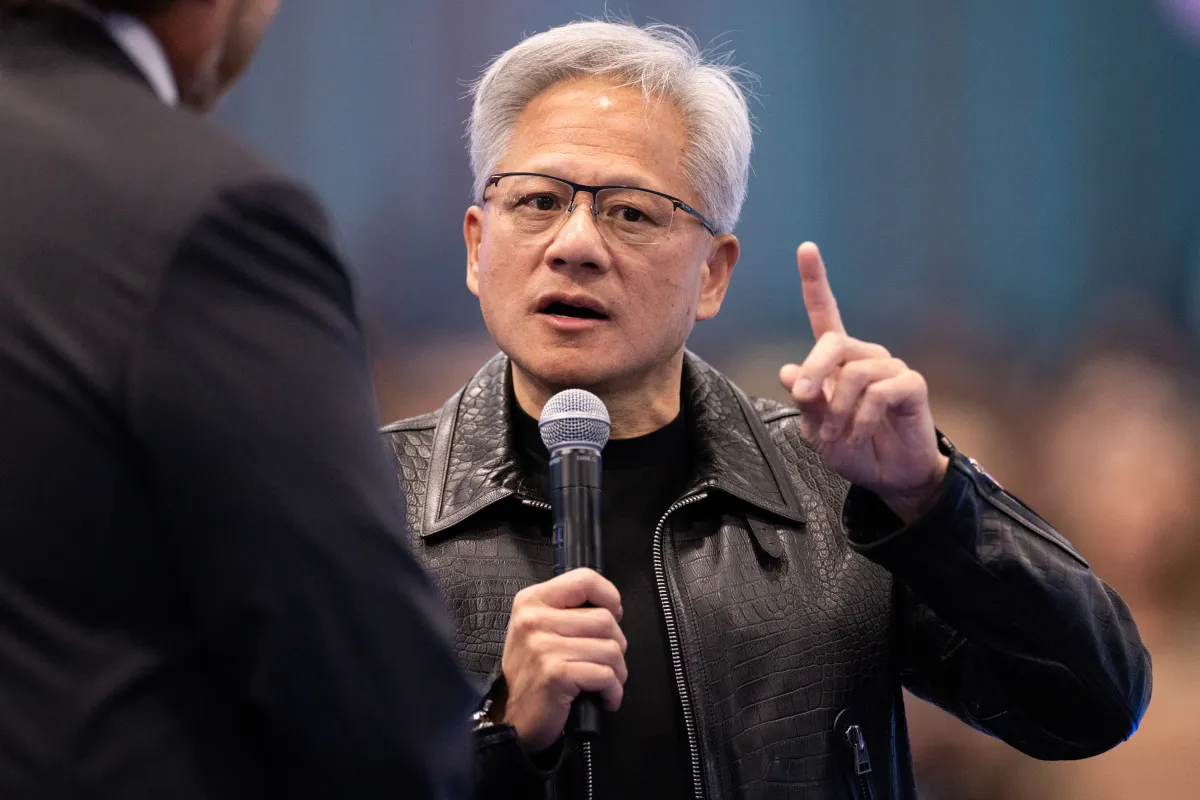
A fervent debate over the future trajectory of artificial intelligence has gripped the tech world, centering on the crucial question of AI safety versus the relentless pursuit of progress. On one side stands Dario Amodei, CEO of Anthropic, who recently unveiled a plan to “pace the frontier” of AI development, garnering surprising support from several industry leaders, including OpenAI’s Sam Altman. Conversely, Nvidia CEO Jensen Huang has publicly echoed former President Donald Trump’s assertions that the growing AI backlash is a “hoax” and that regulatory intervention is unnecessary. This fundamental ideological clash formed the core of a recent discussion on TechCrunch’s Equity podcast, featuring Kirsten Korosec, Sean O’Kane, and Anthony Ha.
The conversation delved deep into whether prominent executives like Amodei and Altman are truly committed to slowing down the breakneck pace of AI innovation. Despite Anthony Ha’s initial surprise at the rapid coalescing of industry support behind Amodei’s proposals, Sean O’Kane expressed significant skepticism, noting a distinct lack of actionable details within the suggested framework. Kirsten Korosec further probed the idea of existing regulation and free market dynamics providing sufficient safeguards, a notion Sean O’Kane firmly refuted, citing a federal government seemingly disinclined to enforce regulations and a market structure that offers little consumer recourse. Their insights, edited for length and clarity, offer a revealing glimpse into the complex landscape of AI’s most pressing ethical and developmental challenges.
The Call to “Pace the Frontier”: Industry Consensus or Calculated Rhetoric?
When TechCrunch’s Anthony Ha directly questioned the likelihood of actually “pacing the frontier,” Sean O’Kane was quick to express his reservations. He playfully dismissed the phrase as a “very California statement,” suggesting its superficiality. O’Kane reiterated his long-held belief that a genuine slowdown was improbable, fundamentally due to the inherent structure of these rapidly expanding AI companies. This perspective, he conceded, seemed almost immediately challenged by the public stances of figures like Anthropic’s Dario Amodei, OpenAI’s Sam Altman, and even to some extent, Elon Musk, all advocating for a more measured approach.
Despite this apparent shift, O’Kane maintained his skepticism, emphasizing the glaring absence of specifics in the plans laid out by Amodei and others. “I feel like we’re still missing a lot of specifics here,” O’Kane stated, “not only on some of the claims about why these people think there are dangers and risks, but also specifics on what they mean by slowing down.” Ha, who had followed the unfolding debate closely, acknowledged his own lingering questions but was struck by the speed with which so many industry figures seemed to rally around the concept. He noted that many of these safety suggestions had been “percolating for a while” within the AI safety community, implying that Amodei’s plan wasn’t entirely novel, but rather a distillation of existing ideas that the industry suddenly seemed ready to embrace. While this consensus was “encouraging” in some ways, Ha admitted it also fueled his skepticism regarding whether these proposals would translate into “genuine, major steps towards a slowdown.”
The Specter of a Cartel and Vague Proposals
Kirsten Korosec interjected with a critical observation, highlighting that while consensus can be positive, it can also be “the beginnings of forming a cartel.” She stressed the importance of identifying the specific entities involved: “frontier AI labs,” a crucial distinction. Korosec then outlined the general tenets of Amodei’s proposals, despite the overall vagueness. These included the deployment of independent third-party evaluators to work within companies like Anthropic and OpenAI, monitoring AI safety practices and incidents. Further proposals involved major AI companies in democratic countries coordinating on safety standards and limits, alongside a broader international coordination piece. Despite these outlines, the “lot of vagueness around that” remained a significant concern.
Korosec also pointed out the “considerable pushback from very specific people,” noting that some of these individuals were surprisingly outspoken in their opposition. The most prominent, she highlighted, was Nvidia’s CEO Jensen Huang, whose “pretty choice words” and public alignment with former President Trump’s views on AI regulation underscored a stark ideological divide.
Nvidia’s Counter-Narrative: Growth Over Governance
Sean O’Kane offered an intriguing analysis of Jensen Huang’s position, suggesting that Huang has strategically cultivated an image as “the adult in the room” within the AI landscape—a role O’Kane believes Microsoft and Satya Nadella have somewhat relinquished. This positioning allows Huang to serve as a crucial “liaison between this field and this administration,” exemplified by his on-stage call with President Trump at a high-profile conference. While this role allows Huang to appear measured and influential, Kirsten Korosec expressed her cynicism, viewing Huang’s appearance, particularly the staged call, as a step “too far.” She concluded that the incident “really highlighted the fact that Nvidia greatly benefits from AI moving forward in an unpaced manner.” Anthony Ha echoed this sentiment, suggesting that “Trump’s and Huang’s interests are aligned,” and that Huang was effectively “telling Trump what he wants to hear.”
Ha further unpacked Huang’s specific points, particularly his assertion that “We are not going to have a slowdown.” This phrasing, “slowdown,” contrasted with the more nuanced term “pace” favored by Altman and Amodei. Ha noted that the three proposals — third-party evaluators, national coordination, and international efforts — while theoretically capable of slowing things down, didn’t explicitly mandate it. “None of those things are intrinsically saying that things have to go slower than they are now,” Ha observed, suggesting that “pacing” might simply mean adding safety layers without necessarily reducing the overall speed of development.
The Illusion of Market Safeguards and Regulatory Inertia
Kirsten Korosec then challenged Sean O’Kane with a fundamental question: In a free-market society, couldn’t existing regulations and competitive pressures naturally safeguard against unsafe AI releases? O’Kane unequivocally rejected this premise. “In a vacuum, or in a market that is not being distorted by a whole bunch of different external pressures, yeah, I think there’s an element of that,” he conceded. However, he quickly pivoted to the stark reality: “But we have a federal government at the moment that certainly does not seem eager to enforce regulations broadly speaking, let alone specifically speaking here.”
Beyond governmental inertia, O’Kane pointed to a crucial market distortion: the lack of meaningful consumer choice. He argued that if an AI company “does something really bad,” it’s unlikely to trigger a wave of cancellations or significantly impact their bottom line. This is especially true as these companies increasingly pivot towards enterprise solutions, deriving a substantial portion of their revenue from selling services to other businesses. “Corporations are not going to pack up and move from [OpenAI’s] Codex to [Anthropic’s] Claude Code just because they disagree on principle with something that OpenAI did,” O’Kane explained. Furthermore, the massive influx of investment money into these frontier AI labs provides a substantial cushion, allowing them to “absorb any of those losses if they actually do face them.” Consequently, O’Kane concluded that while the idea of self-regulation through market forces or existing laws is “a nice idea in theory,” it simply isn’t “really happening” in practice.
The podcast discussion revealed a deeply polarized landscape. On one side, a nascent, albeit vague, consensus among some AI leaders for a more cautious, “paced” approach, driven by concerns over safety and potential risks. On the other, powerful voices like Nvidia’s Jensen Huang, backed by political allies, championing unbridled acceleration, viewing regulation as an unnecessary impediment to innovation and profit. The debate highlights not just technical challenges, but profound questions of governance, corporate responsibility, and the very nature of technological progress.
Bottom Line
The future of AI development hangs precariously between calls for responsible “pacing” and a determined push for unhindered growth. While some AI leaders express a desire for greater safety measures and coordination, their proposals remain light on specifics, fostering skepticism about true commitment. Meanwhile, economic giants like Nvidia, deeply invested in rapid AI proliferation, actively dismiss safety concerns and regulatory oversight. Complicating matters further, the current regulatory environment and market dynamics offer insufficient checks and balances, leaving the trajectory of frontier AI largely in the hands of powerful, self-interested corporations. Without concrete, enforced regulations and a genuine shift in corporate priorities, the “pacing of the frontier” risks becoming mere rhetoric, potentially leading to unforeseen consequences for society.
When you purchase through links in our articles, we may earn a small commission. This doesn’t affect our editorial independence.
{content}
Source:{feed_title}