
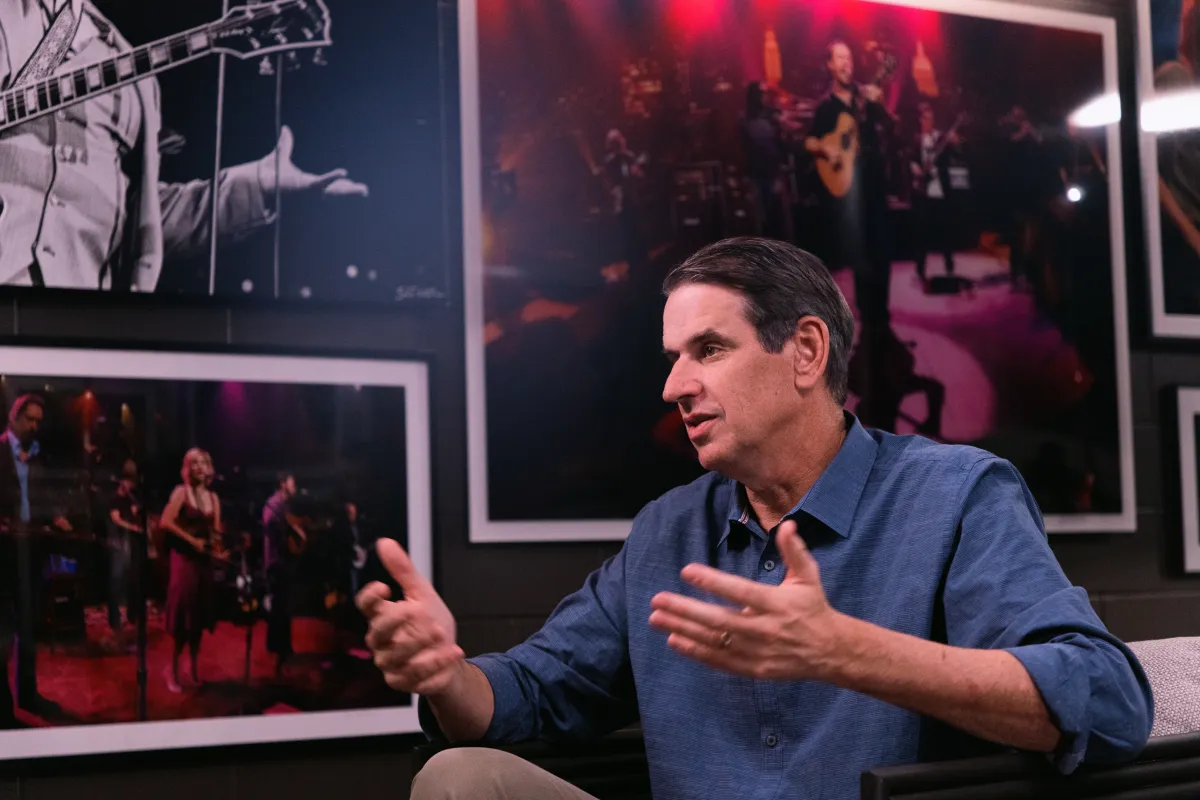
For almost thirty years, Bill Gurley has stood as one of the most impactful figures in Silicon Valley — a key partner at Benchmark whose initial investments in ventures such as Uber, Zillow, and Stitch Fix were instrumental in shaping contemporary venture capital practices. Now, having relocated to Austin and withdrawn from hands-on investment activities, the Texas-born individual is directing his inherent knack for identifying trends towards novel endeavors: a publication, a charitable organization, and a think tank focused on issues he believes he can genuinely influence.
His upcoming work, titledRunnin’ Down a Dream— paying homage to Tom Petty while also asserting that pursuing one’s fervent interest isn’t merely idealized professional guidance but a tangible competitive tactic, a strategy that gains increasing importance as artificial intelligence swiftly transforms the job market. The charitable organization, named the Running Down a Dream Foundation, intends to provide one hundred annual subsidies of $5,000 to individuals requiring monetary support to undertake a significant step they’ve previously hesitated to make.
An interview with Gurley encompassed these topics — including his perspective on the rather astonishing fact that numerous past associates from the technology sector now wield considerable influence in the nation’s capital, his reasoning for believing that the demanding 996 work ethic embraced by many nascent entrepreneurs is not as concerning as it might initially appear, and the genuine implications of AI for one’s professional path. The subsequent text has been refined for conciseness and comprehensibility. The complete discussion with Gurley will be released this Tuesday on TC’s StrictlyVC Download podcast.
What prompted the creation of this publication?
I underwent a period of extensive biographical reading, encompassing individuals from diverse disciplines and historical eras, and began to discern recurring themes, much like I would observe trends in an developing market. These observations were documented. Years later, an invitation to address the University of Texas prompted me to retrieve those notes and construct a presentation. After its YouTube upload, James Clear, author ofAtomic Habits, took notice and commented on it. This sparked the idea for a book. During my personal transition away from venture capital and contemplation of future endeavors, it became clear that I wished to avoid writing about VC, Uber, or similar topics. My desire was to pursue something with a more expansive purpose.
Findings from your Wharton collaboration indicated that approximately 60% of individuals would alter their choices if they could recommence their professional lives. This astonished you. What was the reason?
Our initial SurveyMonkey survey yielded a 70% response rate. A more thorough study conducted with Wharton confirmed a 60% figure. A key insight, articulated in the book, is the concept of ‘use it or lose it’ regarding life’s opportunities, a perspective difficult to grasp in youth. It’s challenging to envision one’s entire lifespan and appreciate its inherent value. Daniel Pink’s extensive research on ‘regrets of inaction’ highlights that as people age, their greatest burdens often stem from untried endeavors, opportunities left unexplored. This observation remains consistent across diverse regions and societal norms. Furthermore, I believe many well-meaning parents prioritize establishing financial security for their offspring over fostering the genuine pursuit of their children’s passions. Given the advent of AI, such an approach might prove suboptimal.
Techcrunch event
Boston, MA
|
June 9, 2026
Pursuing one’s fervent interest appears simpler for those with monetary reserves. What counsel do you offer to individuals managing on a week-to-week income?
Several points. Firstly, the publication features individuals who commenced at the lowest level and ascended to prominence — for instance, celebrity hairstylist and entrepreneur Jen Atkins arrived in Los Angeles with merely $200. The book contains no assertion that one must begin anywhere but at the very outset. Secondly, for those living precariously, I would not advocate resigning. Instead, I would urge them to utilize their leisure hours to develop a brief plan on their device outlining their potential calling. Acquire knowledge. Make ready for the transition prior to enacting it. And thirdly — this forms the impetus for establishing the foundation. The book’s final chapter discusses this: we will provide one hundred annual awards of $5,000 to individuals in precisely that predicament, those who can demonstrate through an application their profound contemplation of their desired path but require some assistance to reach it.
You have voiced strong opinions for years regarding regulatory capture — the concept that large corporations leverage oversight to solidify their positions.
Some years ago, I delivered an address on regulatory capture at the All-In Summit, where I expressed concern that AI firms might attempt to exploit regulations for self-preservation. I believe this is currently unfolding. Conversely, valid concerns exist: Jonathan Haidt’s publicationAnxious Generationhas maintained a spot on bestseller lists for nearly two years, contending that social media has adversely affected children, a claim supported by scholarly studies. Many would assert that we ought to have preempted social media’s issues and must now do so with AI. The issue lies in the fact that the most vocal proponents for AI regulation are the companies themselves, which fosters my skepticism. Furthermore, a global aspect exists — should American AI become ensnared by disparate state-level regulations while Chinese systems operate unrestricted, we risk hindering ourselves with excessive bureaucracy. My consistent query to people is: name your top five historical regulations and explain their efficacy. Do you possess any assurance that state-level authorities in an arbitrary state are capable of formulating effective AI legislation that will genuinely function?
It is somewhat uncanny that numerous notable personalities from your domain currently possess substantial sway in the capital. What is your assessment of this situation?
The irony is profound. Revisiting that discussion on regulatory capture, one might ponder who could have anticipated that David Sacks would, within a few years, serve as [special advisor for AI and crypto in the White House]?
In 2018, Mike Moritz of Sequoia articulated in the Financial Times his belief that the United States would fall behind China without an increase in American work ethic. Though contentious then, many nascent entrepreneurs here appear to have subsequently adopted a rigorous work regimen — the 996 philosophy. What is your perspective on these developments?
Frankly, I rather appreciate it. I observed that Silicon Valley grew quite complacent during the pandemic — office attendance declined, and the prevailing culture softened in a manner unfamiliar throughout my tenure there. Having visited China half a dozen times, I comprehend Michael Moritz’s assertion that our potential defeat stems not from intellectual inferiority but from a superior work ethic elsewhere. However, consider this: an examination of accomplished individuals across numerous domains reveals that we laud an athlete’s twelve-hour daily practice or an artist’s obsessive dedication to their art. No one critiques Jordan’s work-life equilibrium. We simply do not apply this identical rationale to enterprise development. If these entrepreneurs possess such profound affection for their endeavors and perceive this as the opportune moment for intense effort, then that precisely encapsulates the book’s core message: discover your calling.
In the publication, you delve into the topic of mentorship. What constitutes an outstanding mentor-mentee relationship, and what’s the optimal approach for individuals to establish one?
The foremost point is to dispel the common misconception prevalent in the personal development sphere: the notion of simply ‘finding a mentor.’ Many individuals rush to contact indiscriminately those who are unrealistically lofty and unattainable, which ultimately proves ineffective. For those figures currently beyond immediate grasp, I refer to them as inspirational mentors — construct a profile for them, akin to what I described for the ideal career portfolio. Gather segments from all the books they’ve penned, podcasts they’ve hosted, and interviews they’ve given, then meticulously analyze them. You can gain considerable insight from individuals without direct communication, especially in the contemporary era. Subsequently, for your tangible guides, aim two tiers below your initial high-level aspiration. Identify someone — platforms such as LinkedIn greatly facilitate this process — and be the pioneer in contacting them to request their guidance as a mentor, as they’ll surely feel honored. They’ll be pleased that you recognized their contributions. Envision someone receiving their inaugural request to be a mentor; it’s a wonderfully rewarding sensation. You’re destined for significantly greater triumph with that interaction than by overreaching.
Allow me to share an amusing anecdote: I began receiving such a volume of inquiries from individuals keen on entering the venture capital field that I authored a concise three-page document titled “So You Want to Be a VC.” Embedded on the final page were essentially instructions to undertake specific tasks A, B, and C, then return to report on your progress. The count of individuals who subsequently engaged with me after obtaining that document represented merely a portion of the total recipients. It’s amusing how significantly the pool dwindled once a minor preparatory task was assigned.
You commenced developing this publication prior to the implications of artificial intelligence becoming more apparent. Does this in any way alter the approach individuals ought to take regarding their professional paths?
If you’re adhering to the conventional route — utilizing the university’s employment services, enrolling on a register, awaiting a talent scout to interview thirty candidates in brief twenty-minute intervals — you appear like an interchangeable component. You project a sense of uniformity. For that demographic, AI seems intimidating, and perhaps rightfully so. However, if you are forging your distinctive course, implementing the strategies outlined in the publication, becoming what I term a singular applicant — someone whose trajectory appears entirely unparalleled due to deliberate construction — then each strategy within this guide is enhanced by artificial intelligence. Knowledge acquisition has never been more straightforward than it is currently, in the annals of human existence. If you’re embracing it proactively, if you’re cultivating the highest level of AI literacy in your domain, this phenomenon is exclusively a formidable advantage.
{content}
Source:{feed_title}