
Key Takeaways
- Accelerating Commercialization:Humanoid robotics is moving beyond research hype, driven by significant advancements in both physical capabilities and AI, particularly large language models, setting the stage for wide-scale commercial deployment.
- Chinese Automakers Lead Investment:A new wave of Chinese automakers, spearheaded by Xpeng with its record-breaking funding round, are aggressively entering the humanoid robot market, leveraging their manufacturing prowess while racing to master the critical AI component.
- Global Race for Deployment:The push for practical, enterprise-level integration is a global phenomenon, with established players like Hyundai/Boston Dynamics and nimble startups all vying to bring versatile humanoid robots into factories and workplaces within the next few years.
The Race for the Humanoid Future: Why Automakers are Leading the Charge
The vision of humanoid robots working alongside humans has long captivated our imagination, often fueled by the ambitious pronouncements of figures like Tesla CEO Elon Musk and the mesmerizing, agile demonstrations from Boston Dynamics’ Atlas robot. Yet, beneath the layers of sci-fi spectacle and persistent hype, a significant, tangible shift is underway. What was once the domain of specialized robotics labs is rapidly transforming into a fiercely competitive commercial frontier, propelled by an unprecedented convergence of physical engineering prowess and revolutionary artificial intelligence techniques.
Researchers are increasingly confident that the advanced AI methodologies powering large language models can unlock a new era for complex robots, enabling them to learn and execute nearly any task with remarkable adaptability. This technological tailwind has ignited a fresh wave of investment and innovation, particularly drawing an unexpected, yet powerful, cohort into the fray: the automotive industry. And among them, Chinese automakers are making the most striking moves.
The Chinese Gambit: Automakers Drive Embodied AI
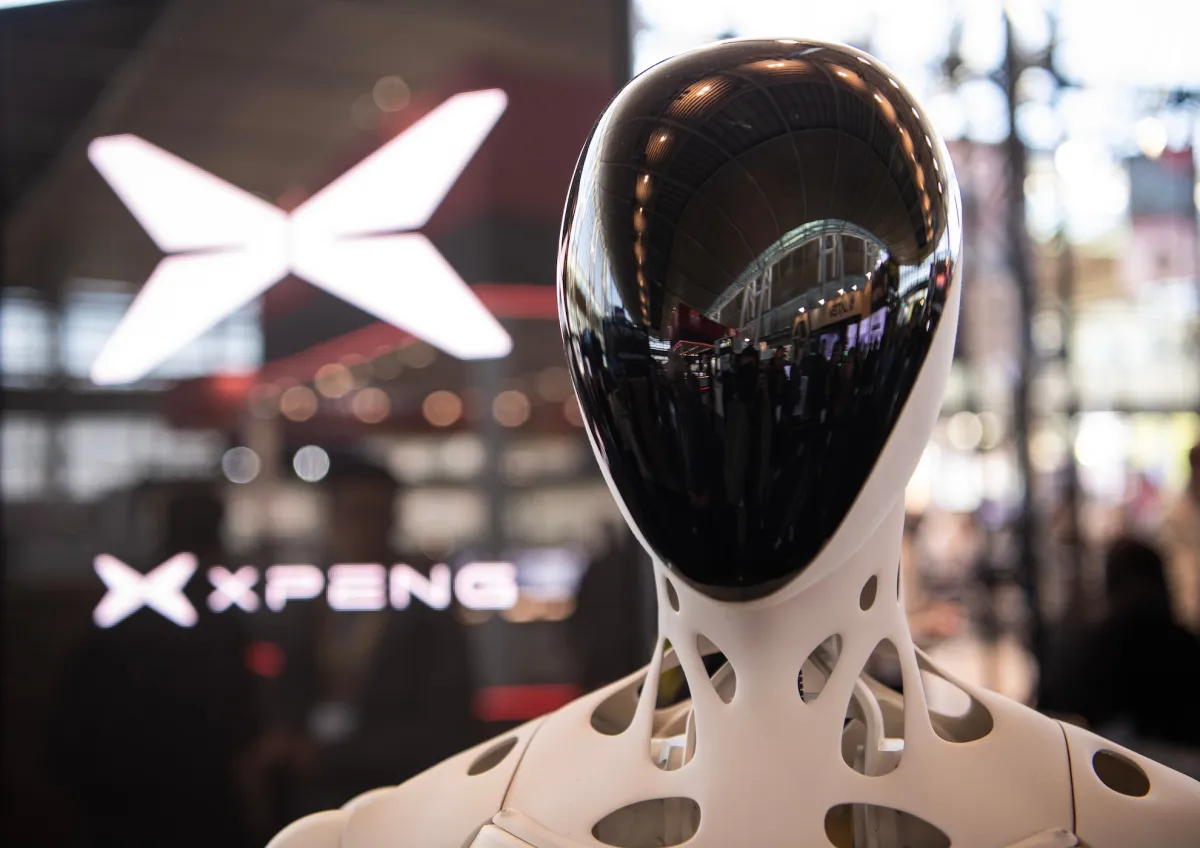
The surge of Chinese automakers into the humanoid robotics space is nothing short of remarkable. Earlier this week, Xpeng’s dedicated robotics unit made headlines by raising over $900 million in private financing, pushing its post-money valuation beyond an astounding $6.3 billion. This round, led by IDG Capital with significant participation from Gaorong Ventures, Tencent, and Alibaba, was hailed by the company as the largest single-round private financing ever recorded in China’s burgeoning “embodied AI” industry – a term that underscores the integration of AI directly into physical machines.
Xpeng is far from alone. This month, AiMOGA, the robotics unit of China’s Chery Automobile, reportedly began laying the groundwork for an initial public offering (IPO), signaling ambitious plans for market expansion. Concurrently, automotive giant BYD unveiled its own humanoid robot, Xiao Di. The list extends further, with other prominent Chinese automakers including Changan, GAC, Li Auto, SAIC, and Seres, all actively developing their own humanoid robotic platforms.
According to Michael Dunne, CEO of Dunne Insights, a San Diego- and Singapore-based advisory firm, Xpeng stands out as the Chinese automaker most closely mirroring Tesla’s strategic initiatives. “It’s the most focused on autonomy, it’s the first to commit in a big way to humanoid robots,” Dunne told TechCrunch, highlighting Xpeng founder He Xiaopeng’s reputation as a tech billionaire known for his agility and ability to pivot quickly. “He sees razor-thin profit in cars on the near horizon. Robots look much more promising.” This strategic foresight is further underscored by Xiaopeng and Xpeng co-president Brian Gu’s personal commitment, having invested approximately $100 million of their own funds into the recent robotics fundraising round.
Xpeng’s primary bet is on “Iron,” a humanoid robot designed with a realistic human shape and built specifically for commercial deployment. Chinese automakers, with their vast and sophisticated manufacturing ecosystems, possess an inherent advantage in bringing these complex machines to life. “They have all the hardware to get the job done,” Dunne observed. However, he quickly added a crucial caveat: “Question is if they can catch Tesla on the AI side of the equation.” This highlights the pivotal challenge and differentiator in the evolving robotics landscape.
Global Contenders: Beyond China’s Walls
While China makes significant strides, the global race for commercially viable humanoid robots is intensely competitive. Numerous other companies are equally dedicated to this ambitious goal, including well-known names like Agility Robotics, Apptronik, and Figure, all relentlessly pursuing large-scale commercial deployment.
Among the established players, Hyundai-owned Boston Dynamics is rapidly nearing that critical inflection point. Hyundai has announced plans to integrate Boston Dynamics’ celebrated Atlas humanoid robot into its Georgia factory this year, with an overarching objective to deploy these advanced robots for intricate tasks such as parts sequencing by 2028. To accelerate this ambitious timeline, the Korean automaker has strategically partnered with Google’s AI research lab DeepMind and is establishing a dedicated U.S. facility this year: the Robot Metaplant Application Center. This center will serve as a crucial hub for teaching robots how to meticulously map and execute complex movements, from precise lifts to intricate turns, preparing them for real-world industrial environments.
The automotive sector’s interest extends beyond these direct robotics developers. Leading automotive supplier Mobileye, for instance, signaled its strong entry into the space by acquiring humanoid robot startup Mentee Robotics earlier this year for a substantial $900 million. Even electric vehicle innovator Rivian is dabbling in the field with its Mind Robotics spinout, although its focus appears to be on robots that may not strictly adhere to the human-like form factor seen in many other developments. This broad participation underscores a collective recognition within the industry that advanced robotics, particularly humanoids, represents the next frontier of automation and operational efficiency.
The AI Imperative: The Brains Behind the Brawn
Ultimately, the true breakthrough in humanoid robotics hinges not just on their mechanical dexterity, but profoundly on their intelligence. The excitement around AI techniques, particularly those driving large language models, is justified. These models are enabling robots to process vast amounts of data, understand complex instructions, and learn from experience in ways previously unimaginable. This “AI side of the equation” is precisely what will differentiate a clunky automaton from a truly versatile, adaptive, and commercially valuable humanoid assistant. The ability to learn nearly any task, to adapt to dynamic environments, and to interact intuitively with humans will define the success of these ventures, turning advanced hardware into truly intelligent, embodied AI.
The Bottom Line
The humanoid robot market is accelerating into a high-stakes global race, fueled by technological breakthroughs and massive strategic investments from an increasingly diverse set of players, especially within the automotive industry. From Xpeng’s aggressive expansion in China to Hyundai’s industrial deployment ambitions with Boston Dynamics, the vision of intelligent, human-like robots integrated into our factories and daily lives is rapidly transitioning from concept to commercial reality. Success will undoubtedly hinge on the intricate balance between sophisticated hardware manufacturing and cutting-edge artificial intelligence, promising to reshape industries and redefine human-machine collaboration in the very near future.
When you purchase through links in our articles, we may earn a small commission. This doesn’t affect our editorial independence.
{content}
Source:{feed_title}