
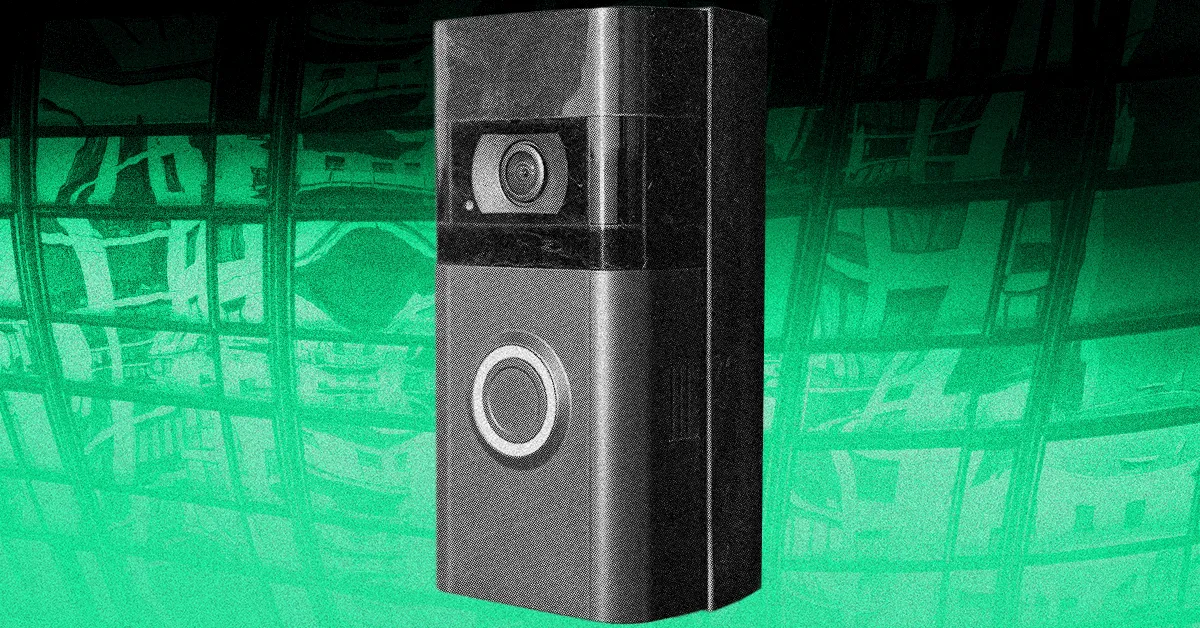
A potential hazard also arises when video recordings are misused, potentially facilitating politically-driven inquiries, law enforcement badgering, or surreptitious tracking, even without your knowledge or intent. Corporate staff or external contractors might obtain entry to these recordings, or your cameras could be compromised. Amazon resolved a data protection legal action initiated by the FTC several years prior, which cited both these possibilities.
Lately, ICE has been accessing Flock’s automated vehicle tag recognition (ALPR) systems throughout the United States, as reported by 404 media. What actions could it take if granted entry to video doorbells?
Moving on to the proprietors of doorbell cameras. Recordings from these cameras are often disseminated digitally, unbeknownst to or without consent from the individuals depicted. Individuals utilizing community engagement applications and online social communities frequently upload clips of those they perceive as dubious. Regrettably, these conjectures are frequently influenced by personal biases, and discriminatory targeting based on race can present a significant issue, as indicated by this study. However, as long as recordings are obtained in a public domain, their dissemination is entirely permissible by law.
“Capturing images within windows, enclosed rear gardens, or other personal areas on your premises could constitute an infringement on personal solitude,” Emile Ayoub, a senior counsel in the Brennan Center’s Liberty and National Security Program, clarified for WIRED. “However, recordings depicting visible pavements or access roads probably lack the equivalent safeguard.”
Therefore, What Entitlements Do You Possess?
The legal framework is clear regarding interactions with law enforcement.
“Absent an official presentation of a formal demand through a judicial authorization or other legal directive, individuals are under no obligation to disclose their video material to authorities,” states Ayoub. “Some service providers permit the police to publish on neighborhood forums, soliciting video from subscribers. You are free to disregard or refuse these solicitations.”
He elucidated that if your video content is kept on remote servers, instead of locally on your apparatus, authorities possess the power to oblige corporations to surrender it. Ordinarily, legal authorities are required to acquire a judicial writ or a comparable legal directive, contingent on the nature of the data they pursue. Nevertheless, deviations from the judicial writ necessity exist during urgent situations, for instance, an immediate threat of fatality or grave bodily harm.
In line with their data protection guidelines, service providers such as Ring and Nest typically inform account holders about requests for information from police agencies, unless they are legally enjoined from doing so. Naturally, hardly anyone reviews these data protection guidelines before installing a doorbell camera.
“This represents one of the most alarming aspects concerning the swift commercialization of law enforcement monitoring,” remarks the EFF’s Dr. Guariglia. “As more forensic material transitions into proprietary information, the populace holds diminishing authority to ascertain what becomes of your data within the corporation, whether they necessitate a judicial order, what their affiliation with authorities entails, and if your information has been yielded.”
Methods to Secure Your Doorbell Camera Recordings
A $10K reward might be offered for anyone capable of breaching Ring devices to cease transmitting information to Amazon, yet simpler and more expeditious methods exist to protect your doorbell video content. Removing your doorbell entirely presents the most straightforward approach to alleviate data solitude worries; however, if you deem them beneficial, you could always abstain from remote storage solutions.
“Control your information,” states Matt Sailor, who founded the global digital surveillance manufacturer IC Realtime. “It is unnecessary for other entities to possess your information.”
{content}
Source:{feed_title}