
Key Takeaways
- Independent special committees have been formed by both SpaceX and Tesla boards to rigorously evaluate a potential merger, a move initiated by shareholders and supported by Elon Musk, who is recused from discussions due to conflict of interest.
- Musk envisions profound synergies, particularly in advancing Artificial Intelligence, robotics, and ambitious projects like orbital data centers (Starmind) and advanced chip manufacturing (Terafab), under a unified corporate umbrella.
- While Musk’s significant voting power in SpaceX streamlines shareholder approval there, a Tesla merger faces a much higher hurdle, requiring 50% approval from *all* shareholders, not just those participating in the vote, making its outcome far from certain.
Tesla and SpaceX Boards Delve into Merger Talks: A “Kabuki Dance” of Independence and Ambition
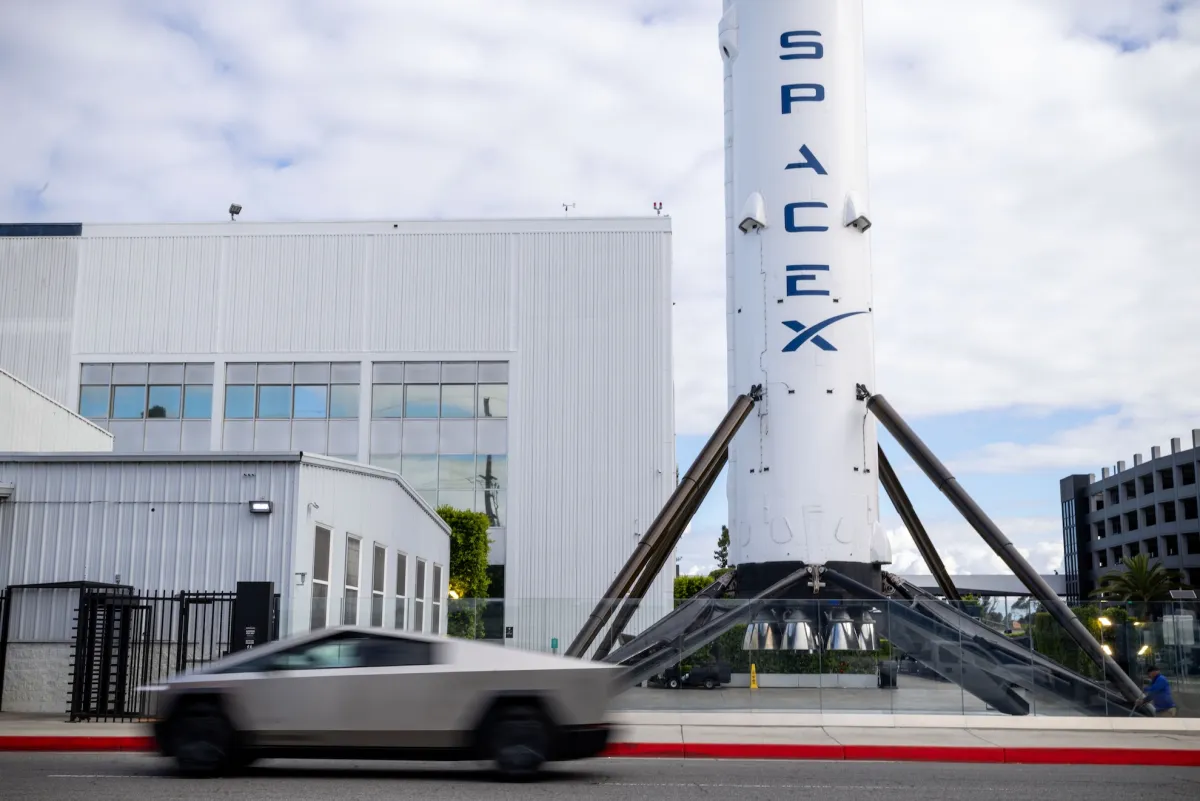
In a significant development that could reshape the future of two of the world’s most innovative companies, the boards of SpaceX and Tesla have each initiated special committees to thoroughly review the feasibility of a possible merger. This strategic exploration, spurred by shareholder requests and publicly acknowledged by CEO Elon Musk, marks a pivotal moment in the intertwined sagas of his industrial empire.
Musk, the visionary at the helm and the largest individual shareholder of both entities, finds himself in a unique and, as he put it, “odd kabuki dance.” Due to his conflicted position, he is strictly barred from participating in the discussions of these newly formed committees, ensuring an arm’s-length, independent assessment of the proposed union. This recusal underscores the stringent governance protocols in place to protect shareholder interests in transactions involving such prominent figures.
The Guardians of Independence: Special Committees at Work
The formation of these special committees is not merely procedural; it is a critical safeguard in corporate governance, particularly when a company’s CEO and major shareholder holds significant sway over both parties in a potential transaction. These committees are composed exclusively of independent directors, whose mandate is to objectively evaluate the merger’s terms, potential benefits, and risks without the influence of any conflicted parties.
For Tesla, the task falls to a subset of its seven independent board members, as outlined in the company’s October 19 proxy filing. These include prominent figures such as board chair Robyn Denholm, Ira Ehrenpreis (who also chairs a committee), former Tesla CTO JB Straubel, Joe Gebbia, Jack Hartung, James Murdoch, and Kathleen Wilson-Thompson. These individuals are veterans of various established committees overseeing crucial functions like audit, compensation, and corporate governance, bringing a wealth of experience to the table. Notably, neither Elon Musk nor his brother Kimbal Musk, who also serves on the board, are considered independent under Nasdaq’s listing standards, hence their exclusion from these sensitive discussions.
SpaceX’s special committee is drawn from its six independent directors, a group that includes Ira Ehrenpreis, who chairs the company’s compensation and nominating committee, alongside Randy Glein, Donald Harrison, Steve Jurvetson, Luke Nosek, and Roelof Botha. Similarly, the company’s board also includes Antonio Gracias, Elon Musk, and SpaceX president and chief operating officer Gwynne Shotwell, all of whom are deemed non-independent. Gracias, a former Tesla board member, leads Valor Equity Partners, a firm with a 3.4% stake in SpaceX and a history of financing SpaceX’s AI hardware purchases through leaseback arrangements, further highlighting the necessity of an independent review process.
Musk’s Vision: Unlocking the “Superintelligence Singularity”
Despite his mandated absence from the committee discussions, Musk has openly expressed his support for the merger concept, believing there’s “a lot of merit to combining the companies as we are pretty much in the superintelligence singularity.” This ambitious statement provides a window into the profound strategic rationale guiding his thinking, extending far beyond conventional business synergies.
Musk posits that a unified entity would unlock unprecedented potential by allowing for deep cooperation on developing advanced AI software and robotics across both automotive and aerospace domains. He specifically cited projects like Starmind, SpaceX’s ambitious orbital AI data center initiative, and Terafab, the joint chip manufacturing project between Tesla and SpaceX. A merger, in Musk’s view, would eliminate corporate silos, streamline resource allocation, and accelerate the development of these bleeding-edge technologies, potentially creating a powerhouse capable of leading the charge into an AI-driven future.
The vision here is of a fully integrated technological ecosystem: Tesla’s expertise in AI, robotics, and advanced manufacturing (e.g., Gigafactories) merging with SpaceX’s unparalleled capabilities in space launch, satellite constellations (Starlink), and deep-space infrastructure. Imagine autonomous Tesla robots assisting in rocket assembly, or Starlink’s global network providing the backbone for truly ubiquitous AI data processing, including for autonomous vehicles worldwide. The “superintelligence singularity” isn’t just about combining balance sheets; it’s about converging distinct technological trajectories into a single, accelerated path towards unprecedented innovation.
Navigating the Shareholder Maze: Hurdles to Unification
While Musk’s enthusiasm for the merger is palpable, he remains a pragmatist, cautioning that a combined SpaceX and Tesla is “not a certainty.” The ultimate decision, he emphasized, rests squarely with the shareholders of both companies, and the path to gaining their support differs significantly between the two entities.
For SpaceX, the approval process appears comparatively less daunting. Following its IPO, Musk cemented his grip on the company, reportedly holding more than 50% of the voting power. This substantial control would significantly ease the process of garnering sufficient shareholder support for a merger, assuming the independent committee recommends it and the terms are favorable.
The challenge, however, looms much larger for Tesla. As a publicly traded company, a merger would require a robust shareholder vote, specifically needing a 50% approval from *all* shareholders, not merely those who choose to cast their votes. This higher bar means that a significant portion of passive or non-voting shareholders would effectively count as “no” votes if they do not actively support the transaction. Convincing a diverse and expansive public shareholder base of the merits of merging with a largely private, capital-intensive space exploration company presents a formidable task, even with Musk’s persuasive power.
The Road Ahead: Scrutiny, Synergy, and Speculation
The committees’ work is currently in its nascent stages, with no agreement yet reached on the terms of any potential transaction. This period of deliberation will involve extensive due diligence, financial modeling, and strategic assessments to determine whether a merger genuinely creates value for shareholders of both companies, or if the perceived benefits are outweighed by operational complexities, regulatory hurdles, or dilution concerns.
Beyond the immediate financial and operational considerations, such a merger would undoubtedly attract intense scrutiny from antitrust regulators globally, given the market dominance and innovative capabilities of both Tesla and SpaceX in their respective, yet increasingly converging, sectors. The implications for competition, technological development, and even national security could be profound. Analysts will be closely watching for details regarding valuation, governance structures of a combined entity, and how the immense capital demands of SpaceX’s space ventures would integrate with Tesla’s rapidly expanding automotive and energy businesses.
Bottom Line
The exploration of a Tesla-SpaceX merger represents a bold, potentially paradigm-shifting move driven by Elon Musk’s vision of a technologically integrated future. While the formation of independent committees ensures a rigorous, conflict-free evaluation, the journey from concept to reality is fraught with significant shareholder approval challenges, particularly for Tesla. The coming months will reveal whether this ambitious “kabuki dance” culminates in a unified corporate titan, or if the complexities prove too great for even Musk’s formidable will to overcome.
When you purchase through links in our articles, we may earn a small commission. This doesn’t affect our editorial independence.
{content}
Source:{feed_title}