
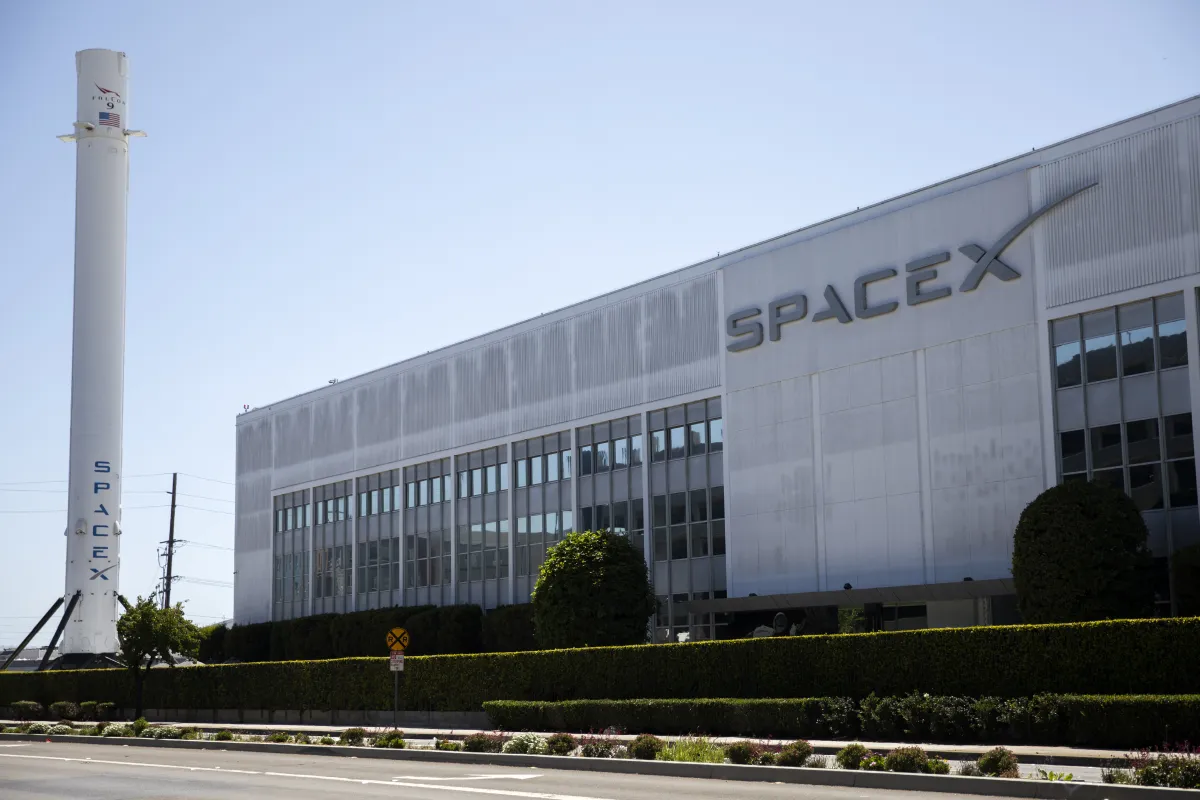
SpaceX, Elon Musk’s space company that also houses his AI company, xAI, is considering spending $55 billion, at least initially, to build a semiconductor factory in Grimes County, Texas, according to a proposal on the county website.
The company estimates it may spend a total of $119 billion on the project, which would be a “multi-phase, next-generation, vertically integrated semiconductor manufacturing and advanced computing fabrication facility,” according to the filing.
Musk has previously outlined plans for the project, dubbed “Terafab,” that will also see Tesla contributing resources. The companies have roped chipmaking giant Intel into the effort, aiming to develop chips for AI servers, satellites, SpaceX’s proposed data center in space, as well as autonomous Tesla vehicles and robots.
The billionaire has said the manufacturing facility will, sometime in the future, manufacture enough chips to provide 1 Terawatt of power per year, arguing that semiconductor manufacturers aren’t making chips quickly enough for his companies’ artificial intelligence and robotics needs. “We either build the Terafab or we don’t have the chips, and we need the chips, so we build the Terafab,” he wrote.
However, Musk wrote in a tweet on Wednesday that Grimes County in Texas was only one of several locations under consideration for the factory.
The filing comes as Musk has doubled down on ensuring xAI has enough computing power available to train and power its Grok series of AI models. He’s also intent on capitalizing on the demand for AI compute by building data centers in space, which he has cited as a big reason for combining xAI with SpaceX. The combined entity is said to have a valuation of $1.25 trillion and is expected to go public in June.
Key Takeaways
- Colossal Investment Proposed:SpaceX is weighing an initial $55 billion, potentially escalating to $119 billion, for a “Terafab” semiconductor factory in Texas, a move highlighting an unprecedented vertical integration strategy in tech.
- Fueling the AI & Autonomous Future:The facility aims to produce chips critical for Elon Musk’s diverse ventures, including xAI’s Grok models, Tesla’s autonomous vehicles and robots, and SpaceX’s satellite constellations and ambitious in-space data centers.
- Strategic Independence & Scale:Driven by perceived chip shortages and the exponential demands of AI, the Terafab represents Musk’s bold play to secure vital computing power, potentially disrupting traditional semiconductor supply chains and reshaping the tech manufacturing landscape.
Musk’s Latest Moonshot: A $119 Billion Gigafactory for Chips
In a move that underscores Elon Musk’s relentless pursuit of vertical integration and technological self-sufficiency, his aerospace giant SpaceX is reportedly eyeing a staggering investment of up to $119 billion for a state-of-the-art semiconductor fabrication facility in Grimes County, Texas. This colossal project, initially valued at $55 billion, signals a dramatic escalation in the race for advanced computing power, placing SpaceX and its burgeoning AI arm, xAI, at the forefront of in-house chip production.
According to a detailed proposal submitted to Grimes County authorities, the envisioned “multi-phase, next-generation, vertically integrated semiconductor manufacturing and advanced computing fabrication facility” — or “Terafab” as Musk has dubbed it — would be a cornerstone for his sprawling technological empire. This strategic pivot comes as the demand for high-performance chips, particularly those powering artificial intelligence and advanced robotics, continues to outstrip global supply, a bottleneck Musk has frequently lamented.
The Genesis of Terafab: From Vision to Gigascale Ambition
The concept of the Terafab isn’t new to Musk’s playbook. He has previously articulated plans for this immense facility, emphasizing its necessity to overcome the perceived limitations of existing semiconductor manufacturers. His rationale is stark: “We either build the Terafab or we don’t have the chips, and we need the chips, so we build the Terafab.” This declaration highlights a fundamental belief that the current pace of chip production is insufficient to meet the insatiable demands of his ventures, especially those requiring massive parallel processing for AI and autonomous systems.
The project’s ambition extends beyond mere manufacturing. It aims for an annual output capable of providing 1 Terawatt of power, a figure that dwarfs most existing fab capacities and speaks to the scale of Musk’s future plans. Tesla, another pillar of the Musk ecosystem, is also slated to contribute resources and expertise to the Terafab, leveraging its experience in designing custom chips for its autonomous driving systems. Furthermore, reports suggest collaboration with industry titan Intel, indicating a blend of in-house innovation and strategic partnerships to navigate the complexities of advanced chipmaking.
Powering the AI Revolution: From Earth to Orbit
The chips produced at the Terafab would serve a diverse array of critical applications across Musk’s interconnected companies. For xAI, the chips are fundamental to training and powering its rapidly evolving Grok series of AI models, which demand immense computational resources. The ability to control the supply and specifications of these chips would give xAI a significant advantage in the intensely competitive AI landscape.
Beyond terrestrial AI, the Terafab plays a pivotal role in SpaceX’s audacious vision for a “data center in space.” This concept, which Musk cites as a primary driver for the recent combination of xAI with SpaceX, seeks to leverage the unique advantages of an orbital environment for data processing and storage. Such an undertaking would require a continuous supply of highly specialized, resilient chips, making an in-house fabrication facility not just convenient, but potentially indispensable.
Furthermore, autonomous Tesla vehicles and advanced robotics, both central to Musk’s future strategies, stand to benefit immensely. As self-driving technology matures and humanoid robots like Optimus become more sophisticated, their computational needs will skyrocket. The Terafab would ensure a dedicated, secure, and optimized supply chain for the processors that power these intelligent machines, potentially accelerating their development and deployment.
Texas as a Contender: Regional Impact and Global Implications
While Grimes County, Texas, has been identified as a prime candidate, Musk himself has tempered expectations, stating via social media that it is “only one of several locations under consideration.” This indicates a competitive bidding process, where states and localities will vie for the economic windfall such a massive project would bring. The potential for thousands of high-paying jobs, significant infrastructure development, and a boost to the local economy would be transformative for any chosen region.
From a broader industry perspective, the Terafab represents a potentially seismic shift. Major tech companies like Apple, Google, and Amazon have increasingly moved towards designing their own chips, but few have ventured into full-scale fabrication with such a monumental investment. Should the Terafab come to fruition, it could challenge the dominance of traditional foundry players and reshape the global semiconductor supply chain, further blurring the lines between chip designers and manufacturers.
Bottom Line
Elon Musk’s proposed Terafab is more than just a factory; it’s a declaration of strategic intent, aiming to secure the foundational compute power for an empire spanning space, AI, and autonomy. With an investment potentially reaching $119 billion, this project would not only be one of the largest private sector undertakings in history but also a daring leap towards complete technological self-reliance. While challenges in advanced chip manufacturing are immense and the final location is yet to be determined, the Terafab underscores Musk’s unwavering commitment to controlling the critical components necessary to realize his most ambitious visions, fundamentally altering the competitive landscape for decades to come.
Source:{feed_title}