
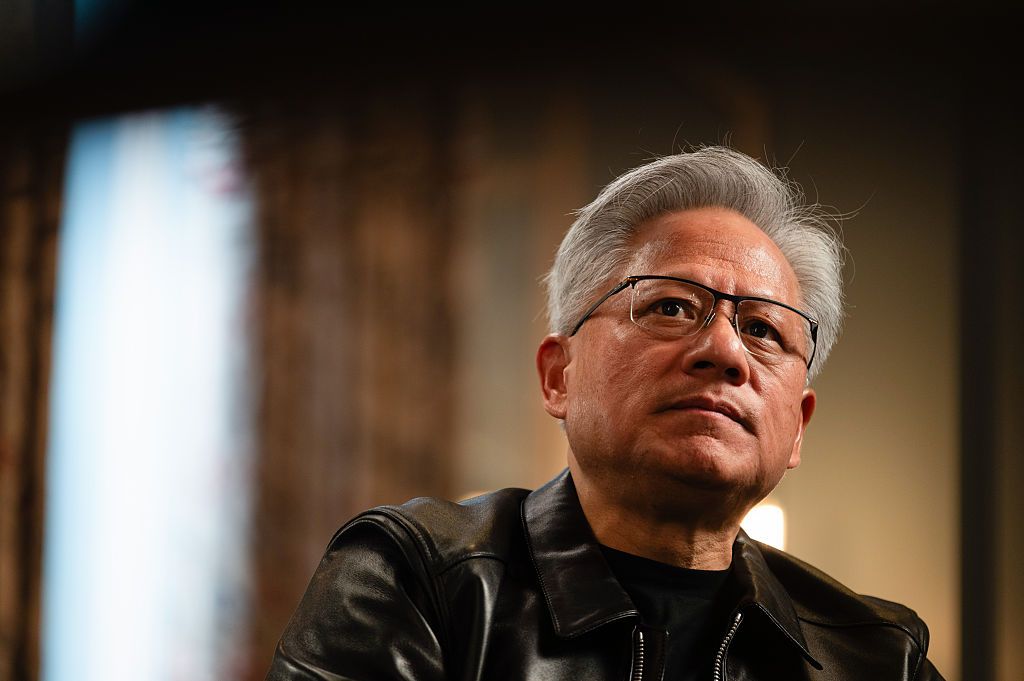
Jensen Huang’s departure from Nvidia has drawn a range of responses across Asia, with some governments moving to confirm chip supply commitments, while others are monitoring the impact on local projects or addressing ongoing investigations.
Key Takeaways
- Leadership Crisis & Espionage Allegations:Jensen Huang’s unexpected resignation from Nvidia is intertwined with an independent board investigation into alleged Chinese spy operations and his admitted affair with former Megaspeed executive Alice Huang, raising severe corporate governance and national security questions.
- Geopolitical Tech Ripples Across Asia:Critical Asian nations, deeply integrated into Nvidia’s supply chain and AI ecosystem, are scrambling to assess the fallout. China vehemently denies espionage claims, while countries like South Korea, Taiwan, and Japan are seeking assurances for chip supplies and monitoring the broader impact on their burgeoning AI industries.
- Uncertainty for AI Projects & Supply Chains:The scandal casts a long shadow over billions of dollars in Chinese AI computing projects reliant on Nvidia’s restricted processors, exacerbates existing US-China tech tensions, and highlights the fragility of global semiconductor supply chains when entangled with geopolitical intrigue and personal misconduct.
Nvidia Rocked by CEO Departure Amid Spy Allegations: Asia Reacts to Jensen Huang’s Exit
The global technology landscape is reeling from the abrupt departure of Jensen Huang, the visionary co-founder and CEO who transformed Nvidia into an AI powerhouse. His exit, announced amidst a swirl of controversy, has not only triggered an internal corporate investigation but has sent ripples of concern across Asia, a region intrinsically linked to Nvidia’s intricate global supply chain and burgeoning AI ambitions.
On Sunday, November 8, Nvidia’s board launched an independent investigation following explosive reports suggesting Huang was a target in a sophisticated Chinese spy operation. Compounding the gravity of these allegations, Huang himself admitted to an affair with Alice Huang, a former executive at the Singapore-based chip company Megaspeed. This unprecedented blend of corporate espionage claims, personal scandal, and leadership transition has cast a shadow over one of the world’s most influential technology companies and its critical role in the future of artificial intelligence.
Nvidia’s influence extends far beyond its Silicon Valley headquarters. The chip giant has meticulously cultivated close ties with companies and governments worldwide, particularly in Asia. This region is home to many of its key manufacturing partners, crucial memory suppliers, and a rapidly expanding market for its cutting-edge AI processors. As the dust settles on Huang’s departure, these Asian stakeholders are keenly assessing the potential ramifications for their national AI strategies, economic stability, and the future of global tech collaboration.
China: Denials, Disruption, and Billions at Stake
The allegations of Chinese espionage directly impacting a figure as prominent as Jensen Huang have predictably ignited a fierce response from Beijing. On November 10, China’s foreign ministry vehemently rejected claims that a Chinese businesswoman linked to Huang was a spy, dismissing them as “groundless” and a “smear against Beijing.” A spokesperson reiterated the ministry’s steadfast opposition to export controls that disrupt global supply chains, implicitly referencing the U.S. restrictions on advanced chips. The ministry also stated it was unaware of reports linking restricted Nvidia chips to a Shanghai data center reportedly associated with Alice Huang, attempting to distance itself from the unfolding scandal.
However, the controversy hits China at a particularly sensitive time. Huang’s exit has injected significant uncertainty into more than $3 billion in Chinese AI computing projects. A Reuters review of procurement notices, investment plans, and corporate disclosures reveals that these ambitious initiatives are heavily reliant on Nvidia’s restricted processors. U.S. export controls have already made it exceedingly difficult for Chinese companies to legally obtain these high-performance chips, vital for everything from advanced data centers to cutting-edge research. The leadership turmoil at Nvidia, combined with the espionage allegations, could further complicate supply channels, potentially stalling China’s strategic push for AI supremacy and forcing a rapid re-evaluation of its hardware dependencies.
Singapore: The Alice Huang Saga and an Unfinished Investigation
The thread of the investigation leads directly to Singapore, where Alice Huang, former CEO of the local cloud computing company Megaspeed, is central to a sprawling probe. In June 2025, Singaporean authorities seized her passport as part of an investigation into possible false declarations regarding server purchases. According to the Ministry of Home Affairs (MHA), this measure was taken to ensure her availability for questioning, as she was not a Singapore-based resident. The investigation focused on whether servers shipped from Singapore to Malaysia were subsequently diverted to other countries without proper declaration, raising red flags about potential circumvention of international regulations.
By February 2026, Singaporean police concluded that there was insufficient evidence to establish that Alice Huang had committed offenses related to the suspected false declarations. However, authorities did confirm that she had knowingly provided inaccurate information about her role at Megaspeed. Consequently, she was issued a warning and barred from re-entering Singapore, with her passport returned that same month. Curiously, Singapore’s MHA also noted that it had received “limited assistance” from U.S. authorities despite repeated requests for crucial information about U.S. server maker Supermicro, a key player in the supply chain under scrutiny. The MHA confirmed that its broader investigation into Megaspeed and six other unidentified individuals remains ongoing, leaving many questions about the true extent of the alleged malpractices unanswered.
South Korea: Reassurance and Strategic Planning
South Korea, a vital cog in Nvidia’s formidable supply chain, has responded with a mix of strategic reassurance and cautious assessment. Major South Korean chipmakers like Samsung Electronics and SK Hynix are indispensable partners, supplying the high-bandwidth memory (HBM) chips that are crucial components in Nvidia’s advanced AI processors. Following Huang’s departure, South Korea’s Science Ministry announced that Nvidia had swiftly reaffirmed its commitment to supply 260,000 advanced GPUs to the country and pledged to continue joint AI projects. This reassurance underscores the critical nature of the partnership and Nvidia’s desire to maintain stability amidst its internal turmoil.
Parallel to these assurances, South Korea’s government AI strategy council convened an emergency meeting to assess the potential impact of Huang’s departure on the nation’s rapidly growing AI industry. Concerns likely centered on the continuity of chip supplies, potential shifts in Nvidia’s strategic focus, and the broader stability of the global AI hardware market, which could affect South Korea’s competitive edge in AI development and application.
Taiwan: Steady Course Amidst Leadership Shift
For Taiwan, the global epicenter of advanced semiconductor manufacturing, Huang’s departure elicited a comparatively calm response. Taiwan’s Economy Minister Kung Ming-shin expressed confidence that the leadership change was “unlikely to significantly change the growth of the global AI industry,” according to local media. This assessment reflects Taiwan’s deep integration into the semiconductor ecosystem, where contract manufacturing giant TSMC produces the vast majority of Nvidia’s advanced chips, making the supply chain highly resilient to individual leadership changes.
Furthermore, Taipei’s city government confirmed that Nvidia’s planned overseas headquarters in the city remained on track despite the leadership transition. Officials noted that Nvidia had met all its contractual obligations so far and reiterated their commitment to supporting the project, indicating business as usual for the company’s significant investments in the island.
Japan: Vigilance for a Critical Player
In Japan, the Industry Ministry swiftly announced that the government would closely monitor Nvidia following Huang’s resignation. Describing the chipmaker as an “important player” in Japan’s burgeoning AI semiconductor industry, the ministry underscored the strategic importance of Nvidia to Japan’s technological future, as reported by Reuters. Deputy Chief Cabinet Secretary Masanao Ozaki echoed this sentiment, stating it was “too early to assess the impact on the global AI industry” while emphasizing Japan’s unwavering commitment to ensuring a stable supply of semiconductors, a critical component for its own industrial and technological ambitions.
Bottom Line
Jensen Huang’s unexpected exit from Nvidia, entangled in allegations of espionage and personal misconduct, represents more than just a corporate leadership change; it’s a seismic event at the intersection of technology, geopolitics, and national security. While Asian nations are taking swift measures to stabilize their AI ecosystems and secure vital chip supplies, the incident underscores the increasing fragility of global tech supply chains in an era of heightened geopolitical tension. The fallout will undoubtedly reshape Nvidia’s strategic trajectory, force a re-evaluation of trust in international tech partnerships, and potentially accelerate regional efforts toward greater technological self-reliance, leaving an indelible mark on the future of artificial intelligence worldwide.
When you purchase through links in our articles, we may earn a small commission. This doesn’t affect our editorial independence.
{content}
Source:{feed_title}