
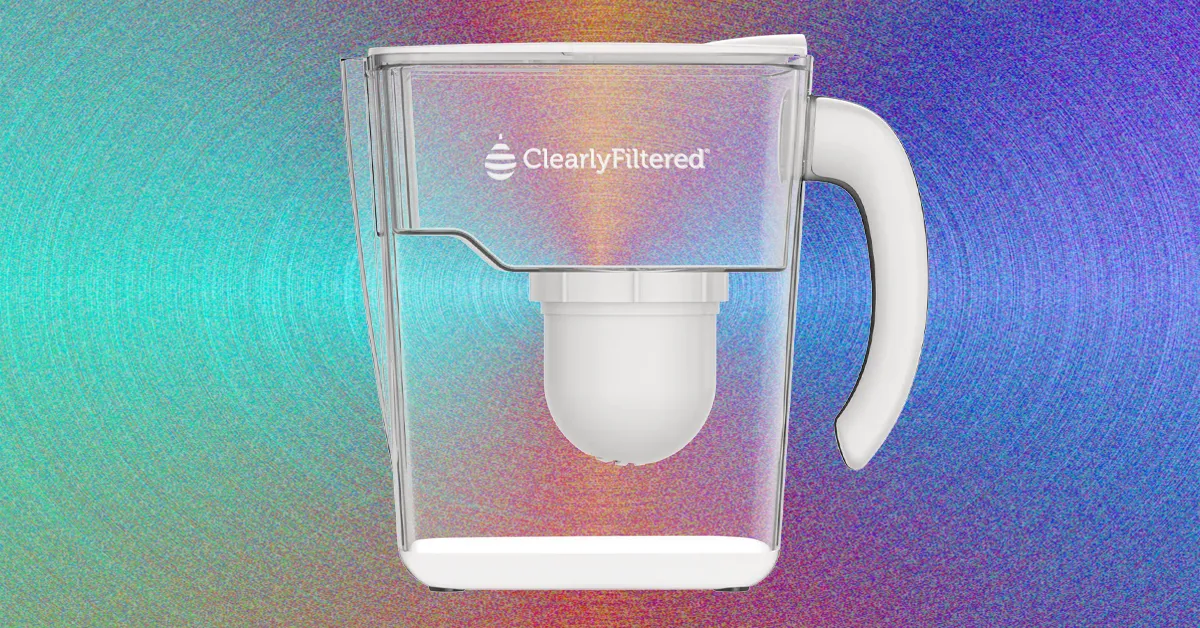
Water filters are experiencing a surge in popularity, following the EPA’s declaration that potentially 10 percent of US water systems could contain hazardous levels of PFAS, commonly referred to as “forever chemicals.” Lead piping remains prevalent in many areas, even though it will be absent from Flint, Michigan, by July 2025. Furthermore, your location might mean heavy metals contaminate groundwater, and purchasing bottled water introduces the hazard of surplus microplastics.
My intention isn’t to alarm you. Most likely, your potable water adheres to national regulations, with merely about 4 percent of water systems demonstrating unsafe pollutant concentrations, based on a 2020 EPA investigation. Nevertheless, local water infrastructure won’t be mandated to conform to the fresh federal limits for PFAS and PFOA in potable water until 2031.
Driven by concerns regarding the water supply, a new wave of water purifiers is making impressive assurances about lessening pollutants: such as chlorine, PFAS, heavy metals, incidental pharmaceuticals like acetaminophen, and fluoride, if that’s a personal apprehension. A portion of these consist of whole-house or under-sink reverse osmosis setups. Conversely, some are uncomplicated countertop units, relying on gravity to pass water through mesh, carbon, or alternative filtration media.
Therefore, how can one discern which assertions about water filtration are trustworthy? Having evaluated water filters since 2024, frequently employing chemical reagents and specialized apparatus, I can confirm that this task is often challenging. Below is a concise guide to scrutinizing any water filter that has piqued your interest.
What Constitute NSF/ANSI Criteria for Water Filters?
My primary assurances when evaluating water filters stem from certifications and unbiased third-party examinations. Ambiguous declarations of a 99 percent decrease in chlorine, PFAS, or arsenic become less credible if the testing originates internally within the manufacturing entity. For legitimacy, any assertions of external testing ought to explicitly name the laboratory that performed the assessment.
The most dependable, standardized method of accreditation involves testing according to NSF/ANSI benchmarks. The NSF, previously known as the National Sanitation Foundation, is a Michigan-headquartered, non-governmental charitable organization established in 1944 that formulates and confirms compliance with various testing criteria—among them, those applicable to water purifiers. ANSI, the American National Standards Institute, operates as an autonomous non-profit body that validates accreditation and testing entities such as the NSF.
Three principal NSF/ANSI criteria are pertinent to residential potable water filters.
- NSF-ANSI 42: Drinking Water Treatment Units—Aesthetic Effects.
This validates the elimination of compounds not deemed detrimental, yet capable of influencing the appearance or flavor of water. It encompasses chlorine and chloramine, agents utilized by municipalities for water disinfection. - NSF/ANSI 53: Drinking Water Treatment Units—Health Effects
This confirms the extraction of numerous compounds believed to be deleterious, such as lead, arsenic, PFAS, and more. Each specific compound undergoes separate examination, from a pool of over 50 potential pollutants. - NSF/ANSI 401: Emerging Compounds/Incidental Contaminants
This certifies the filtration of compounds that are presenting themselves as potential issues, encompassing pharmaceuticals, herbicides, and pesticides.
Should you possess the product, these indicators might be displayed on its packaging. However, do not presume that certification is typical. Specifically among shower water purifiers, merely one filter—the Weddell Duo—obtained NSF certification for the elimination of free chlorine.
{content}
Source:{feed_title}