
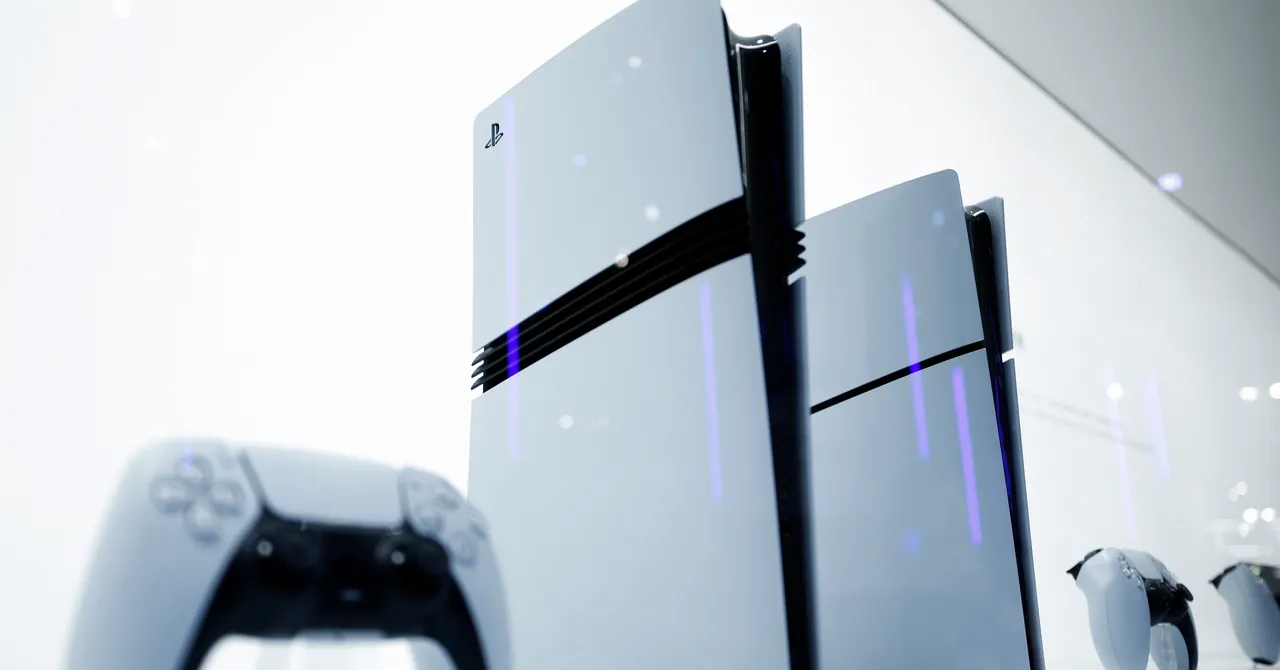
If you’ve beenpostponing the purchase of a PlayStation 5, anticipating a cost reduction, prepare for unfortunate tidings: the expenditure for each iteration of Sony’s dominant gaming system has instead just climbed significantly.
This development deviates from long-standing practices (or at least consumer expectations) and is, without doubt, a setback for anyone desiring a bargain, with the present console generation already five years old. However, it also signals that the current console era is likely to persist for an extended period—a situation thatcould bea positive development, for both the industry and gamers alike.
Conventionally, at this juncture in a console’s lifecycle, existing hardware undergoes considerable markdowns. For instance, the PS4, which debuted at $400 in 2013, was available for $300 by 2018, marking a 25 percent decrease. Even if the hardware is initially sold at a loss, such a price path usually proves mutually advantageous for producers and purchasers. Manufacturing and constituent expenses generally diminish over that five-year span, enabling firms to lower the selling price, often accompanied by more compact hardware iterations. Concurrently, gamers not convinced at a system’s initial release gain a more affordable access point and a backlog of titles to experience. Yet, this generation has been far from ordinary.
Current Era Peculiarities
The surge in AI demand has caused RAM and SSD storage costs to soar over recent months, affecting the worldwide technology industry comprehensively. Sony as a whole has been gravely impacted by this, with its recent disclosure of halting its memory card operations, while the PlayStation division of the conglomerate just substantiated persistent speculations about rising costs for its line of gaming systems.
The revised manufacturer’s suggested retail prices became active on April 2, and it is undeniable that they represent substantial hikes. The “entry-level” digital edition PS5 console—the disc-free variant—suffered the most, jumping to $600. That’s an additional $100 above its former US selling cost (which was already raised due to an earlier increase in August 2025, spurred by Trump’s tariffs) and an astonishing 50 percent more than its initial $400 tag from 2020.
The standard PS5 with a disc reader saw a 30 percent increase on its original $500 cost, currently priced at $650, while the PS5 Pro experiences a rise of merely 29 percent from its $700 debut price, requiring purchasers to pay $900—though it also lacks an integrated disc drive, so expect to spend an additional $80 to utilize physical media or Blu-ray discs. In another development, the PlayStation Portal, Sony’s portable device enabling users to stream titles from their PS5 or online, also saw a $50 rise, shifting from $200 to $250.
PlayStation is not unique in raising its costs. Xbox elevated its device and GamePass membership fees on several occasions in 2025, culminating in the high-spec 2-TB Xbox Series X’s recommended retail price reaching $800, and is speculated to be contemplating an additional increase. The Switch 2 avoided tariff-driven cost increases at its release but, according to Bloomberg, is “reportedly considering an escalation in the device’s price in 2026″—and the same publication indicates Sony might postpone the anticipated PlayStation 6 until 2029, all attributable to the scarcity of components triggered by AI demand.
Even Valve’s handheld Steam Deck hasn’t been spared—though price escalations have thus far occurred solely in Japan, South Korea, and Taiwan, the producer has declared that the initial 256 GB, LCD-display version (the most economical) “is no longer being manufactured, and upon depletion of stock, will cease to be obtainable” while more recent OLED iterations, offered with either 512 GB or 1 TB capacity, “might experience intermittent unavailability in certain territories owing to deficits in memory and storage components.”
{content}
Source:{feed_title}