
Welcome back toTechCrunch Mobility, your hub for the future of transportation and now, more than ever, the role AI is playing in it. To get this in your inbox, sign up here for free — just click TechCrunch Mobility!
Key Takeaways
- The Human Cost of Autonomous Progress:While AVs promise safer roads, a recent investigation reveals over two dozen injuries to test drivers at Waymo and Zoox from abrupt vehicle movements, highlighting an often-overlooked human toll in developing cutting-edge technology.
- Mobility’s Diverse Funding Momentum:Significant investments continue to pour into varied mobility sectors, from Gatik’s $200M for autonomous logistics and Regent Craft’s $240M for electric seagliders, to India’s Airbound securing $37M for autonomous drones, signaling robust growth and innovation across the board.
- Navigating Industry Shifts & Scrutiny:The sector faces critical leadership changes (Rivian CFO’s departure), ongoing safety debates (GM’s EV brake issues, Waymo’s sensor philosophy vs. Tesla), and crucial technical clarifications, underscoring a dynamic and complex landscape beyond just technological advancement.
The Unseen Toll: Worker Safety in the Autonomous Frontier
Proponents of autonomous vehicle technology frequently champion its potential to drastically reduce crash incidents and enhance road safety. While some evidence supports these claims, a closer look reveals that this progress hasn’t come without a cost, particularly for the dedicated individuals on the front lines of AV development.
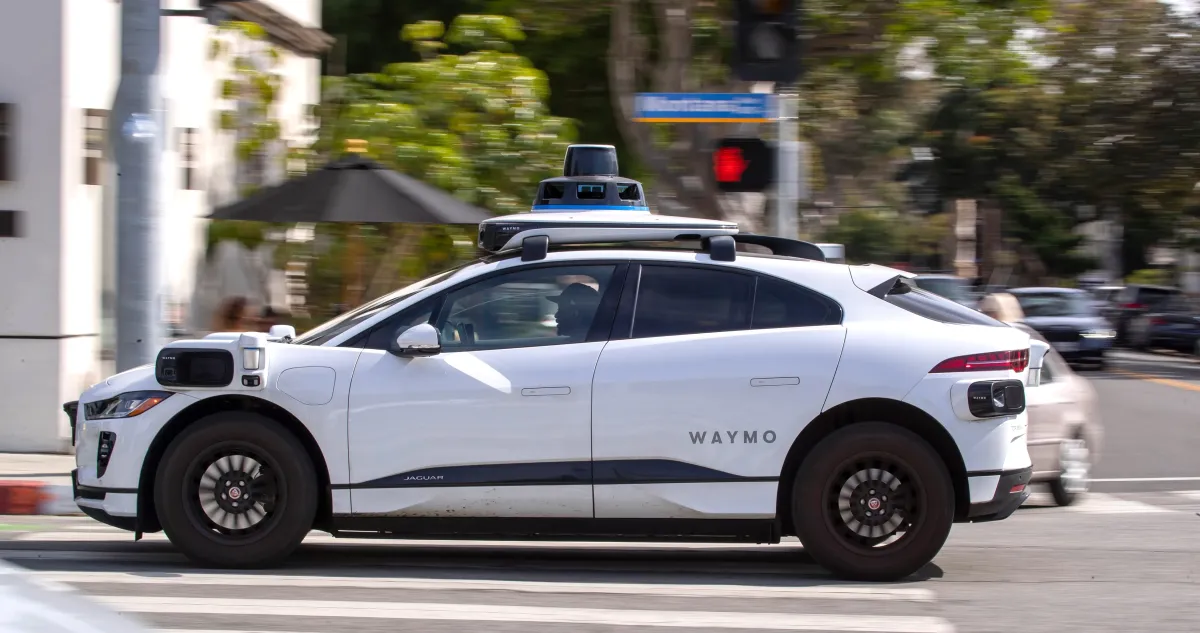
Senior reporter Sean O’Kane’s meticulous investigation into data submitted to theOccupational Safety and Health Administration (OSHA)has uncovered a concerning trend. Test drivers for prominent AV companies,WaymoandZoox, sustained more than two dozen injuries in 2024 and 2025. These injuries were primarily a result of hard braking or other sudden, unexpected movements initiated by the autonomous vehicles themselves. In several cases, these workers were sidelined for months, suffering debilitating conditions like whiplash after their AVs came to abrupt, forceful stops.
O’Kane’s full story, featuring candid interviews with former and current workers, offers a vital perspective on the challenges faced by those directly engaged in validating self-driving technology. It’s a stark reminder that while the future of transportation marches forward, the safety and well-being of the human operators assisting its arrival must remain paramount.
An important caveat to this data is the scope of OSHA’s reporting requirements. While Waymo and Zoox’s data provides critical insights, it’s highly probable that test drivers for other autonomous vehicle developers are experiencing similar incidents. However, many companies may be exempt from OSHA’s specific reporting mandates, suggesting that the problem of AV-induced worker injuries could be far more widespread than currently documented.
Got a tip for us on this story or others? Email Kirsten Korosec at kirsten.korosec@techcrunch.com or my Signal at kkorosec.07, Sean O’Kane at sean.okane@techcrunch.com.
Driving Forward: Funding Fuels Diverse Mobility Ventures
The investment landscape in mobility remains robust, with significant capital flowing into companies pushing the boundaries of autonomous delivery, innovative transport, and logistics tech. These deals highlight a vibrant sector diversifying its approaches and scaling proven solutions.
Gatik’s Journey from Stealth to Scale
Gatik’s journey from a nascent “stealth” startup in 2019 to a pivotal player in autonomous middle-mile logistics offers a compelling narrative of perseverance and strategic execution. While many early AV ventures faltered, Gatik not only survived the notoriously challenging hype cycle but has successfully transitioned from an R&D-focused entity to a commercially operational force. Their recent $200 million funding round, spearheaded by Qatar Investment Authority and Koch Disruptive Technologies with additional backing from Millennium Management, ARK Invest, and Intact Private Capital, marks their largest capital injection to date and underscores investor confidence in their scalable vision.
This financial infusion is poised to accelerate Gatik’s expansion, particularly in light of its significant multiyear commercial agreement with PepsiCo, signed in June and contributing to an impressive $600 million in contracted revenue. This deal, arguably even more impactful than the funding itself, solidifies Gatik’s position as a proven solution for retail giants like Walmart, demonstrating the tangible economic value of driverless box truck deliveries from distribution centers to retail stores.
Broader Investment Trends: From Air to Sea
Beyond Gatik, other significant deals continue to shape the future of mobility:
- Airbound, an innovative Indian startup specializing in autonomous drones, successfully raised $37 million in a Series A round. The investment, led by Greenoaks with participation from DoorDash, Lachy Groom, Lightspeed, and Humba Ventures, signals growing confidence in drone technology for various applications.
- Mubadala Capital, the alternative asset management arm of the UAE-based Mubadala Investment Company, strategically acquired a majority equity interest inArrive Logistics. This move into the Austin-based truckload brokerage firm underscores the continued digitization and optimization of traditional logistics.
- Regent Craft, a Rhode Island electric startup focused on developing and manufacturing electric seagliders, secured a substantial $120 million in a Series B round, co-led by Mare Liberum and AE Ventures. Adding to this, Regent also secured about $120 million in debt capital provided by Erebor Bank, launched by Anduril Industries founder Palmer Luckey. Having closely followed Regent’s trajectory, it’s clear the company is strategically deepening its engagement with the defense sector, likely capitalizing on significant funding and partnership opportunities there, especially after completing its 255,000-square-foot seaglider factory.
- Vista Global Holding, a prominent private aviation group based in the UAE, is reportedly exploring a European IPO. Bloomberg reported that this public offering could potentially raise over $1 billion, indicating strong market appetite for luxury and executive air travel services.
Navigating the Currents: Industry Insights and Pivotal Moments

The mobility sector is constantly evolving, marked by public sentiment shifts, corporate restructuring, and crucial technological debates:
- A recent YouGov survey indicates that moreAmericansoppose police license plate cameras than support them, underscoring growing concerns about surveillance and privacy. We invite you to share your opinion on this evolving debate.
- Any, a Belgian electric two-wheeler startup, is making a strategic bet on cargo space, aiming to tap into the burgeoning last-mile delivery market with innovative designs.
- General Motorsis facing escalating scrutiny from U.S. safety regulators following hundreds of reported incidents, over 20 crashes or fires, and at least six injuries linked to persistent brake problems in its electric vehicles. This highlights the intense pressure on traditional automakers transitioning to EV technology.
- Fordhas announced the hiring of Dave Carroll, formerly of ENGIE North America, as the new president of its energy business. Carroll will succeed the long-serving executive Lisa Drake, signaling a renewed strategic focus on energy infrastructure and services within the automotive giant.
- RivianCFOClaire McDonoughis set to resign from her position at the end of October. Her tenure spanned a pivotal, albeit challenging, period for the company, including its IPO. Her departure comes at another critical juncture as Rivian embarks on major initiatives, including its robotaxi deal with Uber and the crucial scaling of production and sales for its R2 SUV.
- Uberis enhancing its ride-sharing safety features by launching a new live video streaming option, allowing parents to actively monitor their children during rides, addressing a key concern for family users.
- Waymorecently shared 10 invaluable lessons gleaned from its vehicles driving over 200 million autonomous miles. The foremost lesson—that multimodal sensors are indispensable—stands in direct opposition toTesla’scamera-only approach. Other notable insights included Waymo’s increasing promotion of vision language models, an emerging area gaining significant traction in AI development.
- Further solidifying its global ambitions, Waymo also announced plans to launch its autonomous service in Munich, Germany, marking a significant expansion into the European market.
The Nuance of Tech Specs: A Crucial Correction
Last week, we discussedWaymo’scustom silicon chip, specifically a 5 nm ASIC designed to efficiently process the massive influx of raw data before it reaches the core “brain” of the self-driving system. Waymo’s blog post stated: “While these ASICs alone deliver over 1,000 TOPS of ML performance dedicated to front-end processing and ML models, we optimize across the full stack to maximize achieved performance, especially in the low-batch regimes we often operate.”
This line led many, including us, to interpret that a single chip could deliver 1,000 TOPS (trillions of operations per second) of computing performance, a figure comparable to powerful automotive processors like Nvidia’s Drive AGX Thor. However, an astute reader prompted us to seek official clarification from Waymo.
A Waymo spokesperson confirmed, “It’s for the system, not a single chip.” This is a critical distinction. Understanding that the 1,000 TOPS performance refers to the cumulative capability of the entire ASIC system, rather than an individual chip, significantly reframes comparisons with other industry hardware and provides a more accurate picture of Waymo’s computational architecture. Such precision is vital when evaluating the capabilities of sophisticated autonomous systems.
When you purchase through links in our articles, we may earn a small commission. This doesn’t affect our editorial independence.
The Bottom Line
The mobility sector stands at a fascinating crossroads, relentlessly driven by the promise of AI and substantial capital, yet constantly navigating human safety concerns, regulatory scrutiny, and the intricate technical realities of pioneering new frontiers. From the unseen injuries of AV test drivers to the precise specifications of autonomous hardware, every aspect underscores a future that is undeniably exciting but fraught with complexity. Success in this evolving landscape demands not only groundbreaking innovation but also unwavering commitment to transparency, safety, and a deep understanding of the delicate balance between technological ambition and real-world impact.
{content}
Source:{feed_title}