
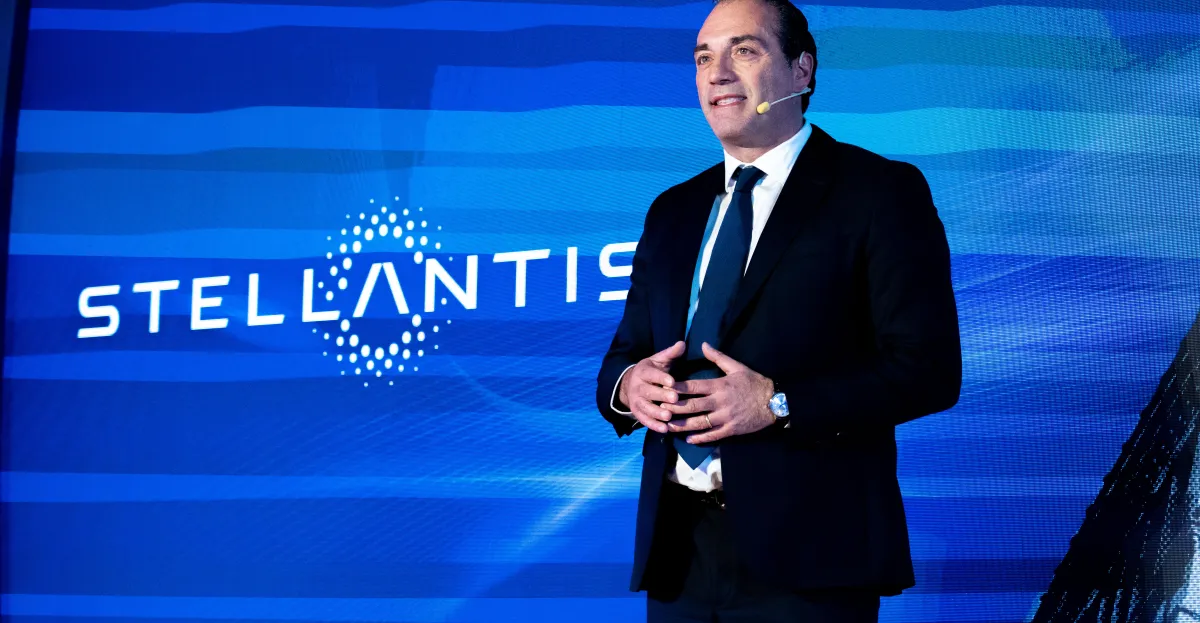
The appetite for electric vehicles has significantly cooled, leading to sequential car manufacturers encountering severe difficulties: General Motors discarded $7.6 billion. Ford erased $19.5 billion from its accounts. Yet, Stellantis is grappling with the most colossal burden to date, a $26.5 billion sum resulting from its ill-advised gamble on EVs.
The conglomerate overseeing Jeep, Dodge, and Chrysler has not disclosed the precise portion of this immense figure directly attributable to EV shortfalls, given that the impairment significantly eroded roughly a quarter of its market capitalization in a single day. All vehicle manufacturers contend with the identical decline in EV interest and a volatile political environment; however, Stellantis seems particularly vulnerable, partly owing to persistent shortcomings in adapting to advancing technology or shifting buyer preferences. Quality issues also persist. Furthermore, an extra $16.7 billion provision for guarantee and callback expenditures, encompassing a retrieval of 320,000 Jeep 4xe plug-in hybrids due to battery-fire hazards, exacerbates the economic damage.
While its appellations evolve — Stellantis, Fiat Chrysler, DaimlerChrysler, Chrysler Corp. — the firm maintains a vexingly consistent character. It represents the somewhat discordant sibling within the Motown triumvirate. This car producer is captivated by immediate solutions and easily attainable gains.
Within the United States, such readily available opportunities often manifest as V8 Hemi engines powering fuel-consuming pickups, SUVs, or high-performance automobiles. History, it seems, is repeating itself. Stellantis intends to dispatch 100,000 Hemi powerplants from its Saltillo, Mexico, facility by 2026, boosting production threefold to propel Ram 1500 pickups, Jeep Wranglers, and additional vehicles. Currently, consumer interest seems robust, and leadership aims to satisfy public desires.
In a conference call with analysts last year, Stellantis CEO Antonio Filosa stated that the aptly named Big Beautiful Bill — a measure for which he credited President Trump — grants the corporation “more flexibility in choosing… a mix between ICE and electric versions that we sell. And this will mean, to us, a lot of additional profit.”
Following a misguided EV wager, car manufacturers anticipate a triumph with ICE models
One can scarcely fault vehicle producers for seeking to recoup these severe EV deficits. Similar to GM, Ford, or Toyota, Stellantis predicts significant financial gains due to the Trump administration’s unconstrained approach to environmental and fuel efficiency regulations. Nonetheless, the tide will undeniably turn, and should this manufacturer neglect to invest in economical passenger vehicles and advanced technology, it risks severe repercussions.
Undoubtedly, Stellantis’ electric vehicles proved insufficient in the American market. The robust Dodge Charger Daytona represented a courageous yet unsuccessful effort to modernize Mopar’s performance heritage for the electric era. Dodge found itself compelled to introduce a gasoline-powered variant. A poorly conceived Jeep Wagoneer S EV, priced over $70,000 with optional features, garnered little interest in dealerships. The 2026 Jeep Recon constitutes the firm’s subsequent endeavor to attract Tesla Model Y purchasers; however, this Mexico-manufactured SUV will commence at $67,000, lacking the $7,500 consumer tax incentive to alleviate the cost.
While its appellations evolve — Stellantis, Fiat Chrysler, DaimlerChrysler, Chrysler Corp. — the firm maintains a vexingly consistent character
These particular models do not align with the Trump administration’s vision for “aiding” the sector, as it effectively rolls back fuel-efficiency and emissions standards to an era reminiscent of the Eisenhower administration. A year-long campaign against environmental rules concluded last week with the nullification of the “endangerment finding,” a landmark judgment that had mandated the Environmental Protection Agency to oversee greenhouse gases due to their peril to communal well-being and security.
Vehicle manufacturers will cease to incur penalties for not adhering to exhaust emission or fuel efficiency benchmarks. The obligation to purchase expensive carbon credits from entities such as Tesla, or to expend billions on EV development that failed to enhance profitability, will also be lifted.
Confronted with such governmental shenanigans, the Detroit Three are understandably inclined to adopt a stance of deliberate ignorance. Car producers possess the liberty to fabricate any vehicles they desire, at least until the next administration assumes power in Washington. Their renewed guiding principle is “Choice.” Predictably, they opt to capitalize on the situation by producing and selling fossil-fueled SUVs and pickup trucks, which account for nearly all their earnings.
The capital asserts these measures aim solely at rendering automobiles more economical. This encompasses a punitive elimination of fuel-efficient stop/start systems, which the EPA estimated reduced drivers’ fuel expenses by 7.3 to 26.4 percent. (One might wonder, does fuel not incur cost?) Furthermore, it was precisely these highly equipped trucks and SUVs that initially pushed the average new vehicle price beyond $50,000. The current low cost of gasoline also tempts car manufacturers to indulge now and face consequences subsequently. Individuals with better recall will remember the former Chrysler being unprepared when fuel costs soared, its dealerships inundated with unsold, inefficient vehicles
trucks. Grumpy individuals might even recall Chrysler’s 2009 bankruptcy and the ensuing government rescue.
Yet Overly Reliant on Trucks
Similar to its fellow automakers, Stellantis asserts it will not abandon electric vehicles. Nevertheless, it maintains a greater reliance on pickups and sport utility vehicles compared to competitors. Stellantis might endeavor to dominate its specialized field. Yet, sales of its mainstay Ram truck, after momentarily surpassing the formidable Ford F-150, have plummeted dramatically. A portion of that decrease certainly stemmed from Ram’s disputed choice to eliminate a V-8 engine, opting instead for a more fuel-efficient “Hurricane” inline V-6. However, it is primarily connected to the bungled launch of an updated 2025 Ram, marked by manufacturing constraints, defect issues, and the removal of a more accessible “Classic” variant in preference for high-profit editions like the $87,000 Tungsten model.
Consider this example of questionable market strategy: Ahead of the introduction of the 2026 Jeep Cherokee, a vital hybrid utility vehicle that reintroduces a legendary Jeep moniker, Stellantis lacked a direct competitor for the Toyota RAV4, Honda CR-V, or other highly sought-after compact SUVs. (The Jeep Compass is significantly smaller and incapable of competing effectively in that segment).
“That’s precisely where demand lies, and Korean and Japanese manufacturers are dominating those categories,” states Tom Libby, head of sector insights for S&P Global Mobility.
Similar to its fellow automakers, Stellantis maintains its commitment to electric vehicles. However, it is still more dependent on utility vehicles and pickup trucks compared to competitors.
While compact SUVs represent just one of 33 market categories, according to S&P’s data, these vehicles nonetheless comprise 21 percent of total US sales. Consequently, Stellantis, Libby points out, “was only competing in four-fifths of the market.”
Frequent executive turnover has not been beneficial. Filosa is the newest chief executive after the sudden departure of Carlos Tavares in December 2024, with Tavares experiencing widespread opposition. Dealers, suppliers, the UAW, key shareholders, and the managing board were on the verge of rebellion due to declining sales and Tavares’ unyielding expense reductions. Similar to a continually restructuring athletic team, every incoming corporate leader brings optimism and novel approaches, only to be subsequently replaced before implementing their vision.
“You cannot continually alter direction and anticipate betterment,” Libby states.
In Europe, Stellantis’ Peugeot and Citroen brands were achieving robust electric vehicle sales. However, the EU is now relaxing an EV directive for 2035. Consequently, Stellantis intends to revive diesel powerplants in at least seven European models. Some analysts view this as an astute commercial move, considering Chinese automakers lack diesel offerings. Yet, this also represents Stellantis at its peak throwback strategy. In Europe, diesels have decreased from comprising more than half the market in 2015 to 7.7 percent today. EVs, meanwhile, stand at nearly 20 percent and are rapidly increasing, fueled by the introduction of Chinese models from BYD and others.

Image: Stellantis
Numerous Marquees, Few Stellar Performers
It is widely known that Stellantis possesses an excessive number of struggling brands, encompassing 14 primary divisions including unnecessary Lancia, Vauxhall, and DS in Europe. (I shall omit Maserati from that list, with the hope that this formerly esteemed marque can endure). By this juncture, a CEO lacking strategic maturity would grasp that they have more operations than they can effectively manage. Yet, each new chief has avoided difficult decisions regarding which brands to divest. While marques like Chrysler decline, executives openly declare their affection and dedication, only to then disregard them.
Efforts to revive Fiat and Alfa Romeo in America were commendable, particularly for devotees seeking a touch of the sweet life in their automobiles. However, Alfa Romeo sold only 5,600 vehicles here last year, with a mere 1,300 units for Fiat. Regrettably, this endeavor has proven unsuccessful. And despite possessing seven brands in America, none serves as the type of core mass-market brand offered by General Motors’ Chevrolet, Ford, Toyota, or Honda.
Even so, Stellantis lacks a popular national automotive marque capable of challenging Toyota, Honda, or Hyundai. It also possesses no profitable premium brand comparable to Cadillac, whose flourishing electric vehicle sales (preceding the curtailment of buyer subsidies) enabled it to surpass a struggling Audi among American luxury vehicle standings.
“You cannot continually alter direction and anticipate betterment.”
— Tom Libby, head of sector insights for S&P Global Mobility
Things
Stellantis’ market performance **reached its lowest point** in August, when its portion of the US retail sector **plummeted to an unprecedented** 5.4 percent, **as reported by** S&P Global. The corporation has **initiated a turnaround**, with its retail segment climbing to 6.3 percent by November. However, having **ceded market dominance** to Toyota or Honda for **many years**, the automaker is presently **losing ground** to Hyundai and Kia, whose sales have **dramatically surged**. **It’s no mere coincidence that** these Korean marques have **committed capital** to **comprehensive product ranges**, incorporating **budget-friendly** sedans, utility vehicles, and **ingeniously crafted** EVs.
A single **alarming statistic reveals the gravity of the predicament**. Stellantis’ proportion of returning clientele, which S&P designates as its **brand allegiance metric**, **declined to approximately** 41 percent in August, prior to **rebounding to** 47 percent for the final quarter. **Put differently**, less than half of existing owners are **acquiring a subsequent** Stellantis vehicle, even with a selection of seven brands available. Among car manufacturers presenting a minimum of two brands in this region, only Volkswagen registered a lower figure at 44 percent.
At General Motors, a **robust** 66 percent of vehicle owners ultimately purchase another GM unit, succeeded by Toyota and Ford, achieving 64 and 61 percent respectively. Such brand allegiance has evolved into a **vital predictor of sustained prosperity**, amidst an increasing number of automotive manufacturers vying for a **constrained (or diminishing) pool** of new vehicle purchasers. Victory belongs to those capable of attracting patrons from competitors, captivating younger demographics, and ideally retaining them permanently.
Is Stellantis Capable of Reversing its Fortunes?
The **vexing aspect** is that Stellantis, performing optimally, is capable of producing **captivating** automobiles and utility vehicles, imbued with allure and distinctive character.
The **luxurious and potent** Ram. The Jeep Wrangler, which underwent a **substantial sales revival** as Americans reconnected with the pleasures of genuine off-road vehicles. The Dodge Challenger and its Hellcat and Demon **derivatives**. The **often-missed** Maserati GranTurismo Folgore, a **delightful-to-drive**, 202-mph electric luxury that renders a Lucid akin to a standard rental.
Stellantis currently has **scant alternative** but to rely on its established client demographic. However, Stellantis is compelled to persist with investments in electrification and other **cutting-edge technologies**, anticipating future shifts. Chinese electric vehicles have already secured a presence in Europe, are set to gain a minor entry in Canada, and will assuredly extend their reach into America.
The Ram 1500 REV pickup, subjected to repeated postponements, continues to represent an **compelling technological gambit**. This category of “extended range electric vehicle,” or EREV, exclusively employs an internal combustion engine to produce electricity for a battery, which subsequently propels the wheels with efficiency. Boasting significantly greater electric travel distances than contemporary plug-in hybrids, coupled with the convenience of refueling a gasoline tank as required, EREVs may appeal to Americans apprehensive about EV range anxiety or prolonged charging durations. Ram asserts that the REV can traverse 145 miles purely on plug-in electricity, offering a total range of 690 miles.
Filosa aims to rejuvenate the almost inactive Chrysler brand, planning for a tangible sedan (potentially electric) derived from the Halcyon concept, and perhaps an agile compact vehicle costing under $30,000. The firm is also preparing a demonstration fleet of Charger Daytonas, energized by semi-solid-state batteries—sourced from Massachusetts-based Factorial Energy—which enabled a minimally altered Mercedes EQS sedan to travel 749 miles from Stuttgart to Sweden, retaining an additional 85 miles of capacity.
Should Stellantis secure an early position in the development of **extremely long-range**, quick-charging solid-state batteries, it, alongside other domestic car manufacturers, could surpass the premier lithium-ion technology originating from China. Stellantis would be perceived as a technological pioneer, rather than an imitator. Presenting them with 500 miles of autonomy and a 15-minute replenishment, electric vehicle enthusiasts might contemplate a Dodge, Chrysler, or Ram for the initial time in their existence. **Dismiss the thought not**. Recall the prediction that Tesla would render every traditional automotive producer obsolete? Time might be running short for Stellantis, yet it is not beyond the point of transformation.
Source:{feed_title}