
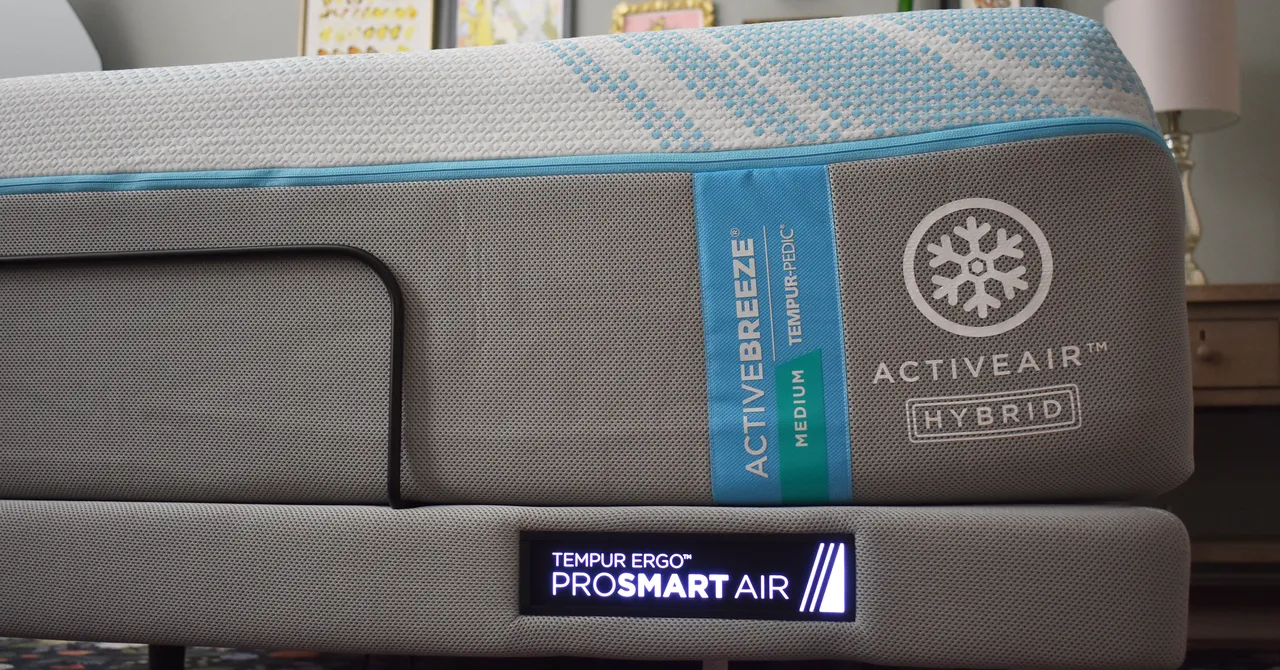
The bed base features warming capabilities for your feet, intended to redirect blood circulation away from your core, thereby facilitating a quicker onset of sleep. The ActiveBreeze distributed heat more uniformly, given that its fans are centrally located within the bed. I found this agreeable, particularly on cooler evenings. Additionally, using the remote, you can select low, medium, or high heating speeds, which the bed can attain in merely a few minutes. Based on your set wake-up time, the Tempur-ActiveBreeze also offers the option to pre-warm 30 minutes prior—a delightful feature, though it made detaching myself from my perceptibly warm, snug bed significantly more challenging.
Data Analyst
Temperature regulation is merely one aspect of this intelligent bed; I discovered its sleep monitoring function to be equally impactful. With smart beds, I typically wear my Apple Watch to bed, then cross-reference the data points. The Tempur-ActiveBreeze boasts comprehensive sleep-tracking abilities, which are mandatory—within a day of testing the bed, I began receiving email summaries of my sleep data, complete with suggested areas for enhancement.
You can obtain a quick summary of your achieved sleep stages through a pie chart illustrating variations in breathing rate, heart rate variability, awakenings, and whether you met your sleep objectives. And that’s only the summary. Within the app’s “Sleep” tab, the data is considerably more detailed, presenting the overview data points in graphs, charts, and numerical metrics. Much of this information is replicated across different views, but I valued the diverse visual presentations that clarified my successful habits and areas needing improvement. Over time, the application will furnish daily, weekly, monthly, and annual breakdowns of your sleep information.
ScreenshotTempurPedic app via Julia Forbes

ScreenshotTempurPedic app via Julia Forbes

ScreenshotTempurPedic app via Julia Forbes
My chief reservation is that despite this abundance of data, my initial readings did not correspond with what my Apple Watch was logging, especially concerning deep sleep and REM cycles. The data from the two tracking devices could differ by as much as 40 minutes. By the fifth day, the Tempur-ActiveBreeze seemed to better grasp my sleep rhythms, recording data that was much more consistent with my Apple Watch’s reports. Instead of wide discrepancies, there was generally a maximum 10-minute variation for REM, deep sleep, and actual time spent asleep.
Companion
Similar to many intelligent beds, the majority of functionalities are integrated into the adjustable foundation rather than the mattress itself. The Tempur-ActiveBreeze’s bed and base are sold as a combined unit and function exclusively together to allow users to experience its signature temperature-control capability.
Regarding the mattress itself, it delivers a quintessential Tempur-Pedic sensation. The foam isn’t overtly pressure-relieving, as I’ve encountered with other firm-feeling hybrid mattresses such as the Wolf Memory Foam Premium Firm hybrid mattress or the DreamCloud. The Tempur-ActiveBreeze’s surface takes several minutes to conform to your body’s contours, and while it offers profound shaping, it still isn’t as soft around sensitive areas as other beds I’ve evaluated. To be clear, it isn’t uncomfortable, nor did it induce any aches or discomfort. However, if you are particularly sensitive to pressure point alleviation, keep this in mind. The impressions left by the contouring didn’t hinder my movement, but they are more perceptible as you shift into a new sleeping posture and feel the imprint from your previous position.
{content}
Source:{feed_title}