
During the pre-dawnhours of February 26, representatives from the Department of Homeland Security (DHS) made their appearance at Columbia University’s residential facilities for students. The university stated that the immigration personnel informed campus security staff they were law enforcement officials searching for a missing 5-year-old child. However, upon gaining entry to the edifice, officials rapped upon the dormitory entrance of Elmina “Ellie” Aghayeva, an Azerbaijani scholar. When her cohabitant answered the summons, the officials promptly apprehended Aghayeva.
By 6:30 in the morning, Aghayeva, a prominent social media personality boasting more than 100,000 adherents across TikTok and Instagram, shared a photograph depicting her lower limbs within the rear passenger compartment of an automobile. She communicated that she had been taken into custody by Immigration and Customs Enforcement and required assistance.
Columbia’s institutional guideline prohibits the entry of federal operatives into the campus’s restricted zones unless a judicial authorization is presented. Nevertheless, the majority of immigration apprehensions rely on administrative warrants, which do not necessitate a judge’s endorsement. The question then arose: how had ICE gained access to the university’s grounds? Following Aghayeva’s apprehension, as scholars and instructors convened to protest against DHS, the truth emerged: ICE had been deceptive. Moreover, it appears such conduct is (largely) permissible under law.
Based on investigations by the Columbia Spectator,the immigration personnel responsible for Aghayeva’s arrest had failed to disclose their status as federal operatives to the university’s security personnel.
Such an occurrence was not particularly uncommon. Specialists consulted by WIRED indicate that ICE has historically been capable of deceit and even impersonating other official policing bodies. However, given increased financial resources, predetermined apprehension targets, and diminished supervision compared to previous times, concerns are mounting that ICE might exceed its established legal boundaries—and further misguide the populace.
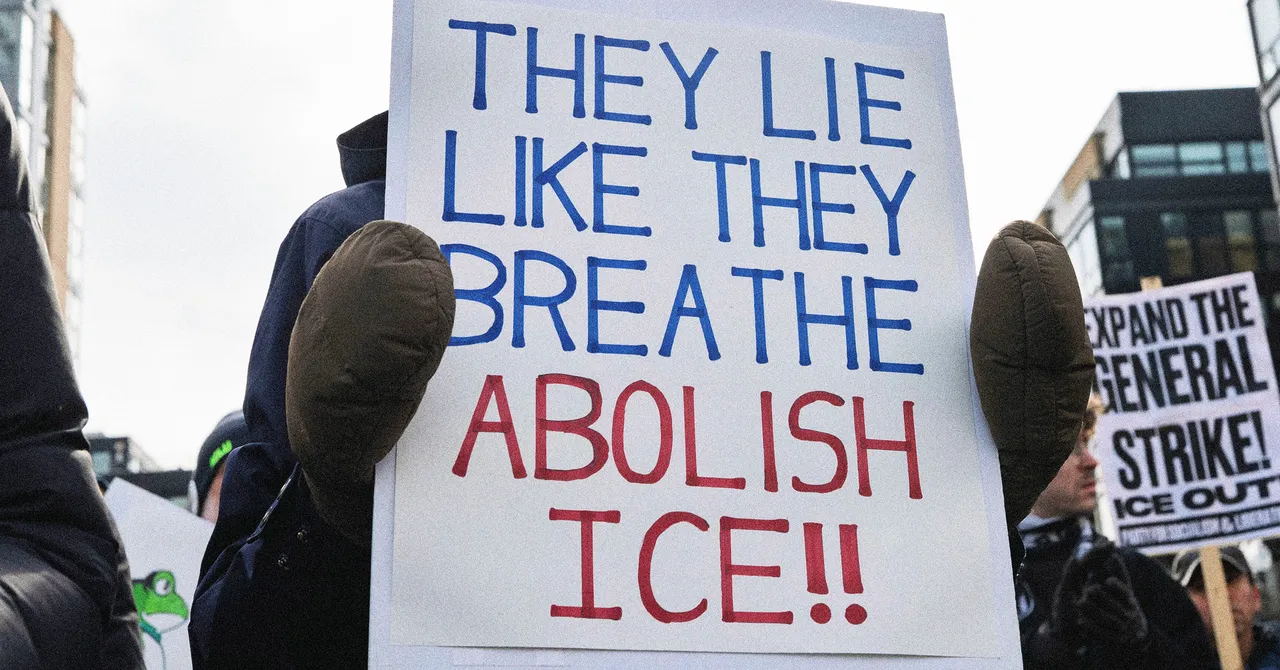
During a demonstration organized beyond the university’s confines within hours following Aghayeva’s apprehension, scores of individuals convened to articulate their displeasure with the institution and advocate for Aghayeva’s liberation.
“Should the university genuinely educate each and every officer on appropriate actions, a greater sense of security for all of us might materialize,” remarks Susan Witte, a social work academic from Columbia’s School of Social Work, who was present at the demonstration. She informed WIRED that certain undergraduates and teaching staff had urged the institution to guarantee comprehensive training for all personnel regarding interactions with ICE and other policing authorities.
However, such instructional efforts may prove inconsequential if ICE engages in deceptive self-representation. Sebastian Javendpoor, a postgraduate scholar serving on the Arts and Sciences Student Council and also present at the protest, notes that despite the university instructing its campus security to permit federal agents on premises solely with judicial authorizations, “it fails to prevent incidents such as this where DHS deceives the attending officer. My contention is that DHS operatives were aware that public safety personnel were not authorized to grant entry based solely on an administrative warrant and, consequently, misrepresented their intentions to secure admission.”
Counsel for Aghayeva did not furnish a reply to an inquiry for remarks. Based on her latest Instagram updates, she has returned to her academic pursuits and resumed sharing digital material.
Columbia’s interim president, Claire Shipman, has stated that immigration personnel presented themselves as police officers and that deceiving university employees constituted a “violation of established procedure.” The DHS holds a differing viewpoint.
“During the execution of operations, our valiant law enforcement personnel unequivocally declare their identity as such,” Lauren Bis, DHS deputy assistant secretary, conveys to WIRED. “Concerning Elmina Aghayeva, the Homeland Security Investigators verbally confirmed their identities and displayed badges conspicuously around their cervical regions.”
Deceptions—or “stratagems”—of this nature have been prevalent for an extended period. During 1993, the Immigration and Naturalization Service, which predated ICE, enticed immigrants to an INS regional bureau by informing them of their eligibility for a solitary opportunity at amnesty for unlawful residency and the provision of employment permits. Upon an immigrant’s arrival to obtain their work permission documents, apprehension and subsequent expulsion would ensue.
{content}
Source:{feed_title}