
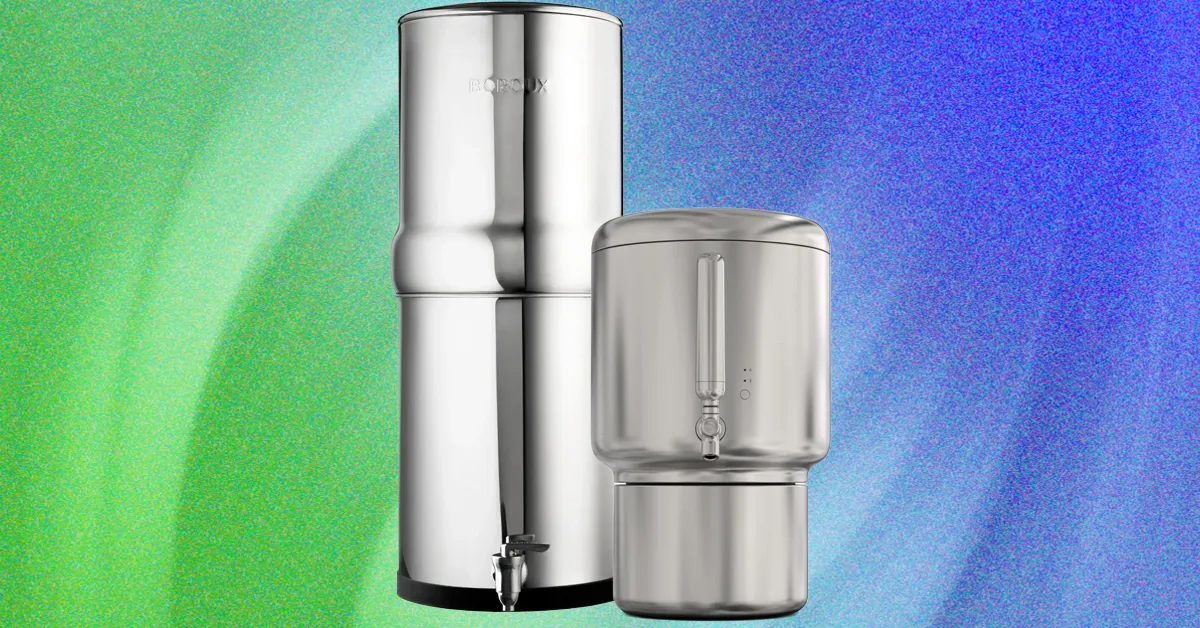
I must concedethat the widespread appeal of these colossal, metallic, gravity-powered hydration systems remained an enigma for me for quite some time—even while large-capacity water purification units from brands like British Berkefeld and Berkey appeared to spread uniformly amongst aficionados of apocalyptic readiness and proponents of comprehensive well-being sanctuaries.
For over a year, I’ve been evaluating numerous distinct varieties of water filters, such as reverse osmosis purifiers and water carafes. Yet frequently, these substantial water reservoirs have appeared to function as much as prestige indicators as practical tools. They possess an appealing aesthetic, somewhat reminiscent of industrial stainless steel design: a manifestation of a certain way of life and a dignified source of self-esteem. Spotting a large gravity-fed filtration unit often signifies the individual’s commitment to health, preparedness, or a combination thereof.
My perspective shifted regarding these substantial metallic purifiers due to microplastic concerns. The majority of water filter jugs are constructed from BPA-free polymers. However, as recent studies indicate that consumers of bottled water absorb tens of thousands of additional microplastic fragments, health enthusiasts have started to view with skepticism filtration devices that are themselves fashioned from plastic material.
Image: Matthew Korfhage
A more recent wave of gravity-based filtration systems has embraced this trend, eliminating all—or virtually all—interaction with plastic components. Consequently, I subjected two of these modern filtration units to evaluation. TheBoroux Legacy Water Filter System ($419)presents itself as an attractive gravity-powered purification unit originating from a former Berkey vendor whose business was negatively impacted by Berkey’s legal disputes with government agencies (details follow). TheRorra Countertop System ($549)represents a more contemporary, acclaimed filtration device developed by a group of three seasoned business creators, incorporating intelligent functionalities such as sensors for both filtration element and liquid volume.
During the evaluation of each unit, I assessed the simplicity of assembly, the quantity of plastic used, the overall chlorine removal efficiency, and any alterations to dissolved mineral content or pH levels. Furthermore, I meticulously reviewed each filter’s NSF/ANSI accreditations and autonomous examination outcomes.
Advantages and Disadvantages of Gravity-Powered Water Purification Units
Gravity-powered water filtration units achieved their greatest recognition in the United States through a product known as the Berkey—whose creators commenced operations in 1998 as a supplier for an considerably older purification system named the British Berkefeld. Amidst Berkey’s legal challenges (further details below), a more recent lineage of gravity-powered filters has emerged as prominent.
Large-capacity purifiers of this type are formidable devices—serving as much as decorative focal points as functional water purifiers. They are substantial, accommodating a gallon or greater volume. They reside on your kitchen counter or dining table, occupying a considerable footprint. However, due to their considerable size, replenishing them is cumbersome, and their filtration rate is sluggish. Based on my initial assessments, gravity-powered filters such as the novel Boroux and Rorra do not inherently purify water more effectively upon initial use than plastic carafes designed for refrigerator doors, or under-sink inline purifiers. Furthermore, as they cannot be stored in your refrigerator, your water remains at ambient temperature.
However, practicality is subjective. The reservoirs of gravity-powered filtration systems are sufficiently capacious, with an overnight replenishment, to supply a full day’s worth of water for the majority of households, suitable for drinking, culinary preparation, and coffee brewing. I perceive this as potentially simpler than the incessant routine of refilling and waiting that afflicts smaller water carafes, particularly for sizable families, devotees of coffee, or enthusiastic chefs. Moreover, while most water carafes necessitate frequent filter replacements, the Boroux filters claim to require substitution merely annually. (Further discussion on this assertion will follow).
{content}
Source:{feed_title}