
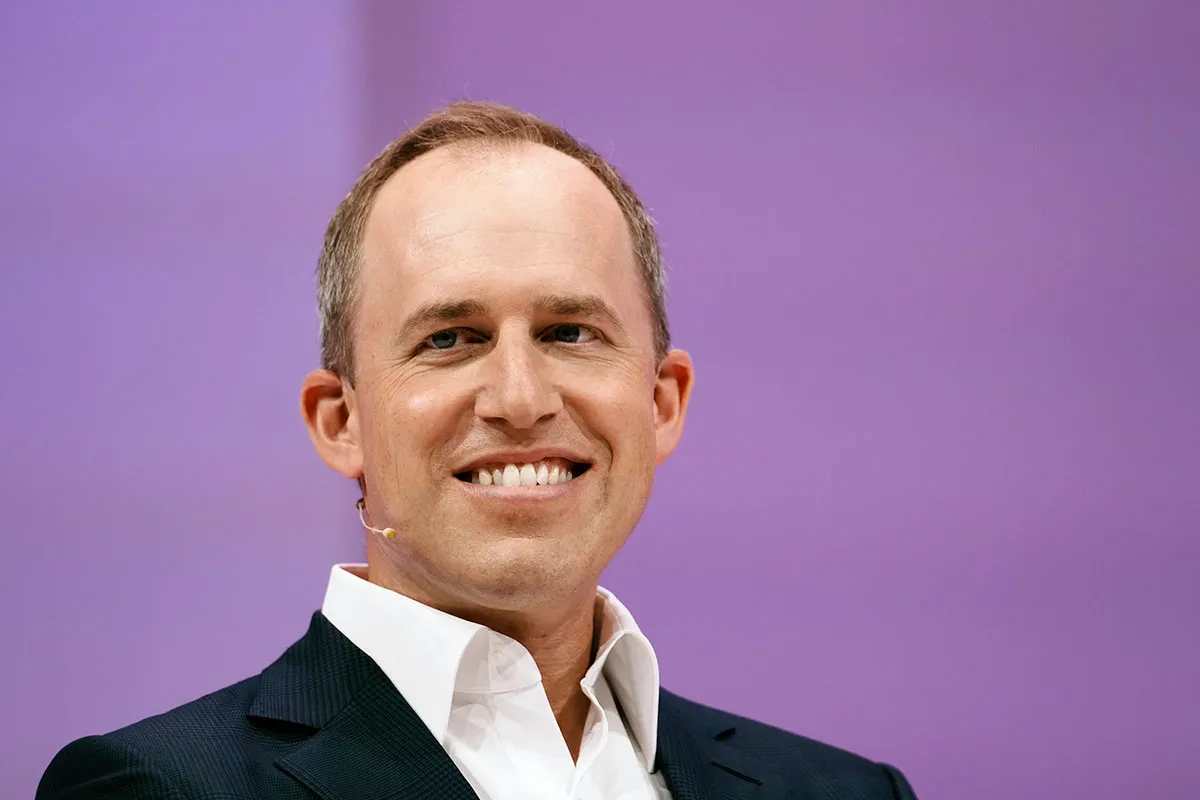
Bret Taylor, co-founder and CEO of Sierra, a startup that builds customer service AI agents for enterprises, is convinced that the way humans interact with software will change in the near future.
Last month, Sierra launched Ghostwriter, an agent designed to build other agents. With this “agent as a service” tool, the startup intends to replace traditional click-based web applications with natural language. Users simply describe what they need, prompting Ghostwriter to autonomously create and deploy a specialized agent to execute the task.
The idea of replacing software with language-driven prompts is intriguing in large part because many of the tools currently used in enterprises are not used regularly, contends Taylor, who was formerly co-CEO of Salesforce.
“You sign into Workday when you onboard as a new employee, and maybe for open enrollment,” Taylor told the audience at the HumanX conference taking place this week in San Francisco. Instead of learning to navigate complex systems, he argued that users will soon use natural language to complete tasks without ever interacting with the software interface.
“I truly think that’s where the world is going,” Taylor said.
He adding that Sierra is already leveraging Ghostwriter to deploy agents at “unparalleled speeds.” Taylor offered, as an example, that his startup implemented an agent for Nordstrom in just four weeks.
Sierra announced last fall that it reached $100 million in annual revenue run rate (ARR), less than 21 months after its founding. The company was last valued at $10 billion when it raised a $350 million round led by Greenoaks Capital in September.
Techcrunch event
San Francisco, CA
|
October 13-15, 2026
“Most companies don’t want to make software,” Taylor said. “They want solutions to their problems.”
While a fundamental shift in software may be coming as Taylor predicts, several technologists and investors tell TechCrunch that, for now, AI agent implementation is far from autonomous.
Many companies claiming to offer AI agents, including Sierra and legal AI startup Harvey, employ “forward-deployed” engineers who must constantly update and fine-tune customer agents to ensure they work as intended.
The Dawn of Conversational Computing: Bret Taylor’s Vision for an Agent-Driven Future
Key Takeaways:
- Language as the New Interface:Bret Taylor, Sierra CEO, forecasts a revolutionary shift where natural language prompts will supersede traditional click-based software interfaces for enterprise tasks.
- Ghostwriter’s “Agent as a Service” Paradigm:Sierra’s flagship product, Ghostwriter, empowers businesses to autonomously create and deploy specialized AI agents, drastically accelerating solution delivery.
- The Reality of Autonomy:Despite ambitious visions, the current generation of AI agents, including Sierra’s, still heavily relies on human “forward-deployed” engineers for fine-tuning and maintenance.
The intricate dance between humans and computers has long been defined by clicks, menus, and graphical user interfaces. Yet, a seismic shift is on the horizon, according to Bret Taylor, co-founder and CEO of Sierra. Taylor, a seasoned tech veteran and former co-CEO of Salesforce, believes that the future of software interaction will be driven not by visual cues, but by the most natural form of human communication: language.
Speaking at the HumanX conference in San Francisco, Taylor laid out a compelling vision where enterprise software, often cumbersome and underutilized, gives way to intelligent AI agents capable of understanding and executing complex tasks purely through natural language prompts. This isn’t merely about voice commands; it’s about an entirely new paradigm for how businesses interact with their digital tools, moving from rote navigation to direct intent.
Unlocking Enterprise Efficiency with Natural Language
Taylor’s argument stems from a fundamental observation about the modern enterprise toolkit. Many specialized business applications, while powerful, are used infrequently. “You sign into Workday when you onboard as a new employee, and maybe for open enrollment,” Taylor remarked, highlighting the inefficiency of requiring users to learn and re-learn complex systems for occasional tasks. This friction costs companies countless hours in training, support, and lost productivity.
Sierra’s answer to this challenge is Ghostwriter, a groundbreaking “agent as a service” tool launched last month. Ghostwriter isn’t just an AI agent; it’s an agent designed to build other agents. The concept is elegantly simple: a user describes what they need in plain English, and Ghostwriter autonomously creates, configures, and deploys a specialized AI agent tailored to execute that specific task. Imagine telling your system, “Generate a quarterly sales report for the EMEA region, highlighting top performers and underperforming products,” and having an agent instantly go to work, compiling data across disparate systems without a single click or manual data export.
This vision extends far beyond mere convenience. It represents a democratization of software capabilities, potentially allowing business users to “program” solutions without writing a single line of code or navigating arcane interfaces. “I truly think that’s where the world is going,” Taylor asserted, painting a picture of an intuitive, highly efficient operational landscape.
Sierra’s Rapid Ascent and the Power of Practical Solutions
Sierra isn’t just selling a dream; the company has demonstrated remarkable traction in a short period. Launched less than 21 months ago, Sierra announced last fall that it had already achieved an impressive $100 million in annual revenue run rate (ARR). This rapid growth attracted significant investor interest, culminating in a $350 million funding round led by Greenoaks Capital, which valued the company at a staggering $10 billion.
Taylor attributes this success to a deep understanding of what enterprises truly need. “Most companies don’t want to make software,” he explained. “They want solutions to their problems.” By offering bespoke AI agents that can be deployed at “unparalleled speeds,” Sierra is directly addressing this core desire. As a testament to this agility, Taylor cited the implementation of a custom agent for retail giant Nordstrom in just four weeks – a timeline virtually unheard of for traditional software development or integration projects of similar scope.
This ability to rapidly deploy highly specific solutions suggests a future where software isn’t a monolithic product, but a fluid, adaptable service that molds itself to immediate business needs. It promises to liberate enterprises from the rigidity of off-the-shelf solutions and the prohibitive costs of custom development.
The Human Touch: Bridging the Gap to True Autonomy
While Taylor’s vision is undoubtedly transformative, the path to fully autonomous AI agents is still under construction. As several technologists and investors have shared with TechCrunch, the current reality of AI agent implementation, even at leading companies like Sierra and legal AI startup Harvey, is far from hands-free. These firms often rely on what are known as “forward-deployed” engineers.
These specialized engineers play a crucial role, working closely with clients to constantly update, fine-tune, and optimize customer agents. They act as the vital bridge between the AI’s capabilities and the nuanced, often unpredictable demands of real-world business environments. This human intervention is necessary to handle edge cases, refine agent behavior based on user feedback, integrate with legacy systems, and ensure the agents consistently deliver accurate and reliable results.
The existence of these engineers underscores a critical point: while AI can automate many aspects of agent creation and deployment, the journey to truly self-sufficient, context-aware artificial intelligence is ongoing. Challenges such as ensuring robust security, preventing bias, maintaining data privacy, and developing foolproof error handling mechanisms remain active areas of research and development.
Bottom Line
Bret Taylor’s bold prediction for a future where natural language reigns supreme in software interaction is a powerful glimpse into a potentially more intuitive and efficient enterprise landscape. Sierra’s rapid rise with Ghostwriter demonstrates a significant appetite for AI-driven solutions that directly address business problems. However, the current reliance on human engineers for fine-tuning highlights that while the vision of fully autonomous AI agents is compelling, the journey to truly seamless, self-governing intelligence is an evolving process. The future of software interaction will undoubtedly be shaped by AI, but for now, the human element remains indispensable in guiding this revolutionary transition.
{content}
Source:{feed_title}