
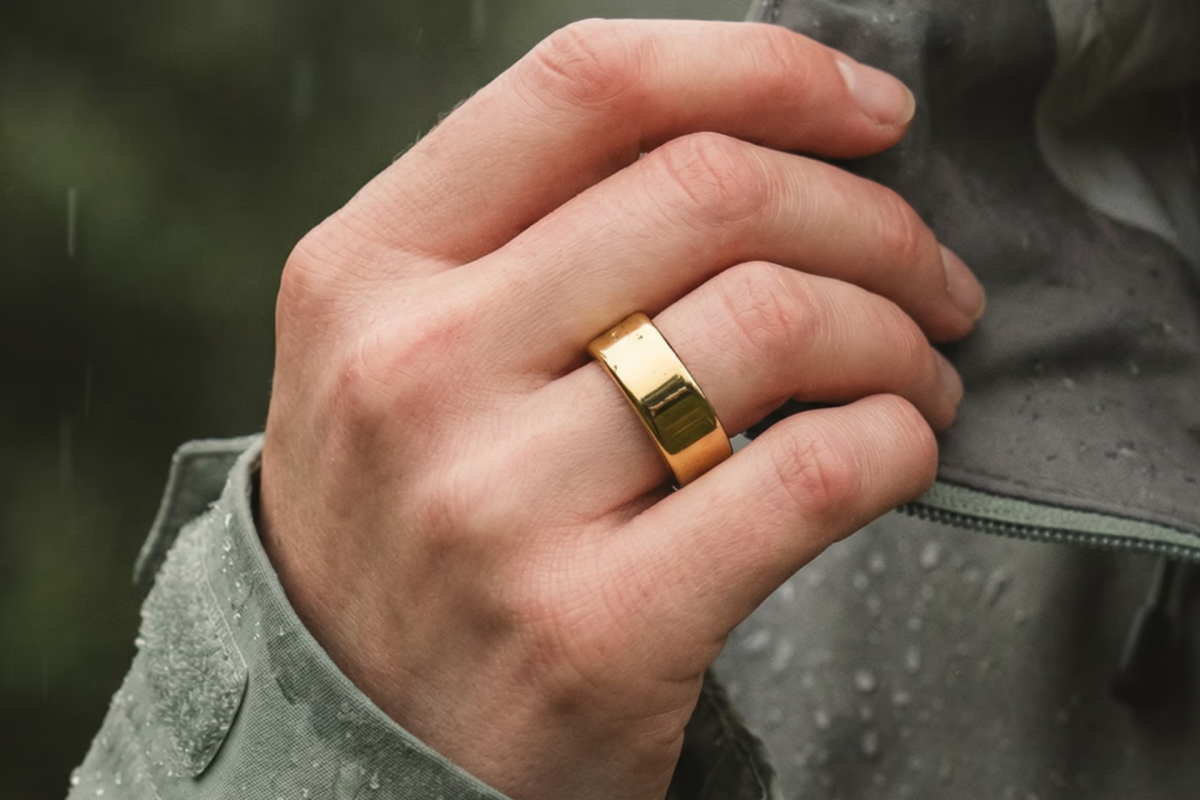
A Bengaluru-based wellness technology firm, Ultrahuman, recognized for its intelligent rings, seeks to revitalize its operations within the U.S. following the attainment of clearance for its Ring Pro. This development initiates a renewed rivalry with Oura, a company that has, in the meantime, cemented its leading position.
This recent endorsement, issued by U.S. Customs and Border Protection, was received less than a month subsequent to the Ring Pro’s worldwide debut in late February. It succeeds an October determination by the U.S. International Trade Commission, which sided with Oura and effectively limited the entry of Ultrahuman’s smart rings into American territory. According to CEO Mohit Kumar in an interview, these constraints resulted in Ultrahuman forfeiting as much as $50 million in potential revenue, given its temporary inability to bring in its established Ring Air model.
For intelligent rings, the U.S. continues to be the most crucial market. It is projected to account for approximately 2.6 million units sold in 2025—representing roughly 60% of the worldwide aggregate of 4.4 million units—and is experiencing a 59% year-over-year expansion, as per IDC figures provided to TechCrunch. Concurrently, the smart ring sector has undergone swift consolidation, with Oura augmenting its pre-eminence in recent quarters while Ultrahuman’s market portion plummeted dramatically throughout the era of import limitations.
IDC research manager Jitesh Ubrani noted that Ultrahuman’s market penetration in the U.S. increased from 11.5% in 2024 to 24.6% by the second quarter of 2025, subsequently declining to minimal single-digit figures by the year’s conclusion once the curbs were implemented. During this identical timeframe, Oura’s share ascended from 63.3% to 85%, seizing the majority of the territory Ultrahuman had relinquished.
At its zenith, the U.S. formerly constituted up to half of Ultrahuman’s income, although that proportion has diminished as the corporation broadened its reach into Europe and Asia during the timeframe of import limitations, Kumar conveyed to TechCrunch. He minimized the ramifications of the competition, stating that Ultrahuman’s temporary withdrawal merely afforded competitors a “three-month head start,” and the firm anticipates swiftly recovering its forfeited position.
Ultrahuman intends to promptly accelerate its introduction into the U.S. market. Kumar indicated that achieving full operational capacity might span five to six months as the enterprise reconstructs its logistics network and dissemination channels.
The Ring Pro’s re-engineered monolithic metallic construction facilitated the company’s acquisition of U.S. authorization and is expected to be pivotal to its resurgence, bringing enhancements such as extended battery endurance and superior on-device computational power, according to the firm.
Techcrunch event
San Francisco, CA
|
October 13-15, 2026
Ultrahuman has initiated advance orders for the Ring Pro within the U.S., with dispatch scheduled to commence on May 15, as stated by the corporation. The gadget’s starting price is $399, while the initial 1,000 clients can secure early pre-orders for $349.
Kumar mentioned that the Ring Pro was already under development as an element of a more comprehensive product enhancement, yet it also aided in tackling the patent contention. He asserted, “We contend the Ring Air is a non-violating design, and we are contesting this in U.S. federal court,” further noting that the updated design aimed to settle the matter with greater certainty.
India becomes the subsequent arena for competition
Even as Ultrahuman intends to intensify its endeavors in the U.S., its competitor Oura penetrated Ultrahuman’s domestic market, India, last week, introducing its Ring 4. This move establishes the context for an expanded contest spanning significant markets.
Kumar expressed optimism regarding the rivalry, stating that Ultrahuman maintains its dedication to sustained expansion in India despite the arrival of new participants. He further indicated that intensified competition might contribute to augmenting recognition within what is still an emerging product segment in the nation.
In 2025, intelligent ring dispatches in India decreased by 30.6% compared to the prior year, notwithstanding Ultrahuman’s market leadership with a 30.4% stake, succeeded by Gabit at 18.3%, according to a recent IDC analysis. Mean retail prices dropped 8.7% to $160, underscoring both escalating rivalry and downward price forces.
IDC forecasts that the smart ring sector will sustain double-digit expansion in the U.S. and worldwide, though its progression in India is anticipated to be more subdued, Ubrani conveyed to TechCrunch. Oura’s worldwide brand acknowledgment might facilitate its gaining influence in the nation, particularly as initial domestic contenders have already receded, thus creating an opening for venerable international entities to penetrate, he elaborated. Numerous pioneering participants in India had principally concentrated on re-packaged components with minimal distinctiveness and have subsequently curtailed their undertakings.
Roughly 45% of Ultrahuman’s worldwide total of approximately 700,000 daily active users are situated in the U.S., Kumar stated, emphasizing its significance for the corporation. Furthermore, the American user demographic tends to be predominantly female, with women constituting around 73–74% of users there, versus roughly 68% worldwide, an increase from about 65% twelve months prior.
Kumar additionally alluded to aspirations extending beyond intelligent rings, mentioning that Ultrahuman is developing a novel wearable gadget centered on an alternative biological marker, as the firm aims to broaden its collection of offerings. At present, Ultrahuman monitors various biological indicators such as cardiac rhythm, heart rate variability, epidermal temperature, sleep phases, locomotion, and blood oxygen saturation.
{content}
Source:{feed_title}