
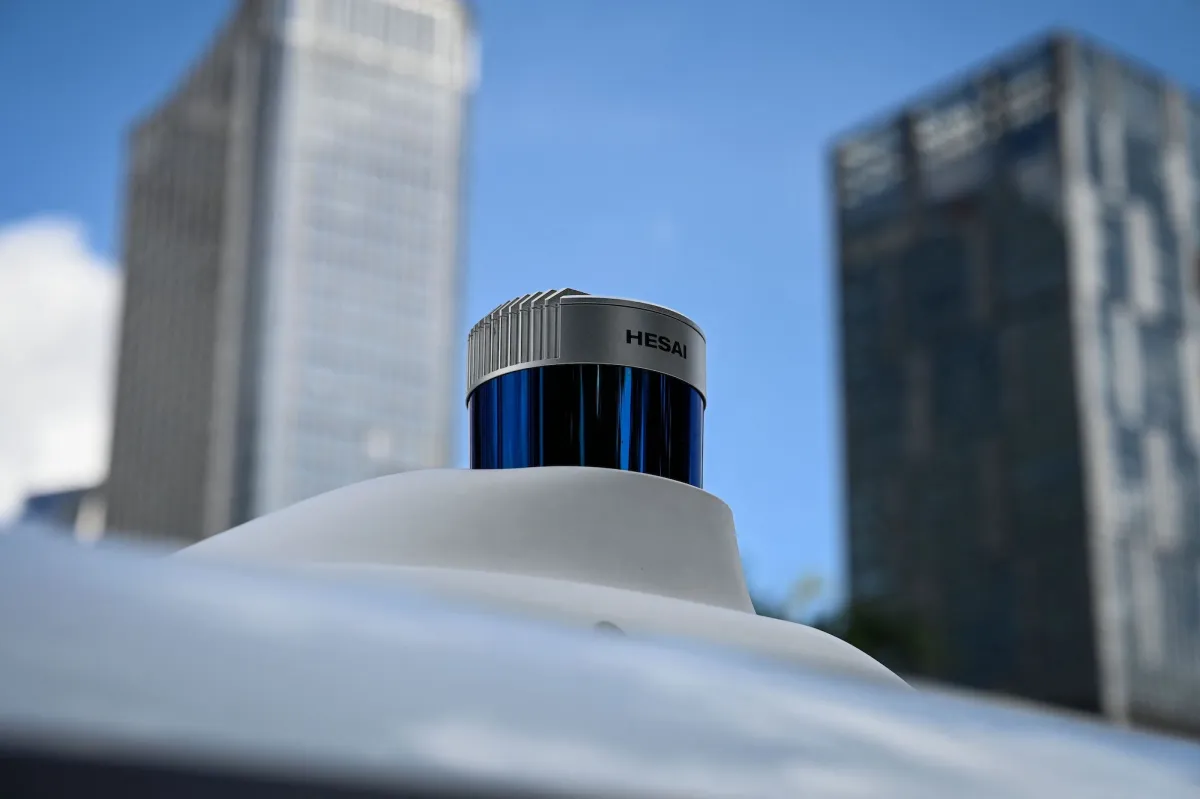
As the autonomous vehicle industry accelerates, a critical investigation is underway into whether widely adopted Chinese lidar sensors could pose significant national security risks to the United States. Funded by anonymous players in the EV and AV sectors, the Idaho National Laboratory is probing potential vulnerabilities, igniting a fierce debate between economic necessity and geopolitical concerns.
Key Takeaways
- The Idaho National Laboratory, a U.S. Department of Energy facility, is secretly investigating the potential security risks of Chinese-made lidar sensors in American vehicles, funded by undisclosed electric and autonomous vehicle companies.
- Lawmakers are pushing for bans, citing concerns about military espionage, “back doors,” and the potential for sensitive data exfiltration or widespread disruption of U.S. infrastructure.
- The dilemma pits the significantly lower cost and scalability of Chinese lidar against national security fears and the vulnerability of the supply chain, forcing U.S. automakers to weigh economic advantages against geopolitical risks.
Unseen Eyes on the Road: U.S. Lab Probes Chinese Lidar Security Threat
The future of autonomous vehicles in the United States may hinge on a clandestine investigation into a fundamental component: lidar sensors. Beneath the surface of rapid technological advancement, a significant security concern is brewing. The Idaho National Laboratory (INL), a U.S. Department of Energy facility, is currently examining whether Chinese lidar sensors, increasingly prevalent in modern vehicles, could be exploited for espionage or disruption, potentially compromising national security.
This quiet review, initially brought to light by TechCrunch, is reportedly backed by a consortium of companies within the electric vehicle (EV) and autonomous vehicle (AV) industries. The exact identities of these funding entities remain a closely guarded secret, with major players like Rivian, General Motors, Ford, and others denying involvement or awareness of the review. The Idaho National Laboratory itself has maintained a tight-lipped stance, declining to comment on a project they are “not at liberty to discuss.” Similarly, leading Chinese lidar manufacturers, Hesai and RoboSense, have not responded to inquiries, deepening the shroud of secrecy around this critical inquiry.
Lidar: The Eyes of Autonomy
Lidar, an acronym for light detection and ranging, is a sophisticated sensor technology that uses pulsed lasers to create highly detailed, three-dimensional maps of a vehicle’s surroundings. This capability makes it indispensable for autonomous vehicles, providing an unparalleled perception layer that complements cameras and radar. As the backbone of many self-driving systems, the integrity and security of lidar sensors are paramount for the safe and reliable operation of future transportation.
Capitol Hill Sounds the Alarm
The INL’s investigation unfolds against a backdrop of escalating legislative pressure and bipartisan concern from Capitol Hill. Lawmakers are actively drafting bills aimed at restricting or banning the use of Chinese lidar on American roads, driven by fears of potential foreign exploitation.
Senator Tammy Baldwin (D-WI), a key figure behind the Securing Infrastructure from Adversaries Act, has voiced strong apprehensions regarding the potential for Chinese lidar to be leveraged for military or industrial espionage. “As infrastructure becomes more sophisticated, the threat Chinese LiDAR technology poses to American communities and our national security cannot be allowed to go unchecked,” Senator Baldwin stated. Her concerns underscore a broader anxiety that taxpayer dollars could inadvertently fund technologies that serve as surveillance tools for adversarial nations.
Echoing these sentiments, Congressman John Moolenaar (R-MI), co-sponsoring a separate bill targeting Chinese lidar, warned of “back doors” that could “transmit information back to these Chinese Communist interests.” Congressman Raja Krishnamoorthi (D-IL), who introduced the bill Moolenaar supports, has long argued that widespread adoption of these technologies could enable China to “gather sensitive data or disrupt our systems.” These legislative efforts highlight a growing consensus among U.S. officials that the perceived economic benefits of Chinese technology must not outweigh fundamental national security imperatives.
The Cost-Benefit Conundrum: Price vs. Peril
At the heart of this geopolitical tension lies a powerful economic reality: the dramatic reduction in lidar costs. A decade ago, lidar units could fetch upwards of $75,000. Today, Chinese manufacturers like Hesai and RoboSense have driven prices down to mere hundreds of dollars, largely due to immense economies of scale, lower labor costs, and significant capital investment.
This price advantage has created a profound dilemma for the U.S. automotive and autonomous vehicle industries. While companies like Tesla, under Elon Musk, have famously eschewed lidar in favor of camera-centric systems, many others see it as an essential sensor for robust autonomy. American lidar companies, struggling to compete with China’s pricing power, have faced consolidation and even bankruptcy, as seen with Luminar’s recent financial woes. This competitive landscape has left many U.S. automakers and AV developers seriously considering Chinese lidar sensors for their next-generation vehicles.
Rivian, for instance, a prominent EV manufacturer, was reportedly exploring integrating a lidar sensor into its new R2 SUV, with CEO RJ Scaringe indicating discussions around leveraging Chinese technology, potentially through joint ventures or shared alignments to establish U.S. production capacity. While Rivian’s CFO later clarified that in-house lidar development was not planned, the initial consideration underscores the allure of cost-effective Chinese solutions for American companies.
Beyond Supply Chain: Deepening Cybersecurity Risks
The INL’s focus extends beyond mere supply chain vulnerabilities to the more insidious threat of cybersecurity. Omer Keilaf, CEO and co-founder of Israeli lidar company Innoviz, highlighted multiple layers of risk. First, he pointed to basic supply chain instability, noting China’s strategic designation of lidar. An over-reliance by original equipment manufacturers (OEMs) on a Chinese supply chain could introduce significant long-term risks, including potential government interference or disruption.
More critically, Keilaf outlined two major cybersecurity concerns. The first is the possibility of en masse disabling of sensors. While researchers have demonstrated the ability to disable individual lidar units using lasers, the mechanism for China to orchestrate a widespread disruption of actively used robotaxis or consumer vehicles remains less clear. However, such an event could cripple transportation systems, causing chaos and significant economic damage.
The second, and arguably more potent, threat involves data exfiltration. Lidar sensors generate incredibly rich, detailed data about their surroundings – everything from road infrastructure to pedestrian movements. Keilaf, drawing on his seven years in Israeli intelligence, stressed that compressing and transmitting this sensitive data via a cellular chip is “not very difficult.” This capability could allow an adversary to gather vast amounts of intelligence, monitoring vehicle movements, infrastructure, and potentially even identifying individuals or patterns of life, posing a severe threat to privacy and national security.
A concerning incident in early 2024 offered a tangible glimpse into the fragility of these systems. Customers using Hesai lidar sensors experienced a full day of autonomous vehicle paralysis due to a simple software bug related to the leap year. This real-world event, while not malicious, illustrated how a single point of failure in a widely deployed system can have cascading and debilitating effects, amplifying fears of what a deliberate attack could achieve.
The Unsettled Regulatory Terrain
The regulatory environment surrounding Chinese lidar remains fluid and uncertain. While the Department of Defense has already placed Hesai and RoboSense on its 1260H list, restricting their ability to work with the U.S. military due to alleged ties to the People’s Liberation Army, this designation does not prohibit their use in civilian vehicles. A 2025 Commerce Department rule bans Chinese-made connectivity hardware in U.S. passenger cars, but crucially, lidar and other autonomous vehicle sensors are not explicitly covered. This regulatory gap leaves a window open for continued adoption, even as lawmakers push for more comprehensive bans.
Bottom Line
The investigation by the Idaho National Laboratory into Chinese lidar sensors represents a critical juncture for the U.S. autonomous vehicle industry and national security. The allure of cost-effective, high-performing Chinese technology clashes directly with profound concerns over espionage, cyber warfare, and supply chain vulnerability. As U.S. lawmakers push for bans and experts warn of severe risks, the choices made today will not only shape the future of transportation but also define the delicate balance between technological advancement, economic competitiveness, and the safeguarding of national interests. The outcome of this silent review, and the subsequent policy decisions, will have lasting repercussions on American roads and beyond.
{content}
Source:{feed_title}