
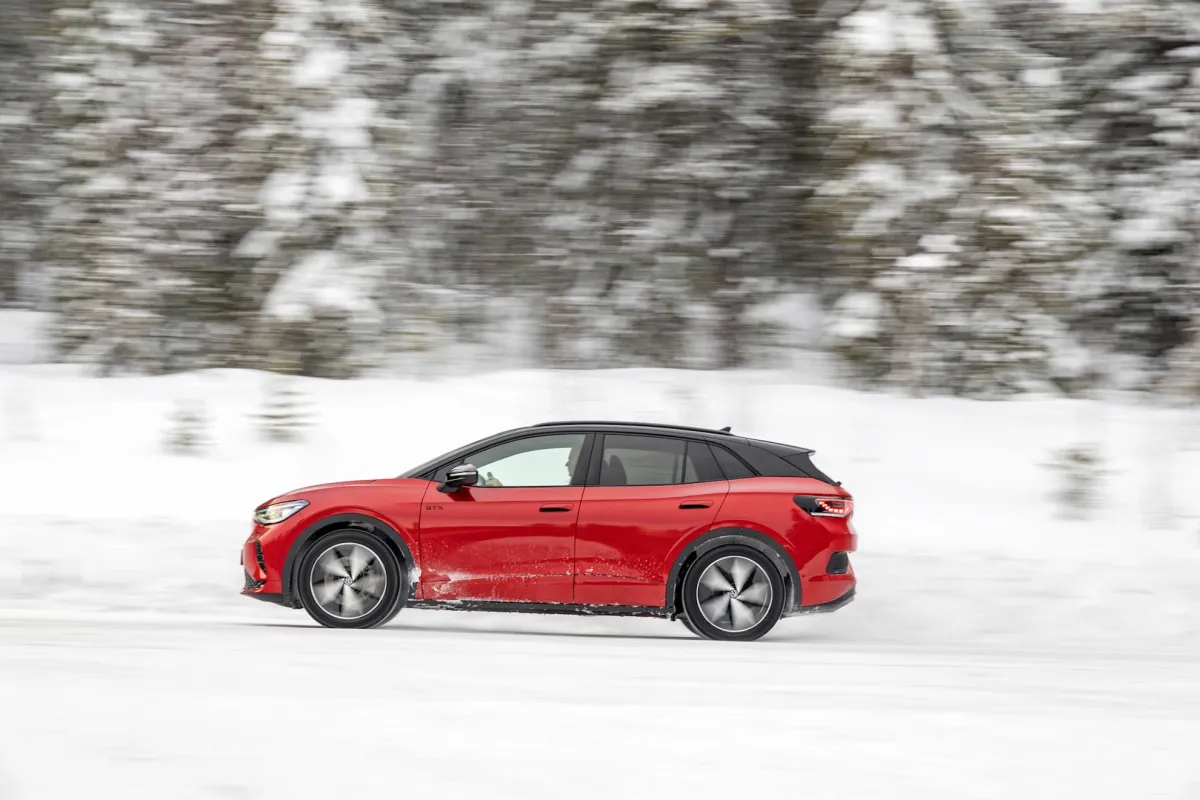
Volkswagen Pumps the Brakes on US ID.4 Production, Shifts Focus to Gas-Powered Atlas Amidst EV Market Realignment
Key Takeaways
- Strategic Pivot:Volkswagen is halting all-electric ID.4 production at its Chattanooga, Tennessee plant, redirecting resources to high-volume, gas-powered vehicles, notably the upcoming second-generation Atlas SUV.
- EV Market Realignment:This decision reflects a broader trend among legacy automakers facing softer-than-anticipated EV demand, particularly after the removal of the $7,500 federal tax credit for many models, pushing consumers towards more affordable options.
- Future Uncertainty for US EVs:While VW reiterates commitment to the US market and hints at a “future version” of the ID.4, its immediate strategy prioritizes internal combustion engine (ICE) vehicles, underscoring the challenges of scaling EV adoption in North America.
Volkswagen has announced a significant strategic shift in its U.S. manufacturing operations, discontinuing production of the all-electric ID.4 at its Chattanooga, Tennessee factory. The German automaker confirmed Thursday that it will instead reallocate its resources and production lines towards high-volume, internal combustion engine (ICE) vehicles, most notably the highly anticipated second-generation Atlas SUV. This move signals a pragmatic recalibration by VW, acknowledging current market realities and the evolving landscape of electric vehicle adoption in the United States.
For consumers eyeing the ID.4, the immediate future holds a finite window: U.S. customers will be able to purchase the electric SUV only until the current inventory is depleted. Volkswagen estimates this existing stock could last well into 2027, providing a gradual phase-out rather than an abrupt halt to availability.
The decision by Volkswagen to pull back on ID.4 production is not an isolated incident but rather a clear symptom of a wider trend sweeping across the automotive industry. Many legacy automakers, including VW, had previously laid out ambitious, aggressive timelines for transitioning their portfolios from traditional gas-powered vehicles to a fully electric future. However, the anticipated surge in demand for battery electric cars, trucks, and SUVs has, in many cases, failed to meet the lofty forecasts initially projected by these companies.
Several factors contribute to this dampened enthusiasm. A significant blow to demand, especially for higher-priced models, came last year with the removal of the crucial $7,500 federal tax credit. This incentive had played a vital role in making EVs more financially accessible to a broader consumer base. Without it, the upfront cost of many electric vehicles became a steeper hurdle, particularly for price-conscious buyers who are now increasingly gravitating towards either more affordable new EVs or the growing market of used electric vehicles.
The ID.4 itself had a somewhat tumultuous journey in the U.S. market. Launched in 2020 with a starting price around $45,000, the mid-priced SUV initially garnered a warm reception. However, early models were plagued by software issues that proved frustrating for both owners and the company. A significant refresh in 2023 breathed new life into the model, addressing many of these concerns and subsequently leading to a notable boost in sales, demonstrating its potential once initial kinks were ironed out.
Despite this resurgence, the overall sales performance of the ID.4 has been a mixed bag, reflecting the volatility of the nascent EV market. In 2023, sales surpassed 37,000 units, a promising figure. Yet, the following year saw a dramatic 55% drop, highlighting the challenges of sustained growth. While sales did recover by 31% in 2025, reaching 22,373 units, this figure still fell short of the peak achieved just two years prior. On a global scale, Volkswagen’s broader EV efforts also faced headwinds, with the company reporting a marginal 0.2% decrease in worldwide all-electric vehicle deliveries in 2025, totaling approximately 382,000 units. It appears this global performance, while nearly flat, wasn’t enough to secure the ID.4’s continued production in Chattanooga.
Volkswagen’s immediate focus for the Chattanooga plant is now firmly on the gas-powered Atlas. The company plans to commence production of the all-new, second-generation Atlas for the model year 2027 this summer, with vehicles expected to arrive in dealerships by fall. This commitment to a high-volume ICE product underscores VW’s strategy to bolster its presence in the U.S. market with proven sellers.
Techcrunch event
San Francisco, CA
|
October 13-15, 2026
Addressing concerns regarding its workforce, a Volkswagen spokesperson informed TechCrunch that there are “sufficient number of roles” within the Atlas production areas for employees previously assigned to ID.4 production to transfer. The company is also offering an early retirement buyout program to some workers, aiming to manage the transition smoothly and minimize job displacement.
This pivot clarifies Volkswagen’s commitment to the U.S. market, albeit with a refined strategy that currently prioritizes conventional vehicles. The company stated it is actively “exploring new products for the U.S. plant that would be designed specifically to meet U.S. consumer needs” and align with its “new focus on high-volume vehicles.” Translating this corporate-speak, industry observers and consumers can likely anticipate the development of a more affordable, compact SUV tailored for the American market, signaling a return to segments where Volkswagen has historically found strong success.
Kjell Gruner, President and CEO of Volkswagen Group of America, reaffirmed the enduring importance of the Chattanooga facility, stating that the plant “has been, and will continue to be, a cornerstone of Volkswagen’s strategy in the United States.” This statement aims to reassure stakeholders of VW’s long-term presence and investment in American manufacturing, despite the immediate shift away from EV production.
Interestingly, despite the current halt, VW claims it will eventually bring a “future version of the ID.4” to the North American market. However, no specific timeline or details were provided, leaving the exact nature and timing of this potential return ambiguous. Should Volkswagen indeed reintroduce an electric vehicle for U.S. consumers, it is almost certain to be positioned at a highly competitive and accessible price point, reflecting the lessons learned from the current market dynamics and the evolving preferences of electric vehicle buyers.
Bottom Line
Volkswagen’s decision to halt ID.4 production in the U.S. marks a significant strategic retreat from its immediate EV ambitions in North America, underscoring the formidable challenges legacy automakers face in balancing ambitious electrification goals with current market realities. While the company reaffirms its commitment to the U.S. market, its focus is now firmly on high-volume, gas-powered SUVs like the Atlas, a pragmatic response to softer EV demand and the removal of key incentives. This pivot signals a more cautious, demand-driven approach to electrification for VW, suggesting that future successful EVs in the U.S. will need to prioritize affordability and direct alignment with consumer preferences, rather than relying solely on aspirational targets.
{content}
Source:{feed_title}