
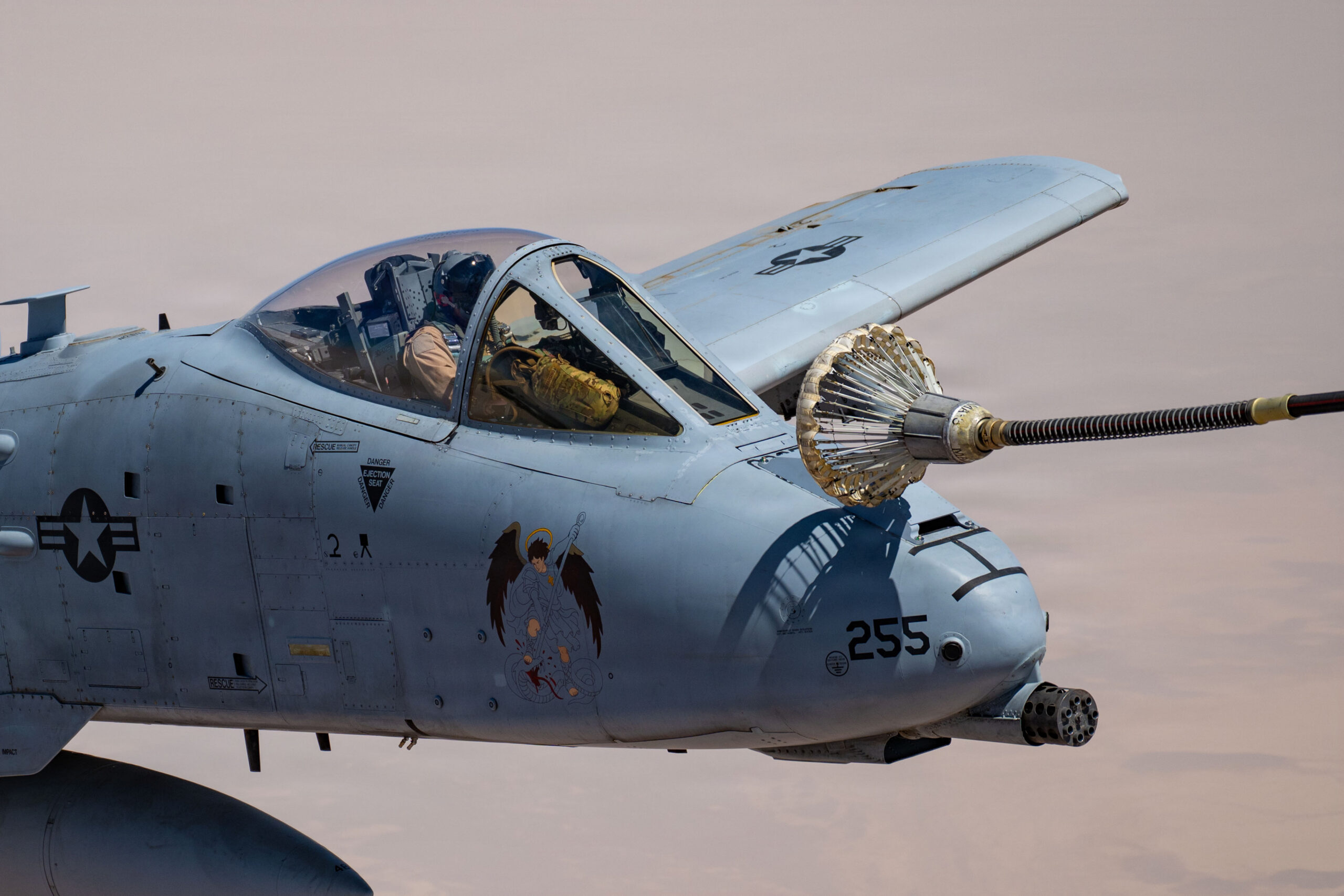
United States Air Force A-10 Thunderbolt II ground-attack aircraft deployed to the Middle East are now operating with significant new modifications, enhancing their operational flexibility. These developments come amidst sustained U.S. military presence in the region, aimed at deterring aggression, maintaining maritime security, and addressing regional threats. The modifications include a new probe-and-drogue aerial refueling system and a novel electronic warfare pod, as observed in recent official U.S. Air Force photographs.
The A-10 Thunderbolt IIs, commonly known as “Warthogs,” were recently photographed conducting aerial refueling operations in the U.S. Central Command (CENTCOM) area of responsibility. These images, released earlier this month, confirm the integration of a new probe-and-drogue aerial refueling capability, a rapid development announced just weeks prior. This upgrade is crucial for the aircraft, as its inherent design previously restricted its aerial refueling to only “flying boom” systems, primarily found on KC-135 Stratotankers. The aircraft were also observed carrying an unspecified, novel electronic warfare pod, suggesting an enhancement to their defensive or offensive electronic capabilities.
Traditionally, the A-10’s specific thrust-to-weight ratio and flight characteristics have limited it to refueling exclusively from KC-135 Stratotankers, which utilize a rigid, telescoping “flying boom” system. This dependency restricted the aircraft’s operational reach and its ability to integrate with the broader array of U.S. and allied tanker assets.
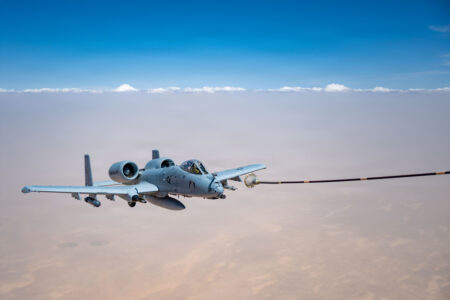
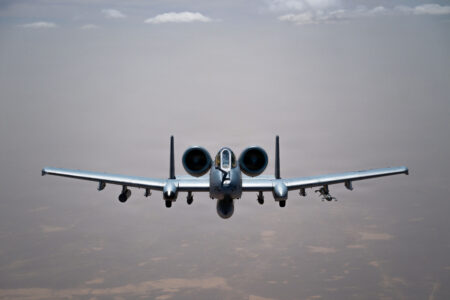
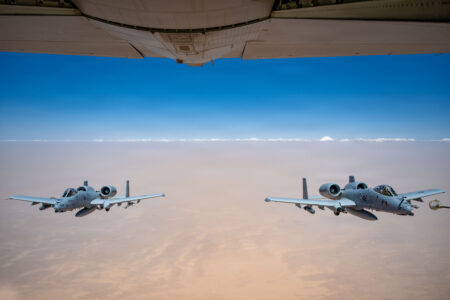
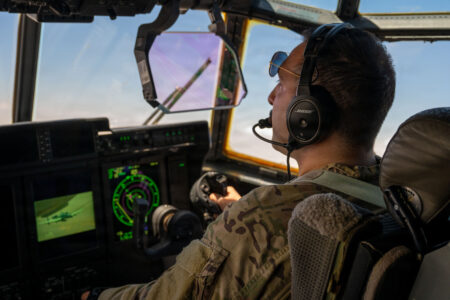
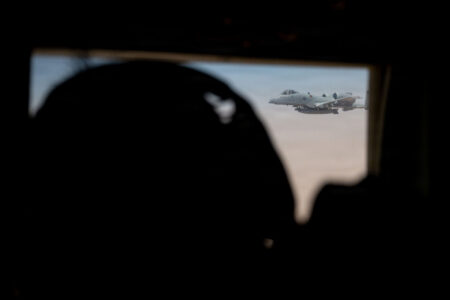
The new modification, officially designated as the Probe Refueling Adapter, was a rapid development initiative led by the Air National Guard Air Force Reserve Command Test Center (AATC). According to the AATC, this project was undertaken in direct response to an “urgent combatant command requirement,” underscoring the pressing need for enhanced operational flexibility in forward-deployed environments.
Approximately two dozen A-10s are reportedly stationed in the Middle East. These aircraft have been involved in a range of operations, including strikes against Iranian-backed militias in Iraq and engagements with Iranian small boats in the Strait of Hormuz. They also played a critical role in a multiday combat search and rescue mission to recover two aviators from a downed F-15E Strike Eagle, an operation during which one A-10 was lost, though its pilot successfully ejected in friendly territory. Currently, A-10s are contributing to U.S. efforts to maintain maritime security and deter illicit activities in key waterways, including patrolling routes near Iranian ports.
The distinction between the two primary aerial refueling methods is important. A probe-and-drogue system involves a flexible hose trailing from the tanker aircraft, ending in a funnel-shaped drogue. The receiving aircraft extends a rigid probe to connect with this drogue. In contrast, the “flying boom” system, primarily used by the U.S. Air Force, employs a fixed, telescoping boom that is maneuvered by a boom operator on the tanker into a receptacle on the receiving aircraft.
By adopting the probe-and-drogue modification, the A-10 gains the ability to refuel from a significantly wider range of tanker aircraft. This includes specialized C-130 variants, such as the HC-130J Combat King II, which is dedicated to combat search and rescue, and the MC-130 Commando II, used by special operations forces. Furthermore, it enables interoperability with other military services’ tankers, such as the U.S. Marine Corps’ KC-130s. The upgrade also facilitates refueling from the newer KC-46 Pegasus tankers, which, alongside KC-135s, form a substantial portion of the U.S. refueling fleet in the Middle East. This modification is particularly beneficial for the KC-46, as it addresses a known “stiff boom” issue that previously complicated its ability to refuel A-10s using the traditional Air Force method.
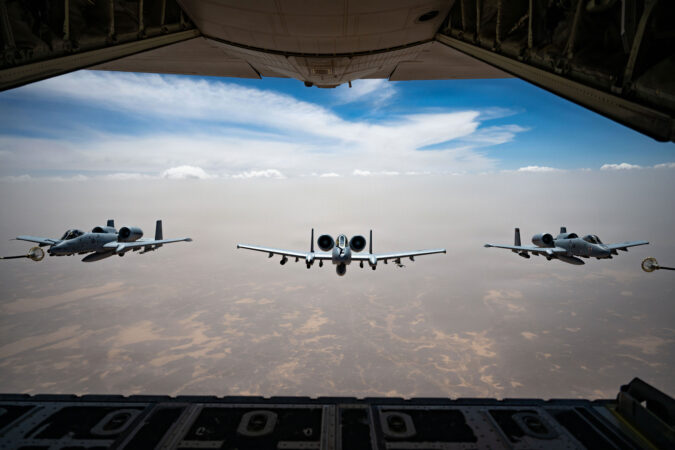
The A-10s observed with these new refueling probes belong to the 107th Fighter Wing, based at Selfridge Air National Guard Base, Michigan, which deployed to the Middle East last month. A U.S. official informed Air & Space Forces Magazine that flights incorporating the Probe Refueling Adapter in the Middle East are part of ongoing operational testing. While initial deployment and use are underway, the modification is still undergoing further research and development work and is not yet designated as standard equipment across the entire A-10 fleet in the region.
Why This Matters
The integration of probe-and-drogue refueling capability and an electronic warfare pod on the A-10 Thunderbolt II aircraft represents a significant enhancement to U.S. air power projection and tactical flexibility in the Middle East. This development addresses several critical operational and strategic concerns:
Increased Operational Reach and Endurance:By enabling the A-10 to refuel from a wider array of tanker aircraft, including specialized C-130 variants and Marine Corps KC-130s, its operational range and time on station are substantially extended. This means A-10s can spend more time providing critical close air support, conducting reconnaissance, or performing maritime security patrols without needing to return to base or rely solely on a specific type of tanker. In a vast and strategically vital region like the Middle East, this increased endurance directly translates to more persistent presence and response capabilities.
Enhanced Interoperability:The ability to refuel from various U.S. Air Force, Navy, and Marine Corps assets fosters greater interoperability among different branches of the military. This is crucial for joint operations, allowing for more seamless integration of air assets in complex scenarios, from combat search and rescue to special operations support. It also streamlines logistics and reduces the dependency on a single tanker platform, increasing resilience in contested environments.
Improved Survivability and Efficacy:The addition of a novel electronic warfare pod suggests efforts to bolster the A-10’s defensive capabilities against modern threats. While specifics are undisclosed, such pods typically provide electronic countermeasures, jamming, or intelligence gathering, which can be vital for the survivability of slower, ground-attack aircraft operating in potentially hostile airspace. This upgrade signals a continued commitment to maintaining the A-10’s relevance and effectiveness in evolving threat landscapes.
Strategic Flexibility in a Volatile Region:The Middle East remains a focal point of geopolitical tensions, with ongoing maritime security challenges, regional conflicts, and the need for persistent deterrence. Equipping A-10s with these capabilities provides U.S. combatant commanders with more versatile tools to respond to contingencies, enforce maritime security, protect friendly forces, and project power. It allows for more adaptable deployments and mission profiles, crucial for managing dynamic situations and signaling resolve without necessarily escalating conflicts.
Prolonging the A-10’s Service Life:Despite periodic debates about its retirement, the A-10 continues to be a highly valued asset for close air support. These modifications indicate a strategic investment in extending the aircraft’s operational viability and utility, ensuring it can continue to perform its unique missions effectively for years to come by adapting to modern operational requirements and logistical realities. This reflects a pragmatic approach to maintaining relevant capabilities amidst ongoing modernization efforts for the U.S. Air Force fleet.
WASHINGTON D.C.– The U.S. Air Force’s venerable A-10C Thunderbolt II aircraft, affectionately known as the “Warthog,” has been observed operating in the U.S. Central Command (CENTCOM) area of responsibility with advanced electronic warfare capabilities. Recent imagery from May 2026 confirms that these ground-attack platforms are not only performing aerial refueling operations with HC-130J Combat King II aircraft but are also equipped with “Angry Kitten” electronic warfare (EW) pods, marking a significant enhancement to their operational utility in contested environments.
The images depict A-10C aircraft linking up with HC-130J tankers, an aircraft type already instrumental in aerial refueling for HH-60 helicopters during critical Combat Search and Rescue (CSAR) missions, often referred to as the “Sandy” role, which the A-10 traditionally supports. This continued integration of aerial refueling capabilities underscores the A-10’s enduring operational reach and its ability to sustain presence over extended periods in a region of high strategic importance.
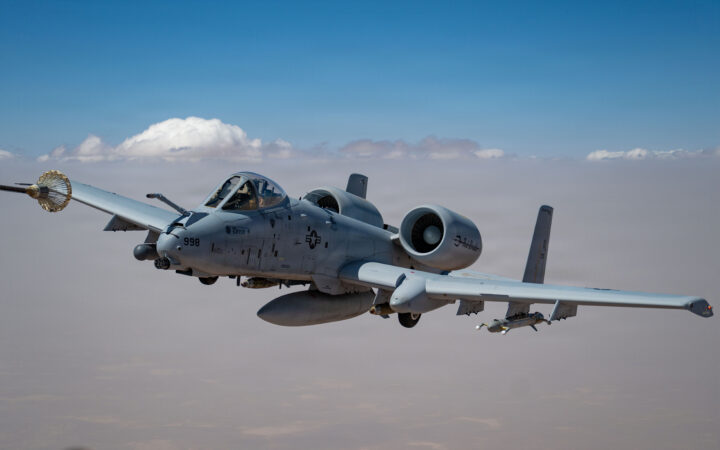
The A-10’s continuous deployment to CENTCOM has been a feature of U.S. airpower strategy since 2023, following a direct request from the command to enhance its regional airpower posture. Upon their deployment, these aircraft underwent rapid modifications to accommodate a heavier payload of Small Diameter Bombs (SDBs), thereby significantly boosting their precision strike capabilities and firepower. The A-10’s robust design and ability to operate from austere airfields make it a valuable asset for maintaining a persistent presence and delivering close air support in complex operational environments.
The most recent photos also reveal A-10s carrying “Angry Kitten” electronic warfare pods. This system, developed by the Advanced Technology Targeting Center (ATTC), represents a strategic pivot for the A-10 fleet. While the Angry Kitten system has been undergoing testing on the A-10 in the United States, its deployment on Warthogs within an active combat zone had not been publicly confirmed until these recent images. Originally conceived as a rapidly reprogrammable training tool to simulate diverse enemy threats, the U.S. Air Force has progressively explored and is now actively employing its offensive electronic attack capabilities.
The Angry Kitten pod first saw combat deployment on F-16 Fighting Falcons during “Operation Epic Fury” against Iran, with images released by the U.S. military confirming its operational debut in March 2026. Its presence on A-10s in CENTCOM now suggests a broader integration across various fighter platforms, highlighting the system’s versatility and the Air Force’s commitment to equipping a wider range of aircraft with advanced EW tools to enhance survivability and mission effectiveness against sophisticated adversaries.
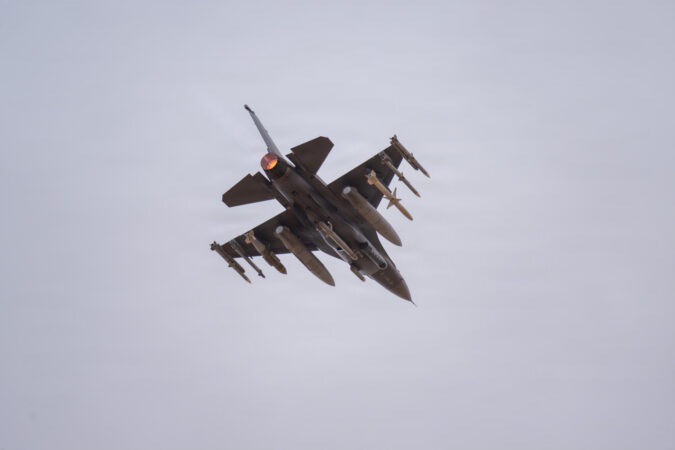
A key advantage of the Angry Kitten system lies in its adaptability. Unlike many traditional electronic warfare systems, which typically require complex updates against new enemy threats by specialized personnel away from the front lines, Angry Kitten is designed for rapid and easy reprogramming. This capability allows the pods to be continuously refreshed and optimized for evolving threats within hostile airspace, providing a dynamic defensive and offensive EW posture that can quickly counter new adversary technologies.
The deployment of such tactical EW pods complements the operations of dedicated electronic warfare aircraft that have also been active in missions against Iran. These include Navy EA-18 Growlers, which excel in escorting strike packages and jamming enemy radars, and Air Force EC-130 and EA-37 Compass Call jamming aircraft, which typically operate at greater distances from targets to disrupt enemy command, control, and communication networks. The integration of Angry Kitten on frontline fighters demonstrates a layered approach to electronic warfare, extending capabilities to platforms engaged directly in close air support and strike missions.
These developments unfold against the backdrop of the U.S. Air Force’s decision to delay the retirement of the A-10 Thunderbolt II until at least 2030. This deferral underscores the continued perceived value and combat effectiveness of the Warthog, particularly when augmented with modern technologies that extend its relevance in contemporary battlefields. The A-10’s robust airframe, powerful GAU-8 Avenger cannon, and capacity for loitering over targets remain critical assets that newer, multi-role fighters may not fully replicate in specific close air support scenarios.
Why This Matters
The observed integration of Angry Kitten electronic warfare pods with U.S. Air Force A-10 Warthogs in the CENTCOM area of responsibility, alongside continued aerial refueling operations and the aircraft’s delayed retirement, signals several critical shifts and priorities in modern air warfare:
- Evolving Airpower Strategy:This deployment demonstrates the U.S. military’s commitment to adapting legacy platforms with cutting-edge technology to maintain their relevance in increasingly contested airspace. Rather than solely relying on fifth-generation fighters, the Air Force is strategically upgrading existing assets to maximize their utility and survivability, indicating a pragmatic approach to resource allocation and fleet modernization.
- Enhanced Survivability and Mission Effectiveness:Equipping A-10s with advanced EW capabilities like Angry Kitten significantly boosts their ability to operate safely and effectively in environments where sophisticated anti-access/area denial (A2/AD) systems are present. This move extends the A-10’s operational lifespan and expands its utility beyond traditional close air support, allowing it to perform critical missions even when facing advanced threats.
- Flexible Electronic Warfare Capabilities:The rapid reprogrammability of the Angry Kitten system represents a significant leap in electronic warfare. It allows for quick adaptation to new or evolving adversary threats without requiring aircraft to be pulled from the front lines for extensive updates. This agility is crucial in dynamic conflict zones and provides a distinct tactical advantage in disrupting enemy defenses and communications.
- Strategic Messaging to Adversaries:The public display of these enhanced capabilities, particularly in a volatile region like CENTCOM and in operations involving named adversaries such as Iran, sends a clear message about U.S. readiness, technological superiority, and resolve. It indicates a willingness to employ advanced tactics and systems to counter potential threats and protect allied interests.
- The Enduring Role of Legacy Platforms:The decision to delay the A-10’s retirement until at least 2030, coupled with these significant upgrades, underscores the continued value of specialized platforms for specific combat roles. Despite desires for fleet modernization with multi-role aircraft, the A-10’s unique attributes—such as its robust design, loitering capability, and formidable cannon—remain irreplaceable for certain missions, especially in scenarios requiring precision ground attack and close air support in complex terrains. This influences future decisions on defense procurement and strategic planning for air forces globally.