
Commerce Secretary Howard Lutnick discusses how America is rebuilding its automobile manufacturing industry through policy on ‘Kudlow.’
Key Takeaways:
- Strategic Reshoring:Ford’s commitment to cease importing Lincoln vehicles from China by 2030 signals a significant strategic pivot towards domestic manufacturing, driven by geopolitical risk mitigation and the pursuit of supply chain resilience.
- Economic & Political Alignment:The move aligns with broader “Made in America” policy initiatives and is expected to generate thousands of U.S. jobs, potentially bolstering the domestic automotive sector and appealing to protectionist sentiments.
- Navigating Trade Headwinds:While Ford did not explicitly link the decision to tariffs, it comes amidst rising costs and uncertainty from global trade policies, suggesting a proactive measure to de-risk its luxury brand’s supply chain from future geopolitical volatility and tariff burdens.
DEARBORN, MI –Ford Motor Company, a bellwether of American industry, is embarking on a significant strategic realignment for its luxury Lincoln brand, announcing plans to dramatically expand U.S. production beginning in 2030 and eventually halt all imports of Lincoln vehicles from China for American customers. This move underscores a broader industry trend towards supply chain de-risking and domestic content, deeply influenced by evolving geopolitical landscapes and persistent trade tensions.
The Dearborn, Michigan-based automaker revealed Wednesday that this ambitious expansion is projected to create thousands of direct and indirect U.S. jobs across its manufacturing ecosystem. While the company remained tight-lipped on the specific financial investment required or the exact plants slated to receive this additional production, the implications for Ford’s global manufacturing footprint and its luxury brand positioning are substantial.
This initiative represents a definitive shift for Lincoln’s U.S. lineup, most notably impacting models like the Nautilus, which currently sees its redesigned iteration assembled at the Changan Ford plant in Hangzhou, China, and subsequently exported to the American market. The previous generation of the Nautilus was notably produced at Ford’s Oakville Assembly Plant in Ontario, Canada, highlighting the brand’s historically flexible, yet globally dispersed, manufacturing strategy.
SOME OLDER FORD VEHICLES POSE ‘UNREASONABLE’ SAFETY RISKS, REGULATORS WARN
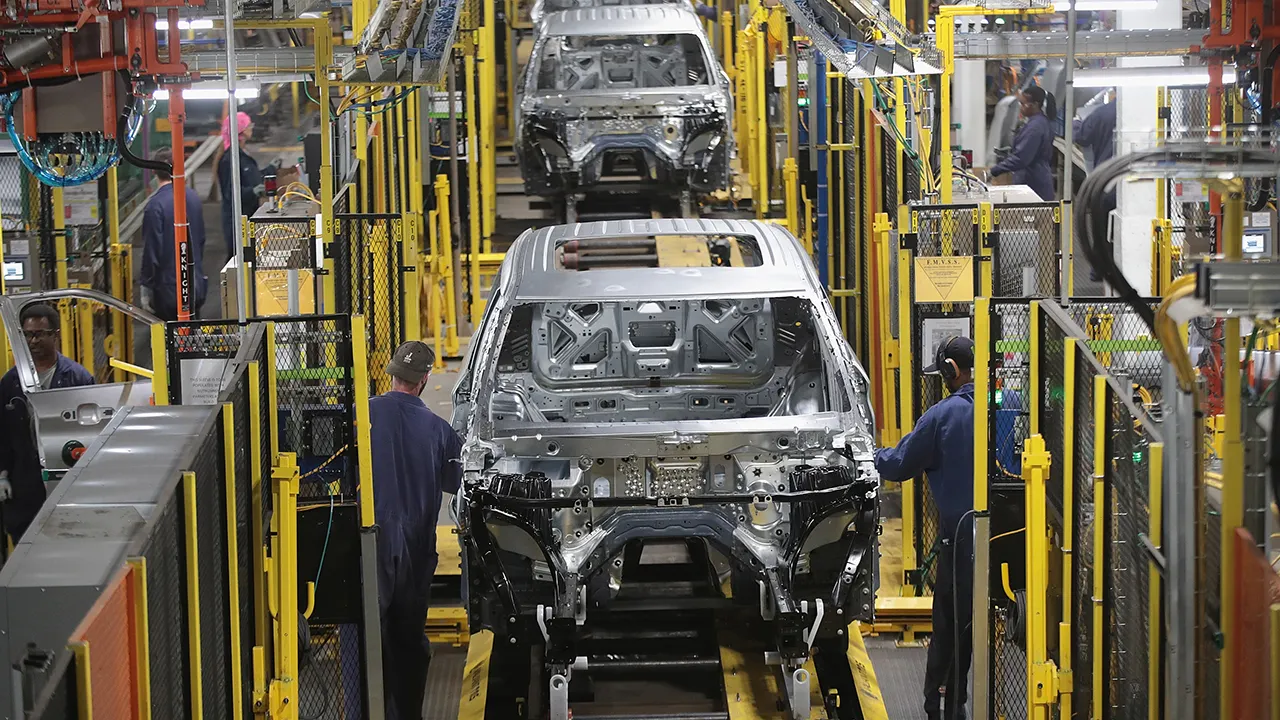
Workers assemble Ford vehicles at the Chicago Assembly Plant on June 24, 2019, in Chicago.(Scott Olson/Getty Images / Getty Images)
Ford’s announcement, while forward-looking to 2030, did not explicitly confirm whether the Nautilus’s production specifically would relocate to the U.S. under this new directive, nor did it itemize which other China-imported vehicles would be impacted. However, the clear intent to phase out all Chinese imports for the U.S. market signals a comprehensive reassessment of Lincoln’s supply chain strategy.
This strategic decision unfolds against a backdrop of escalating global trade complexities. Ford, like many multinational corporations, has been grappling with elevated operational costs and significant uncertainties stemming from tariffs and a constantly shifting global trade policy environment. The company’s latest annual report disclosed approximately $3 billion in gross costs related to tariffs implemented or revised in 2025, with an estimated $2 billion impact on earnings before interest and taxes (EBIT) after various offsets. This financial burden provides a potent economic rationale for re-evaluating sourcing strategies, even if Ford refrained from explicitly attributing its decision to these tariff pressures.
FORD TO USE APPLE MAPS SOFTWARE IN SELF-DRIVING TECH FOR NEW EV PLATFORM

A Lincoln Navigator SUV is displayed against a desert backdrop at sunset.(Ford Motor Company)
The move also resonates with broader government and consumer sentiments advocating for increased domestic manufacturing and supply chain resilience, particularly in critical sectors like automotive. The “Made in America” ethos, championed by policymakers, has gained considerable traction, influencing procurement decisions and encouraging companies to invest domestically. For a luxury brand like Lincoln, a strong “Made in America” narrative could also serve as a compelling marketing advantage, appealing to a segment of consumers who prioritize domestic sourcing and job creation.
Ford’s current U.S. manufacturing footprint is already substantial, with several Lincoln models already produced domestically. The flagship Navigator, for instance, is assembled at Ford’s Kentucky Truck Plant in Louisville, while the Aviator is manufactured at the Chicago Assembly Plant. These vehicles are not only sold stateside but also exported to key international markets including Canada, Mexico, and the Middle East, demonstrating Ford’s robust capabilities for high-volume, quality production in the U.S.
The planned expansion will further augment Ford’s impressive domestic manufacturing scale. In 2025, the company reported assembling over 2 million vehicles in the U.S., a figure that positioned it as the leading automaker in the country for domestic production. Furthermore, Ford led the industry in U.S. vehicle exports and hourly autoworker employment, reflecting its deep commitment to American labor, with approximately 56,300 hourly manufacturing workers in the U.S. This new commitment will deepen that foundation, providing a significant boost to the American industrial base.
| Ticker | Security | Last | Change | Change % |
|---|---|---|---|---|
| F | FORD MOTOR CO. | 13.83 | -0.15 | -1.07% |
CLICK HERE TO GET FOX BUSINESS ON THE GO
While the strategic direction is clear, many operational and financial specifics of the 2030 expansion remain under wraps. The automotive industry, characterized by long investment cycles and complex supply chains, will be watching closely for details regarding which specific Lincoln models will transition to domestic production, the exact locations of these expanded manufacturing facilities, and the precise capital expenditure Ford intends to allocate. These details will be crucial for assessing the full economic impact and Ford’s long-term competitive positioning.
Market Impact:
Ford’s decision, while forward-dated, sends a clear signal to investors and the broader automotive market: de-risking global supply chains and embracing domestic manufacturing are increasingly paramount strategic imperatives. For Ford (NYSE: F), this move could be viewed positively by investors valuing long-term stability and resilience against geopolitical shocks, potentially mitigating future tariff-related earnings volatility. It also positions Lincoln strongly within the luxury segment, catering to a growing consumer preference for domestically produced goods. Competitors, particularly those with significant production footprints in China or other politically sensitive regions, may feel pressure to re-evaluate their own sourcing strategies, potentially triggering a wider trend of reshoring or nearshoring across the industry. The announcement could also galvanize political support and potentially open doors for future government incentives aimed at bolstering U.S. manufacturing, further solidifying Ford’s strategic advantage. However, the substantial capital expenditure required for such a transition, even if spread over several years, will be a key factor for analysts to monitor, potentially impacting short-to-medium term cash flow projections. Overall, this is a long-term strategic play designed to enhance brand value, mitigate risk, and align with evolving market and political realities.